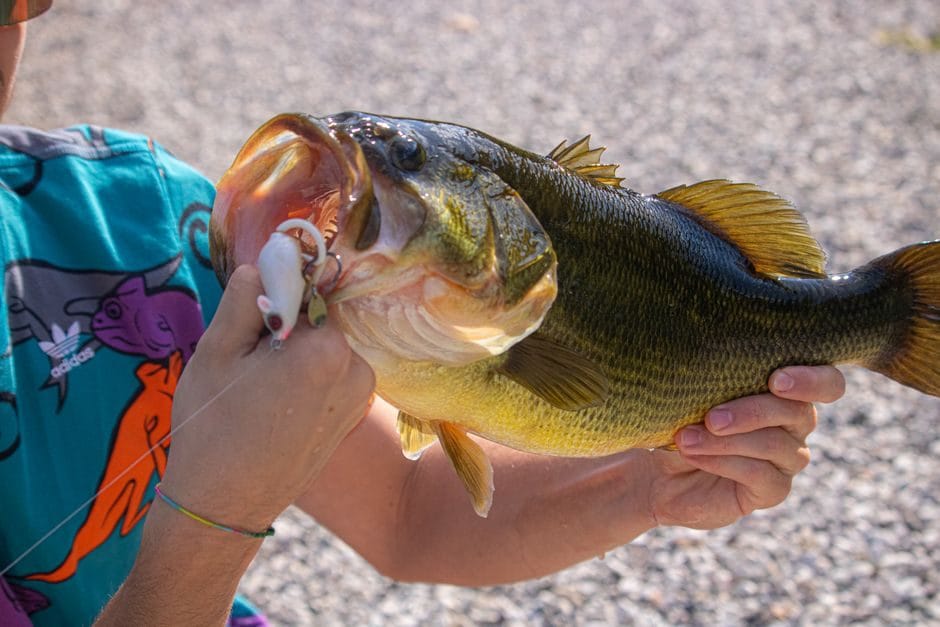
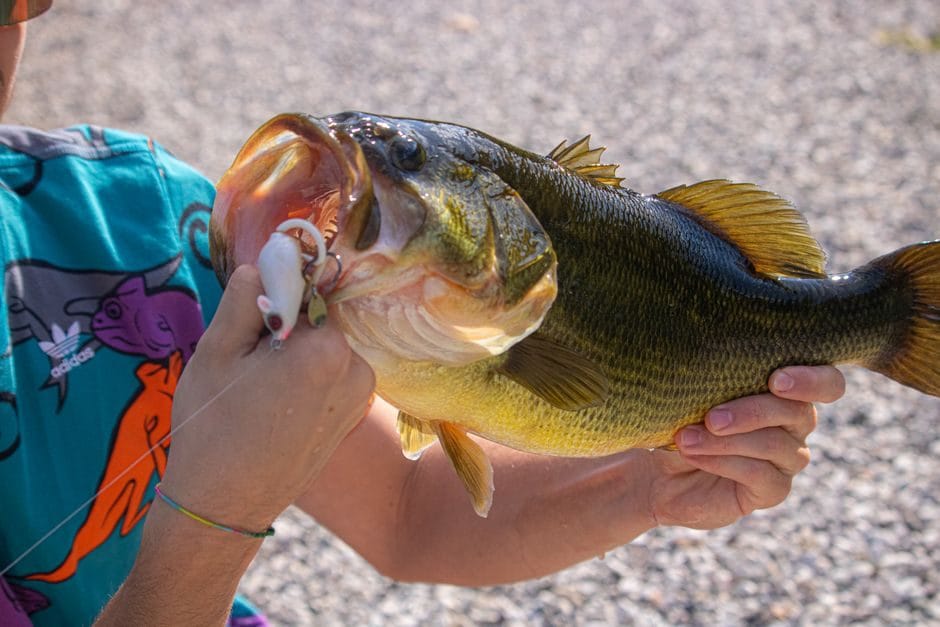
By the time the lake hits 80 degrees in late June, the bass have stopped chasing anything that looks like work. They want a meal that arrives slow and obvious, in the half hour either side of sunrise, when the surface still holds last night's cool. That window is short and it does not wait for you to finish your coffee, which is why most weekend anglers miss it and then blame the fish.
Topwater in high summer is the most honest fishing there is. You see the strike. You feel the rod load a beat after the boil, and the hardest discipline you will ever practice on a bass lake is keeping your hands still for that beat instead of snatching the lure away from a fish that hasn't taken it yet. I have lost more summer bass to early hooksets than to any knot, line, or lure choice, and so has everyone who tells you otherwise.
Read the water before you tie anything on
A largemouth in July is lazy and territorial at the same time. It tucks under a dock, a laydown log, a mat of duckweed, or the shaded edge of a grass line, and it will not move three feet for a bait it doesn't believe. So the first job is not casting — it's standing still long enough to find the shade lines and the bait. Where the bluegill are flicking at the surface near cover, the bass are underneath them. Where the water is dead flat and open, you are wasting your morning.
Wind matters more than people admit. A light chop on a windward bank pushes baitfish into the shallows and breaks up the surface enough that a wary fish commits. A glassy cove looks pretty and fishes poorly once the sun is up. If you have a choice between a calm pocket and a slightly ruffled point, take the point every time.
Three baits that earn their keep in the heat
- A hollow-body frog — the Booyah Pad Crasher runs about $7 — for fishing right on top of slop and lily pads where nothing else will go without fouling.
- A walking bait like the Heddon Super Spook (around $9) for open pockets and grass edges, worked side to side with a slack-line cadence.
- A buzzbait for low light and stained water, because the blade calls fish in from a distance the way a quiet bait never will. This is the one I reach for first when the sky is still grey.
Notice none of those costs real money. Summer topwater is the cheapest serious fishing on the calendar, which is part of why it's the best place to put a beginner. Hand a kid a frog rod over a pad field and the worst that happens is they get bored; the best is a blow-up that they talk about for a year.
The hookset, and why you keep getting it wrong
Here is the thing nobody warns you about with frogs: a bass often misses, or grabs the bait sideways, or simply pushes a wake at it without ever closing its mouth. If you swing on the boil, you pull the frog out of a fish that was about to commit on the second swipe. Wait until you feel weight. Count one alligator if you have to. Then sweep — don't snap — and reel down hard to bury the hook through the frog's body.
Braided line is not optional here. Forty-pound braid pulls a fish out of pad stems that would shred fluorocarbon, and it has no stretch, so the hookset actually reaches the hook. I run 50-pound on the frog rod and have never once thought it was too much.
When the surface dies, don't force it
By 9 a.m. in July the topwater bite usually shuts off like a tap. This is the part where stubborn anglers lose the whole day — they keep throwing the frog into a sun-baked flat because it worked an hour ago. It won't. The fish slide to the first shade and the first depth change they can find, and your morning lure becomes a wall decoration.
That's the moment to switch to a Texas-rigged worm or a wacky-rigged stick bait and pick apart the shade under docks and laydowns, slowly, almost boringly. You will not get the explosion. You will get bites, which on a 90-degree afternoon is the whole ballgame. The fish didn't leave — they just stopped reading their mail at the surface.
Get back out before the next sunrise and you'll find them looking up again. The summer topwater window opens every single morning whether you set an alarm for it or not.