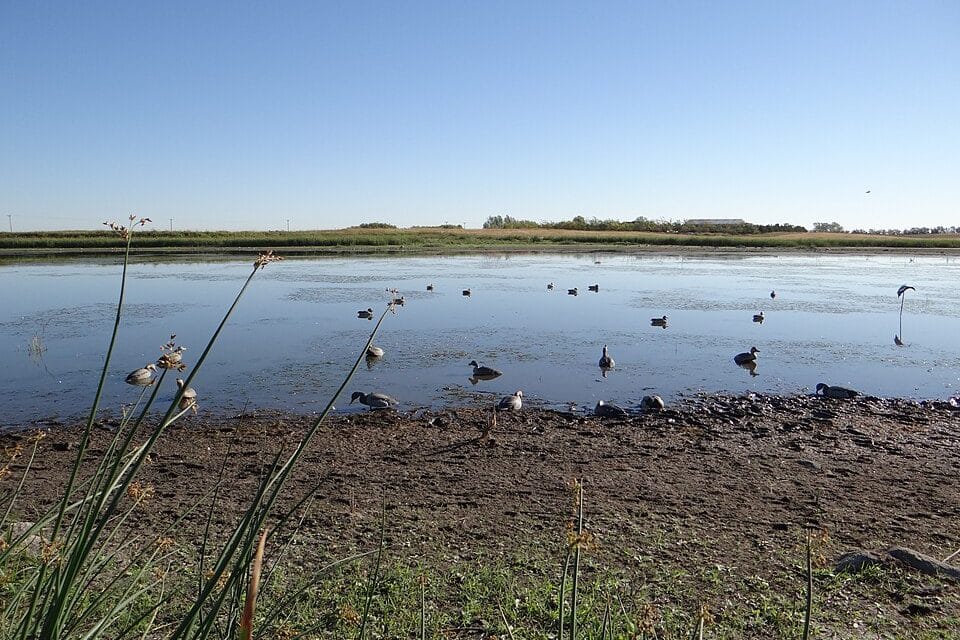
Blue-winged teal don't wait for cooler weather the way mallards do. The first flights are already lifting off the prairie pothole region of the Dakotas and southern Canada by late July, months ahead of the main duck migration, which is exactly why the scouting work for a September teal opener has to start now — not two weeks before the season, when every other hunter in the county is suddenly checking the same flooded corn stubble you were.
Why July Scouting Beats August Scouting
Early teal season runs in most Mississippi and Central Flyway states as a 9- to 16-day window in mid-September, opening well ahead of the regular duck season, and it exists specifically to catch this early southbound push of blue-wings before they've moved through. That timing window is short. Birds that show up on a flooded field in the second week of September might be gone within four or five days, replaced by a different group, or gone entirely if a cold front further north stalls their push. Scouting in July means you're not looking for teal yet — you're looking for the water that will hold them when they arrive, and that's a completely different skill than glassing birds on the wing.
What you're actually mapping in July is depth and food, not ducks. Teal want 4 to 12 inches of water over moist-soil vegetation or flooded grain stubble — deeper than that and they lose interest, shallower and there's nothing to dabble for. Drive the back roads around any sod farm, sewage lagoon, or rice field with a slow leak in the levee, and take notes on which spots are already holding sheet water from summer rain. A field that's dry in July but sits in a natural low spot will often flood again with the first September rain, and knowing that ahead of time beats discovering it the morning of opening day.
Reading a Field Before There's a Single Duck on It
Look for invertebrate life first. Teal feed heavily on aquatic insects, seeds, and small crustaceans in shallow water, so a flooded field with visible chironomid activity or duckweed cover is worth more than one that just looks wet. Rice fields drained for harvest in August and re-flooded afterward are close to ideal, and in states like Arkansas and Louisiana, growers sometimes flood post-harvest fields specifically because waterfowl leases pay for the water. If you don't have access to managed rice ground, public wildlife management areas usually post their moist-soil unit water levels online weeks before the season — check yours now rather than guessing from last year's memory.
Here's the part scouting reports rarely mention.
A field can look perfect and still be worthless if it's surrounded by standing timber or a tree line close enough to break the wind, because teal favor open, exposed sheet water where they can see approaching danger from a distance — the same openness that makes a spot look "empty" to a hunter used to timber mallard holes is often exactly what teal are keying on. Cross that off your list of good spots if it's tucked in tight against woods, no matter how many acres of flooded bean stubble are sitting behind it.
Building a Decoy Spread Scaled to a Small Duck
Teal decoys should be smaller than your mallard rig, not just fewer in number. A dozen full-body Greenhead Gear teal decoys runs about $55-65, roughly a third less than a comparable mallard dozen, and the reduced silhouette actually matters to incoming birds — teal work smaller, tighter groups than mallards, typically six to twenty birds per flock, and a spread built around bulky mallard decoys looks wrong to them even at a distance. Set two or three loose clusters of four to six decoys rather than one long spread, leave a landing hole between clusters no wider than 15-20 feet, and keep the whole thing inside 25 yards of the blind — teal commit fast and often don't circle twice. Spinning-wing decoys divide opinion among serious teal hunters. A Mojo Elite Series unit on a low pole adds visible motion that pulls distant flocks off their line, and plenty of guides run one on every hunt without hesitation. But run it on full speed all morning and birds that have already been shot at once in the area will flare from 80 yards out — cut the motor after the first few groups work the spread, or run it on a remote so you can kill it the second birds commit.
Tracking the Migration Without Guessing
eBird's real-time sighting maps are the single best free tool for this, and they're better than most hunters give them credit for. Birders report blue-winged teal sightings well before hunters start paying attention, so a cluster of eBird pins moving south through Nebraska or Kansas in late July gives you a rough read on how far along the migration is running compared to a typical year. Pair that with an onX Hunt layer showing public land water boundaries, and you can build a shortlist of five or six candidate spots before you've burned a single tank of gas driving around. Weather matters too — teal push hardest on the leading edge of a cold front out of the northern plains, so a scouting trip timed two or three days after a mid-August front moved through beats one on a calm, hot week with nothing pushing birds south.
The Regulations That Trip Up First-Timers
Early teal season is species-restricted, and that single fact causes more citations than any other rule in the proclamation. Only blue-winged, green-winged, and cinnamon teal count — shoot a wood duck or an early-migrating gadwall by mistake and you're not just over on a different species, you're hunting outside the legal framework entirely, since no other ducks are in season yet. Learn the wing-flash and the size difference in flight before opening morning, not while a flock is already committing to your decoys. Shooting hours are the second trap: most states restrict early teal to sunrise-to-sunset only, dropping the usual half-hour-before-sunrise start that applies once the regular season opens. Set an alarm for actual sunrise, not legal shooting light as you remember it from November.
What's Worth Buying Now, and What Can Wait
Buy your shells before the season, not during it. Federal Premium Speed-Shok in 3-inch #6 steel, at roughly $18-20 a box of 25, patterns tight enough for the closer shots teal typically offer, and steel that size handles the smaller, faster-flying birds better than the heavier loads you'd carry for late-season mallards. A pair of breathable waders — Banded's Aspire line runs around $280-320 — earns its keep in September heat that would cook you in neoprene, since teal season temperatures often sit in the 80s at first light. Skip the heavy timber camo pattern you'd wear in a flooded oak flat; open-field patterns like Sitka's Ducks Advantage or a simple marsh-grass blind work better against the exposed sheet water teal prefer.
One more thing worth doing before July ends: pull up your state wildlife agency's harvest report page and look at last year's early teal season numbers by region. States publish this data, and a county that produced strong harvest numbers in a similar water year is a far better bet than chasing a spot based on a single good hunt from three seasons back. Scouting from a truck window only gets you halfway there — the birds still have to show up, and the data from last year tells you where they actually did.