Late July feels early for deer season, and that's exactly why most guys skip this window and pay for it in October. By the time the leaves start turning and everyone else remembers they own a food plot, the seed catalogs are picked over, the ground has hardened under three more weeks of summer heat, and there isn't enough runway left before first frost for a fall blend to actually establish before the rut. The guys pulling bucks off their own ground year after year aren't doing anything mysterious — they're planting food plots on a July and early-August calendar while everyone else is still thinking about it in September. You've seen the same pattern on your own lease or back forty: the neighbor's plot comes in thick and dark green by mid-October, yours comes in patchy, and the difference traces back to a six-week head start, not better ground or better seed. Most of the guides sold in feed stores in September are aimed at that rushed crowd, which is exactly why the bags say "plant now" regardless of what the calendar actually allows for that seed to mature. Ignore the bag date and work from your own frost date instead, and the whole plan changes.
Here's what that actually looks like on the ground: soil test results in hand, a seeder that's been calibrated instead of eyeballed, and a planting window picked around your specific frost date rather than a bag's generic instructions. None of it is complicated, but skipping any one step is the difference between a plot that pulls deer off neighboring land in November and a green patch that never quite fills in.
Why July Planting Beats the September Rush
Brassicas — kale, turnips, radishes, the backbone of most fall plots — need 80 to 100 days from seed to full maturity, and a hard frost in your area typically lands somewhere between October 15 and November 10 depending on latitude. Work backward from that date and you land on a planting window of late July through mid-August for most of the whitetail range, not the Labor Day weekend most guys treat as the unofficial start of plot season. Miss that window by three weeks and you're not getting a slightly smaller plot — you're getting brassica leaves the size of a hand instead of a dinner plate, which deer will walk past for a neighbor's mature plot every time.
Getting the Soil Test Back Before You Buy Seed
A basic soil test through your county extension office runs $10-20 and takes one to two weeks to come back — which is exactly why it needs to happen now, not the weekend you planned to plant. Whitetail food plots want a pH between 6.0 and 7.0, and most raw hunting ground tests closer to 5.0-5.5 without ever having seen lime. Spreading pelletized lime at 1-2 tons per acre corrects that, but lime takes 60-90 days to fully react with the soil — meaning lime applied in July is doing real work by planting time, while lime applied at planting is mostly wasted money that year. Most guys who've hunted a piece of ground for years still have no idea what their soil pH actually is, because the plot has always come in "good enough" and nobody stopped to ask what it would look like at the right pH. That's the frustrating part of this whole conversation — the fix costs less than a tank of gas and takes a mailed sample, and it still gets skipped more than any other step in the process. Send two samples if your plot has an obvious wet spot and a dry ridge, because ground that looks uniform to the eye is rarely uniform six inches down.
Skip the test and guess, and you'll spend $200-300 on premium seed blend that a $15 test would have told you wasn't going to establish in that soil anyway. That's not a hypothetical — it's the single most common reason a food plot "doesn't work" the first year, and it has nothing to do with the seed brand.
Calibrating the Seeder Instead of Eyeballing It
A broadcast spreader set on a guess typically over-applies small seed like clover and brassica by two to three times the recommended rate, which wastes seed and produces a stand so thick it competes with itself for light and water.
Run the math instead: weigh out the seed for a known area — a driveway or garage floor works — set the spreader to a middle setting, and walk a measured 100-foot pass at a steady pace, then check how much seed came out against how much should have for that square footage. Adjust the setting up or down and repeat until the numbers match. It takes fifteen minutes and it's the single most skipped step in the entire process, mostly because it feels like overkill for "just spreading some seed" — until the plot comes in patchy and thin in the exact pattern of an uncalibrated spreader's overlap and gaps.
Drilling Versus Broadcasting: When Each One Actually Wins
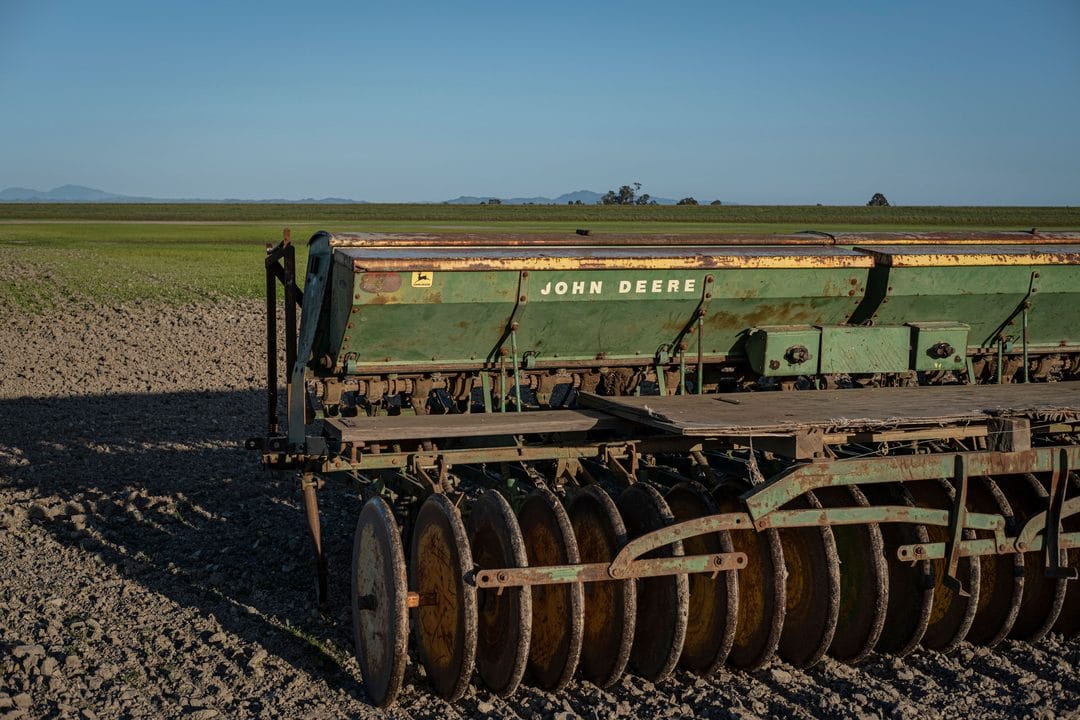
A no-till drill puts seed at a consistent, correct depth and gets away with less rainfall dependence than broadcasting, which just leaves seed sitting on the surface hoping for rain within days. If you've got access to a drill — through a co-op, a rental yard, or a neighbor's equipment — use it for brassicas and cereal grains, which fail hard when buried too deep or left exposed too long. Broadcasting still works fine for clover into an already-established seedbed, or for anyone without drill access, but broadcast seed needs a cultipacker pass afterward to press it into good soil contact, and it needs rain within about a week of planting or germination rates drop fast.
The honest tradeoff: a drill costs more to access and takes longer to set up than just spinning a handheld spreader off the back of a four-wheeler, and for a half-acre plot behind the house, that extra step might not be worth arranging. For anything over an acre, or for a blend that's mostly brassica, the drill earns its cost in stand consistency alone.
The Blend That Actually Works for Most of the Whitetail Range
A mix of Buck Forage Oats or a similar cereal grain with a brassica blend like Whitetail Institute's Winter-Greens covers both early-season attraction, when deer hit the tender cereal grain first, and late-season draw, once frost sweetens the brassica leaves and turns the plot into the go-to food source when everything else has gone dormant. Straight clover plots are lower-maintenance and come back for multiple seasons without replanting, but they don't carry the same late-December pull that a frost-sweetened brassica plot does — plant both if you've got the acreage to split it.
Get the soil test back this week if you haven't already, calibrate the spreader before it ever touches seed, and put brassica in the ground by the second week of August at the latest. The bucks that show up on your trail camera in November were decided by what got planted in July.