Why the First Week of July Decides Your September Dove Hunt
Most guys don't start thinking about dove season until the second week of August, when the local Facebook groups light up with photos of freshly disked fields. By then the good landowners already have their sunflowers planted, their millet drilled, and their favorite hunters penciled in for opening weekend. If you want a field that actually holds birds on September 1st, the scouting and the planning happen now, in the first week of July, while the sunflowers are still knee-high and the millet is barely germinated.
Doves are creatures of habit shaped by three things: seed availability, water, and grit. A field that looks perfect to you — tall sunflowers, bare dirt strips, a pond in the corner — means nothing if the seed heads aren't drying down on schedule or if the birds have already found an easier meal two farms over. That's the part beginners get backwards. They scout the field. They should be scouting the whole square mile around the field.
Reading a Sunflower Field Before It's Ready
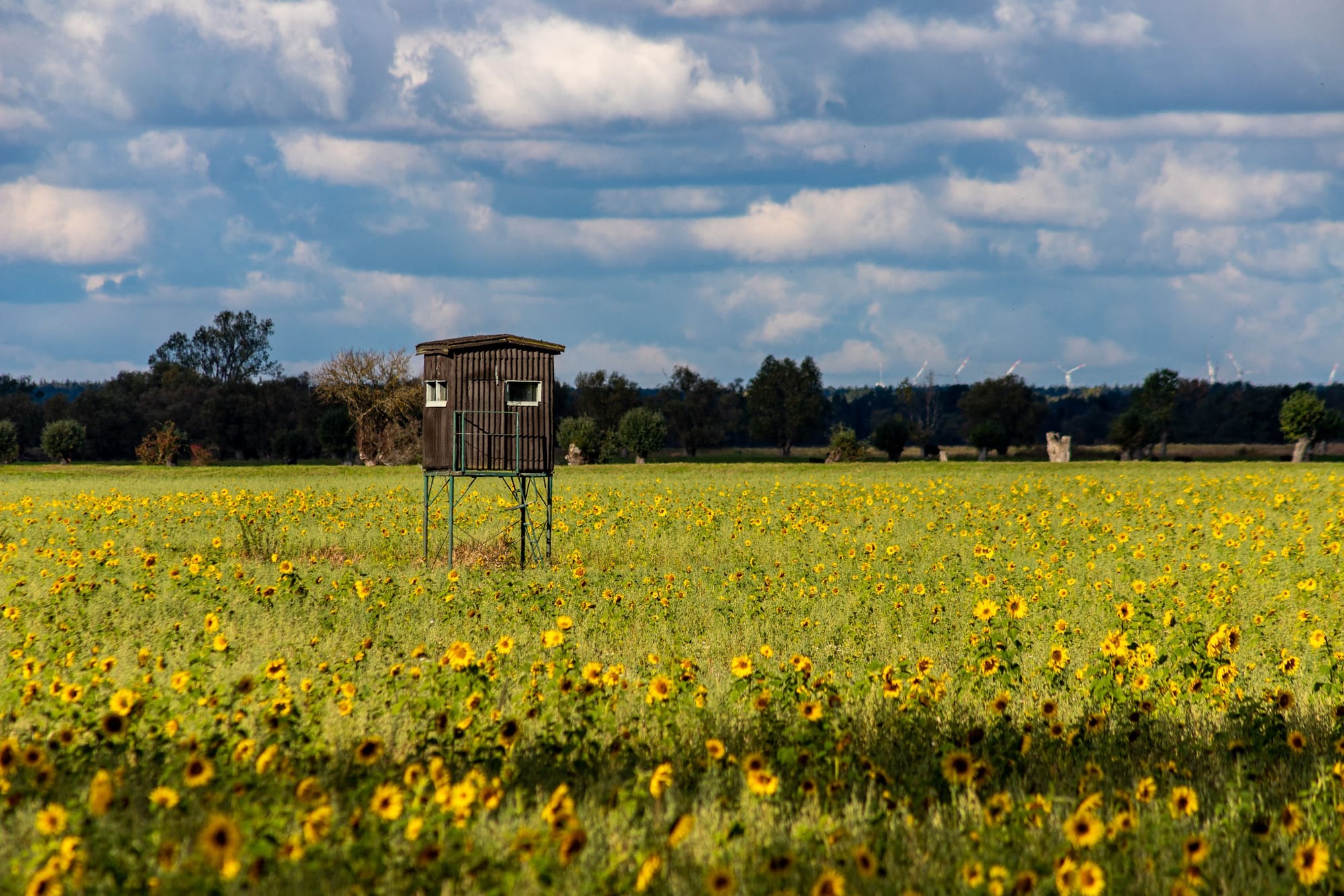
Black oil sunflowers planted in late April are usually blooming by late June and drying down between mid-August and early September, depending on rainfall and heat units. Walk the field now and check the back of the flower heads — if they're still bright green and the petals haven't started curling, you're on track for a Labor Day opener. If the heads are already yellowing this early, either the field went in too soon or drought stress pushed maturity forward, and you'll want to plan around a mid-August hunt instead of waiting for the calendar date everyone else assumes is standard.
Millet is the forgiving cousin in this equation. Proso millet planted in early June matures in roughly 60 to 90 days, which puts most July-planted fields right in the opening-week window without much guesswork. The catch is that millet lodges easily in heavy wind or rain — a storm in mid-August can flatten a stand that looked flawless two weeks earlier. Check drainage on any millet field you're scouting; low spots that pond water after a thunderstorm will rot the stand from the base up, and you won't know it until the birds have already moved on.
The Landowner Conversation Nobody Has Early Enough
Call the landowner in July, not August. Ask what's planted, when it was planted, and whether they're strip-disking sections for bare ground — doves need that exposed dirt to land and feed, since a solid wall of standing grain is nearly useless to them. Offer to help with the disking. A few hours on a tractor in exchange for a guaranteed spot on opening morning is one of the best trades in wing shooting, and it puts you ahead of the guys who show up in late August asking for a favor everyone else already asked for first.
Water and Grit: The Overlooked Half of the Pattern
A field can have textbook sunflowers and still hunt empty if there's no water source within half a mile. Doves drink daily, sometimes twice, and they favor exposed muddy banks over deep, brushy pond edges — a stock tank with a bare gravel apron will out-produce a scenic farm pond every time. Walk the perimeter of any water source near your field candidates and look for tracks in the mud, feathers, and the telltale white splash of droppings on fence rails or dead limbs nearby. That's your confirmation, not a guess.
Grit matters more than most hunters realize. Doves need small gravel to grind seed in their crop, and gravel roads, driveways, and bare disked strips all serve double duty as feeding and gritting sites. This is why a field bordered by a gravel county road often outperforms an identical field bordered by pavement or thick grass — the birds have a reason to linger instead of grabbing a few bites and leaving for water elsewhere.
So what do you actually do with all this in the first week of July? Start a written log — field name, planting date, seed type, water distance, grit access — and revisit each site every ten days through August. The pattern that forms across four or five visits tells you more than any single walk-through ever will, and it's the difference between guessing at opening morning and knowing.
Legal Groundwork You Can't Skip
Confirm your state's dove season dates and shooting hours before you finalize any plans — most Southern and Midwestern states run an early September opener around Labor Day weekend, but a handful shift the split-season dates year to year, and shooting hours frequently start at noon rather than sunrise on opening day specifically to protect early-arriving migrants. Buy your HIP certification through your state wildlife agency before you head afield; it's free, it takes two minutes, and game wardens check for it more often on dove fields than on almost any other hunt because of how many out-of-state and first-time hunters show up. Nontoxic shot requirements apply on a lot of public wildlife management areas even for dove — check the regulations for the specific tract, not just the statewide dove rules, because WMA-specific restrictions frequently go further than the general season framework.
Bare Ground Isn't Optional
If you're managing your own field or advising a landowner, disk 10 to 20 percent of the planted acreage in strips roughly 20 to 30 feet wide, timed so the bare dirt is fresh — not baked hard — by mid-August. Doves won't work a field where every inch is covered in standing vegetation, no matter how much seed is up top. This single detail separates a field that produces three hours of steady shooting from one that gets a handful of passing birds and goes quiet by 9 a.m.
Confirming the Pattern With a Trail Camera
A single cell trail camera set on a T-post at the edge of the field, angled across the bare-dirt strips, will tell you more in two weeks than a dozen drive-by scouting trips. Set it to take a photo every ten minutes between 6 a.m. and 9 a.m. and again from 4 p.m. to sunset — that's when doves feed hardest — and check the card weekly rather than daily, since checking too often just puts more human scent and disturbance on a field you're trying to keep quiet. A camera that shows steady bird activity through late July and into August is worth more than any landowner's word about how the field "usually hunts."
Budget cellular cameras run $60 to $130 and beat a cheap SD-card model for one reason: you get the data without walking back into the field to check it, which matters on a property you don't want to pressure before opening morning. If the field is on public land or a lease you share with other hunters, expect competition for the same information — plenty of guys run cameras on WMA fields, and a camera that disappears in early August usually means someone else found your spot first.
Building Your Opening Day List
By early August you should have three to five fields ranked, not one. Weather in the two weeks before the opener changes everything — a field that looked perfect in July can go quiet if a neighboring farmer harvests wheat stubble nearby and pulls every bird in the county onto fresh grain. Keep checking your short list right up until the Thursday before opening weekend, and don't be afraid to move your whole group to field two if field one has gone cold. The hunters who fill limits consistently aren't the ones with the single best field — they're the ones who never stopped scouting.
Get the calls made, get the log started, and get out to walk a field this week. September rewards the guys who did their homework in July.