The mate cuts the engines at 6:40 a.m., forty-one miles off the beach, and for a second the only sound is water slapping the hull. Then somebody on the bow points: a ragged brown line running east to west as far as the binoculars can follow, patches of sargassum weed strung together like a fence nobody built. That line is the whole game. Everything under it — the mahi-mahi stacked in its shadow, the yellowfin working the bait balls it collects — is why you burned two hundred dollars in diesel to get here before the fleet.
Why July Is the Window
By early July, Gulf and mid-Atlantic surface water has climbed into the upper 80s Fahrenheit, and the big loop-current eddies that spin off the Gulf Stream have had all spring to organize floating grass into real structure. Mahi-mahi migrate with that warm water, and July is usually the month when fish that were scattered singles in May start showing up in schools of twenty or more under a single weed patch. Yellowfin tuna follow a different clock — they're chasing flying fish and squid pushed up by the same current edges — but the two species overlap enough in July that a well-run spread will draw strikes from both on the same pass. Charter captains out of Venice, Louisiana, and Hatteras, North Carolina, will tell you the same thing in almost the same words: this is the month you stop hunting and start picking, because the fish have told you where they are.
What the calendar actually buys you
It buys you consistency, not certainty. A June trip might be twelve miles of empty blue water followed by one lucky stop on a rip; a July trip in the same spot usually means three or four weed lines inside a five-mile stretch, each one worth a look. That's a meaningfully different day on the water, and it's the reason serious offshore anglers block out July weekends the way deer hunters block out the rut.
Reading the Water Before You Ever Wet a Line
Running blind and trolling in a straight line is how you burn fuel for nothing. You're looking for three things, in this order of importance: floating weed, a color change, and bait or birds. A patch of sargassum the size of a car hood can hold fish. A line of weed a hundred yards long, stacked two or three feet deep in spots, is a highway — work the edges, not the middle, because mahi sit in the shade line where the weed meets clean water, not buried inside it.
Color changes and temperature breaks
Blue water meeting green water — a rip line, usually caused by two currents converging — concentrates plankton, which pulls in bait, which pulls in everything that eats bait. You'll often see this rip running parallel to or crossing a weed line, and the intersection of the two is close to a guarantee. Bring a temperature gauge if your electronics don't already show sea surface temp; a jump of even one and a half degrees across a few hundred yards marks the edge worth trolling.
Birds tell you what's already happening
Frigatebirds circling and diving mean tuna are pushing bait to the surface right now, not an hour ago. Terns picking at the surface calmly, without diving hard, usually mean smaller bait scattered thin — worth a look but not worth abandoning a good weed line for. Learn to tell the difference at a quarter mile, because chasing every bird you see wastes gas and daylight.
Rigging a Spread That Actually Covers Water
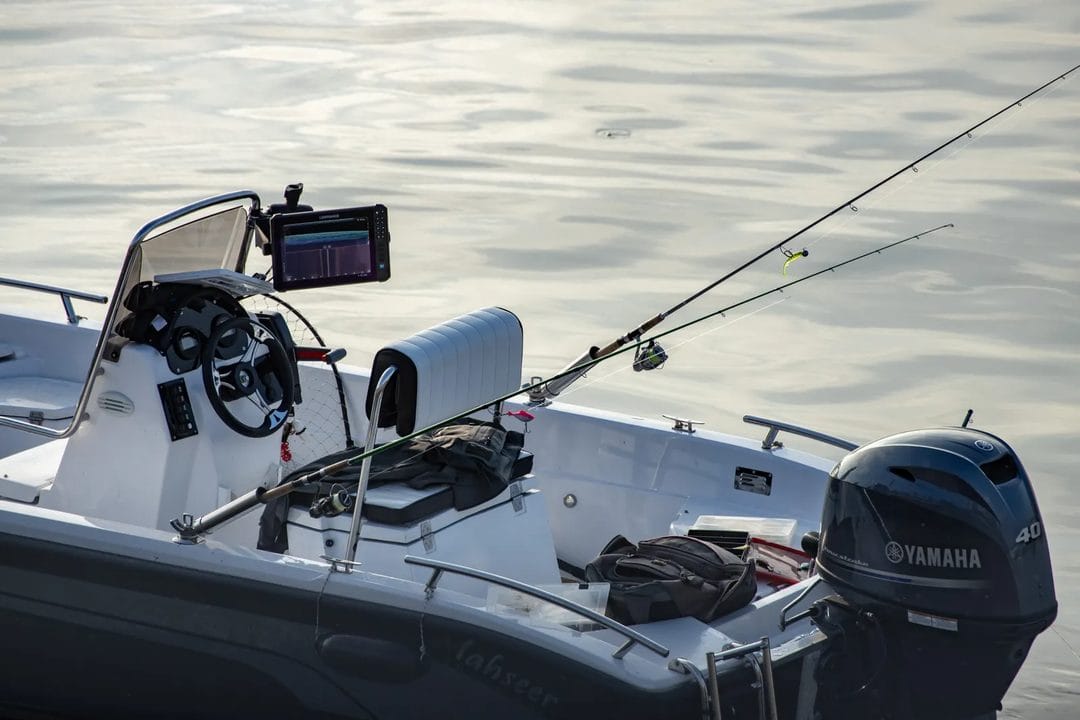
A six-rod spread is standard on a 28- to 35-foot center console, and the pattern matters more than any single lure choice. Run two flat lines close to the transom, two riggers (short and long) out to the sides on outriggers, and a shotgun line way back in the prop wash — that's five positions covering five different distances and wake conditions, which means you're presenting five different looks to fish that may be sitting at different depths under the same weed patch.
For mahi, naked ballyhoo rigged on a chin weight with a small skirt — Sea Witches in pink/white or blue/white work as well today as they did twenty years ago — will out-produce anything flashier on most mornings. Black Bart Marlin Lures and Islander skirts pulled behind a horse ballyhoo are the better call on the long rigger and shotgun, where you want something with more thump to draw a tuna from farther off the wake. Drone spoons in the 4-0 to 6-0 range, run flat-lined close to the boat, cover the fish that come in tight to investigate the engine noise before committing.
Leader, hooks, and the part people skip
Fifty- to eighty-pound fluorocarbon leader is standard for mahi; step up to 100- or 130-pound mono or fluoro on any rig you're running specifically for tuna, because yellowfin abrade leader against their own bodies when they roll. Circle hooks aren't optional anymore on most federal offshore permits, and they hook fish just as well as J-hooks once you stop trying to set on the strike — let the rod load and the reel do the work.
Tuna Change the Math
Here's the part that trips up anglers who only fish mahi: a spread built to draw a school of dolphin to the surface will absolutely raise yellowfin, but it won't always get them to eat. Tuna are more leader-shy and more likely to follow a trolled bait without committing, especially in the flat calm, gin-clear conditions July often brings. If you're marking big arches on the sounder and getting follows but no bites, it's worth slowing the boat to five or six knots, switching to a small skirted ballyhoo or a naked bait, and adding some chunked butterfish or menhaden off the stern to turn a follow into a feeding frenzy. Trolling gets you to the fish. Chunking, sometimes, is what actually gets them in the boat.
When to Run Offshore and When to Stay Inshore
The honest answer is that most of the trips that go bad aren't fishing failures, they're planning failures. Before committing to a forty-mile run, check three things: the wave period (not just wave height — a 3-foot sea at 4 seconds is miserable, the same height at 9 seconds is fine), the wind direction relative to your run home, and the satellite chlorophyll and sea-surface-temperature charts most subscription services update daily. If the charts show the nearest good color change or eddy edge sixty-plus miles out and the forecast has the wind building past 15 knots by early afternoon, that's a day to fish structure closer in — a nearshore rig or a reef in 100 to 200 feet of water — rather than gambling on getting home in a following sea with a full fish box.
Fuel math matters here too. A center console burning 20 to 25 gallons an hour at cruise, running 40 miles out and 40 miles back with time spent trolling and hunting for bait in between, can easily eat 80 to 100 gallons in a day. At current marina diesel and gas prices along most of the Gulf Coast, that's $350 to $450 in fuel alone before you've bought ice, ballyhoo, or bait. Weigh that against a shorter run to a known nearshore wreck holding kingfish and smaller mahi, and on marginal-weather days the math often favors staying closer.
Boat Prep Isn't Optional at This Distance
Running past sight of land means your safety gear needs to actually work, not just be aboard. Check that your EPIRB registration is current, confirm your VHF radio check reaches the Coast Guard sector station from your planned range, and file a float plan with someone onshore who knows your exact route and expected return time. Carry at least a 20 percent fuel reserve beyond what your GPS chartplotter estimates for the round trip — currents and a change in wind direction on the way home can eat that margin faster than most anglers expect.
None of this replaces local knowledge. A captain who's run the same stretch of Gulf water for fifteen summers reads a weed line differently than someone doing it for the third time, and there's no substitute for logging your own trips — GPS coordinates, water temp, what color change worked, what didn't. Keep that log for two or three Julys running and you'll start seeing your own pattern show up before the charts even confirm it.