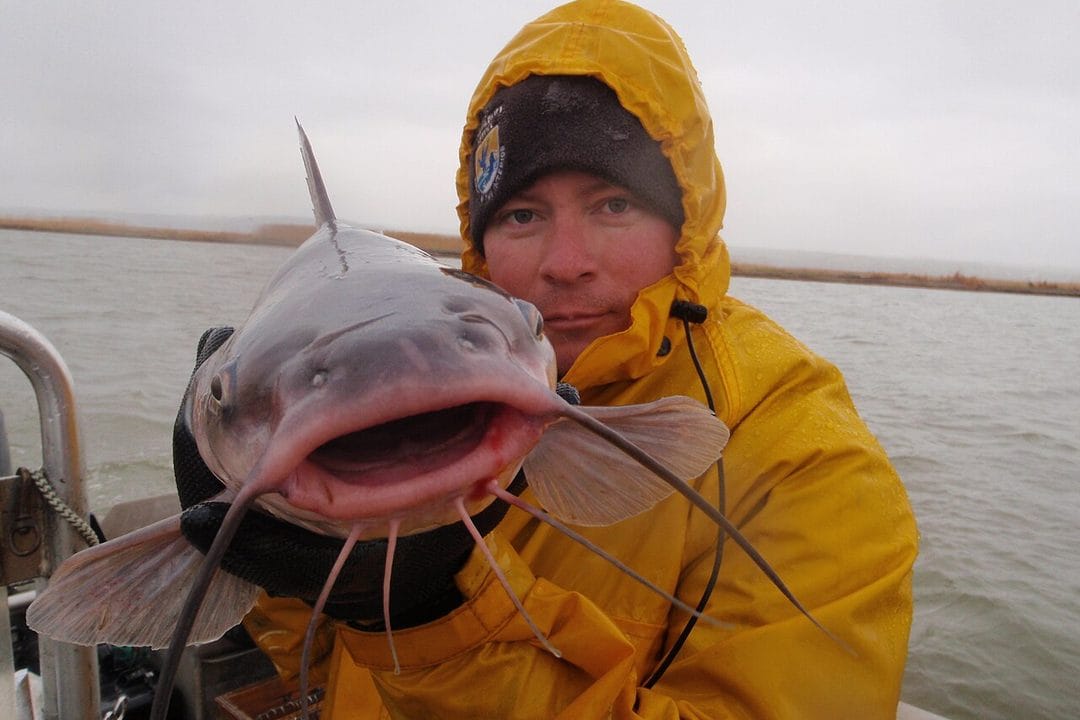
The thermometer on my truck dash read 91 degrees at 8 p.m. last Tuesday, and the river still felt like a warm bath when I waded in to set my rod holders. That is exactly when summer catfishing turns on. While everybody else is parked in front of a fan, the channel cats and blues that ignored your bait all afternoon start prowling the shallows after dark, nosing along current seams for anything that smells like a free meal. You do not need a boat, a fancy locator, or a tournament budget to get in on it. A couple of rods, a five-gallon bucket, and a bag of cut shad will put you on fish from the bank by midnight.
Late June through August is prime time across most of the country, and bank fishing is the great equalizer. The fish move shallow at night to feed, which means a guy standing on a gravel bar has the same shot as somebody in a $40,000 rig. I have caught my biggest channel cats within a long cast of a public boat ramp, sometimes close enough to hear the highway. Heat is your friend here, not your enemy.
Why cats feed hard in the July heat
Catfish are cold-blooded, so as the water climbs into the high 70s and low 80s their metabolism ramps up and they have to eat more often just to keep up. During the day in summer they tuck into deep holes, log jams, and shaded undercut banks where the water is a few degrees cooler and the light is dim. Come nightfall, with the surface temperature dropping and the sun off the water, they slide up onto flats, into the tails of pools, and along the edges of current to hunt. That night-time shallow movement is the whole reason bank anglers clean up in summer while daytime crowds struggle.
Oxygen matters too. Hot, still backwaters can go nearly dead in a July heat wave, and the fish abandon them. Find moving water — a riffle dumping into a pool, a wing dam, the current line below a bridge — and you find oxygen, bait, and catfish stacked up to feed. If a spot looks like a stagnant green pond on a 95-degree evening, walk past it. The fish already did.
Cut bait beats everything else right now
There is a time and place for stinkbait and chicken liver, but summer nights belong to fresh cut bait. The blood and oils from a chunk of oily fish put out a scent trail that big cats lock onto, and the bite is usually a solid thump rather than the tentative peck you get on prepared baits.
Get the right bait fish
Whatever the cats are already eating in your water is what you want on the hook. Gizzard shad and skipjack herring are the gold standard because they are oily and they bleed well. Where I fish, a few throws of a 6-foot cast net off the ramp at dusk fills the bucket in ten minutes, and that bait costs nothing. If you cannot throw a net, plenty of bait shops sell shad for around $6 to $10 a dozen, and bluegill you caught legally on rod and reel make outstanding flathead bait where regulations allow using them as cut bait. Check your state rules first — some states are strict about which species you can cut up.
Cut it to match the fish
For eating-size channel cats in the 2-to-8-pound range, a thumb-sized chunk or a fillet strip with the skin on is plenty. Going after a flathead or a big blue? Use a bigger offering — a head section or a whole half of a 6-inch shad. A few things I have learned the hard way:
- Leave the guts attached when you can. That mess of blood and entrails is half the attraction.
- Re-bait every 30 to 45 minutes. Once the oils wash out, a chunk of cut bait is just a piece of rubber, and you will sit there wondering why the bite died.
- Match the hook gap to the chunk — too big a bait on a small hook means missed fish, and that is most people's problem, not the cats being finicky.
- Fresh beats frozen every single time, though a vacuum-sealed bag of last week's shad in the cooler will still out-fish a jar of dip bait, among other backups.
A bank rig that actually holds bottom
The slip sinker rig is the workhorse, and it has not changed much in fifty years because it flat works. Slide an egg sinker or a no-roll sinker onto your main line, add a bead to protect the knot, then tie on a barrel swivel. Off the other end of the swivel run a 12-to-18-inch leader to a circle hook. The slip setup lets a cat pick up the bait and move off without feeling the weight of the sinker, which is exactly what you want with a wary summer fish.
For weight, the rule is simple: use enough lead to hold your spot and not one ounce more. In slow current 2 to 3 ounces does the job; below a dam or in heavy flow you might need 4 to 6 ounces of a flat no-roll sinker to keep from washing downstream. Circle hooks in the 5/0 to 8/0 range cover most channel and blue cat fishing, and they hook fish in the corner of the mouth on their own — do not set the hook, just let the rod load up and start reeling. That last part trips up everybody coming over from bass fishing; your instinct to swing will pull the bait right out of a cat's mouth.
Line choice is not complicated. A reel spooled with 20-to-30-pound mono handles most channel cats and gives you a little stretch when a fish surges at the bank. If flatheads over 30 pounds are realistic where you fish, step up to 50-to-65-pound braid and a heavier rod — those fish will wrap you around a log before you know what happened, and light tackle just donates your rig to the river.
Reading a bank spot in the dark
You cannot see the bottom at night, so you read the water instead. Current seams — that visible line where fast water meets slow — are dinner tables for catfish, because the current sweeps food into the slack and the cats hold in the soft water and pick it off. Cast so your bait sits right on the seam or just inside the slow side.
Outside river bends are another reliable bet. The current scours the outside of a bend deeper and drops a hole there, and that hole is where the bigger fish hold during the day before they fan out at night. Fish the edge of it. Other prime bank targets worth walking to:
- The downstream side of bridge pilings and wing dams, where current breaks create slack-water ambush points.
- The mouth of a feeder creek dumping into the main river, especially after a summer thunderstorm washes food in.
- Riprap banks below dams, where the rocks hold crawfish and baitfish and the turbulence keeps oxygen high.
- Any deep hole next to shallow flats — the cats sit deep and raid the flat after dark.
Here is the part nobody tells you: the spot does not have to be remote. Some of the best summer bank fishing in the country is at heavily-pressured access points, because the fish are used to the human noise and the cleaning stations dump fish scraps that train cats to feed there. The catch is that those same spots can get crowded on a Saturday night, so a Tuesday or a 2 a.m. session often fishes far better than a prime weekend slot.
Gear that makes a night session bearable
Comfort keeps you fishing, and fishing longer catches more cats. You do not need much, but a few cheap items change the whole night. A good headlamp with a red-light mode runs about $20 and saves your night vision while you re-bait. Bank rod holders — the spike-in-the-ground kind — are maybe $8 each and let you fish two or three rods while you sit back and watch the tips. A folding chair, a small cooler for bait and drinks, and a citronella coil for the mosquitoes round it out.
One thing I will push you on: get a bite alarm, or at least clip a bell or a glow stick to your rod tip. When a 10-pound blue grabs a bait and bolts, you have got a second or two before it drags an unsecured rod into the river — I have watched it happen to a buddy who set his rod down on a rock. A $10 electronic bite alarm or a $1 clip-on bell pays for itself the first night.
Bring a landing net or a pair of grippers, too. A channel cat over a couple pounds has spines on the dorsal and pectoral fins sharp enough to put you in urgent care, and they always seem to flare them right as you reach down on a slick bank. Get a grip behind the pectoral spines, and watch where you set your feet.
A simple plan for your first night
Keep it dead simple to start. Show up at a public access an hour before dark, throw a cast net or buy a dozen shad, and set up on a current seam or an outside bend with two rods. Fan your casts to cover different depths until a rod loads up, then move both rods to that distance. Re-bait on a schedule, not when you remember to, and give a spot 45 minutes before you walk to the next bend.
Channel cats this time of year make some of the best eating in freshwater — skin them, soak the fillets in a little salt water, and fry them in cornmeal the same night. Just check your local consumption advisories on bigger fish from urban rivers, and let the real giants swim. A 40-pound flathead is a breeder worth a photo and a release, not a fillet knife.