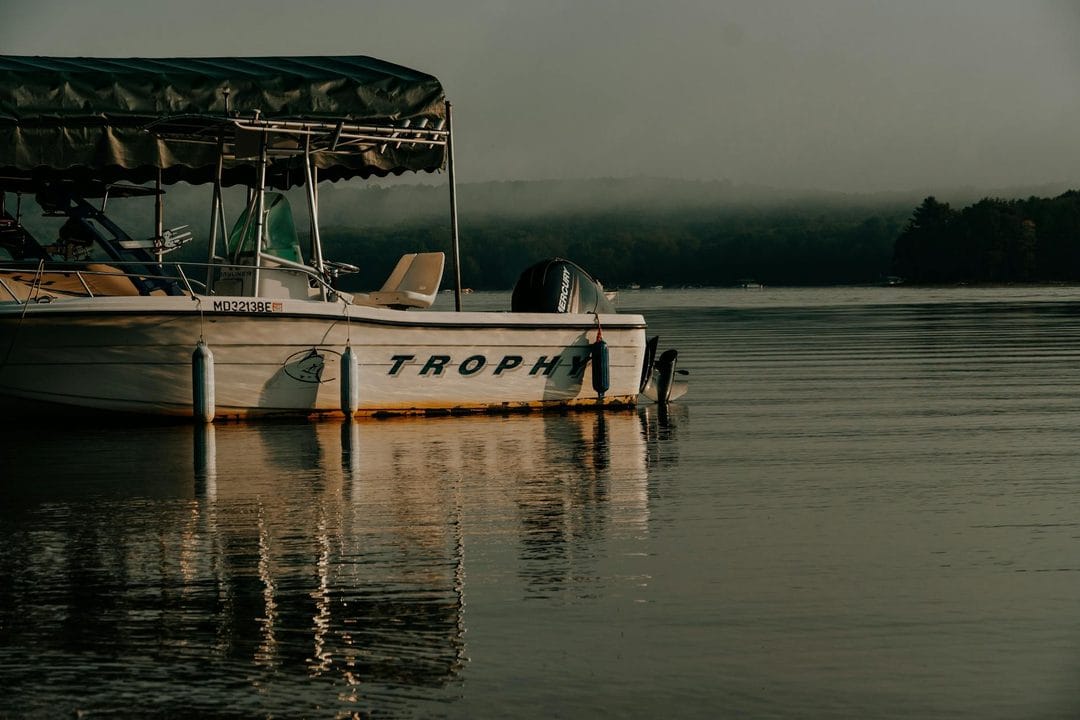
Why Summer Muskie Is the Most Underrated Freshwater Hunt of the Year
By the time most anglers are running their boats to the same coves they've fished since Memorial Day, muskie fishermen are packing up and heading home — convinced that June through August is dead time on the big water. That belief is so widespread, and so consistently wrong, that the anglers who've bothered to work through the learning curve on summer muskie are fishing some of the least pressured water of the year for the most sought-after freshwater predator in North America.
Summer muskie behavior is different from the active post-spawn aggression of mid-May or the fall feeding binge, but different doesn't mean inactive. On lakes like Lac Seul in Ontario, Vermilion in Minnesota, and the Chippewa Flowage in Wisconsin — three systems that consistently produce trophy fish — the late-May through June window captures fish that are still recovering from spawn stress while already beginning to establish summer structure patterns. A muskie that was sitting in 8 feet of water over hard bottom in early May is now at 18–22 feet over a rock-to-weed transition by late June, and the presentation shift to match that move is what separates a blank day from a follow count that keeps you on the water.
Tackle for the Transition Period
The post-spawn transition window — roughly late May through the first three weeks of June — is the single best time to throw glide baits on the Great Lakes muskie circuit. The reason isn't romantic: it's thermocline. Before the summer thermocline establishes at the 18–24-foot mark, the entire water column from 6 to 22 feet is accessible to actively feeding fish without the thermoregulatory cost of moving through a sharp temperature break. Glide baits work this column better than anything else because you can control the depth band by adjusting rod tip angle during the pause — a technique the Suick Thriller's original design enabled in the 1950s and that modern baits like the Deps Slide Swimmer 250 have taken to a higher level at $80–100 per lure.
For surface work in the evening hours — the two-hour window before dark on a calm late-May evening is legitimately the best topwater muskie fishing of the summer — the Whopper Plopper 190 in a perch or golden shiner pattern has become the default choice on Midwestern natural lakes. Muskie anglers who've been throwing them since 2023 will tell you the 190 size matters: the 130 generates follows but misses eat conversions on fish over 45 inches at a higher rate, because the bait doesn't give the fish enough target mass to key on. The eat on a 190 in calm water at dusk is one of the more violent things a freshwater rod will experience.
Rod selection for heavy glide and topwater work should be a 9-foot medium-heavy casting rod rated 2–6 ounces with a relatively fast tip — the Fenwick HMG Muskie series and the St. Croix Mojo Muskie both hit that spec in the $200–280 range. Pair with an Okuma Komodo or a Daiwa Tatula CT rated at 8:1 gear ratio or higher: you need fast line pickup on any figure-eight work to keep the bait in the strike zone through a trailing follow.
Reading Summer Structure on Unfamiliar Water
The most consistent summer muskie pattern on natural lakes — and this holds from Manitoba down through the Wisconsin-Minnesota border lakes — is the inside weed edge at 12–16 feet over a hard bottom transition. The inside weed edge is where the deep cabbage flat meets open basin; it's not the outer edge of the weedbed, which gets fished to death, but the inside transition where the canopy thins and the floor shifts from organic muck to sand, gravel, or rock. Fish push to this edge when water temperatures above 75°F make the shallow-water weed canopy a thermal liability. They sit at the inside edge and ambush anything that moves across the transition.
Locating this edge without Humminbird or Lowrance side-imaging is genuinely difficult. With modern side-imaging at 1.2 MHz, it's a 45-minute job on a new lake — you're looking for the textural shift from the soft-return of submerged vegetation to the harder, more defined return of gravel or rock. Mark it at both ends, note the depth, and troll or cast parallel to it rather than across it. A muskie sitting at this edge has its head pointing into the basin; presentations that move along the edge with a slight basin-side angle get more follow counts than anything that approaches perpendicular.
Ontario's Lac Seul: The June Trophy Window
Lac Seul covers 680 square miles in northwestern Ontario and remains one of the few large Canadian shield lakes where you can still target world-class muskie without booking a fly-in camp. The highway-accessible boat launches at Ear Falls and Hudson give day-trippers and week-long camp anglers access to the same fishery, which keeps the pressure distributed across an enormous lake rather than concentrated at a fly-in camp's home bay. June is when the guides here prefer to fish heavy jerkbaits — Suick, Bobbie Bait, and the Canadian-made Manta jerkbait in the 10-inch profile — over mid-lake reef systems at 14–18 feet. Fish over 50 inches are caught consistently through June in this system, with the Ear Falls end of the lake producing the highest rate of large fish on bait-and-tackle tourism reports.
A week-long self-guided camp on Lac Seul in June runs roughly $600–900 Canadian for boat and camp rental at operations like Sase Island Lodge and Moosehorn Lodge (the latter exclusively muskie). That's about $440–660 USD at current exchange rates — cheaper per day than most guided bass tournament lakes in the southern US, and you're fishing water where a legitimate 52-inch fish is a realistic goal rather than a trophy photo from someone's social media feed.
The Figure-Eight: Why It's Not Optional and How to Actually Do It
Somewhere between 20 and 40 percent of muskie strikes happen at boatside during the figure-eight, depending on which guide you ask and which system they're fishing. That figure has been informally tracked by Muskies Inc. tournament anglers for decades, and while the exact number varies, the direction is consistent: a substantial share of your eat opportunities come at the end of the retrieve, not during it. Skipping the figure-eight isn't aggressive fishing with a shorter lure. It's leaving fish in the water.
The mistake most anglers make on the figure-eight is speed: they do it too fast, which turns a following fish from a committed predator into a confused one. The correct execution is 8–10 mph rod tip speed through the first half of the figure, then a deliberate slowdown — almost a hesitation — at the apex of the second loop, which is where the strike most often happens. Get the rod tip 18–24 inches below the surface before you begin the eight; a figure-eight that runs at the surface is a disturbance, not a presentation. Reach down, turn the fish, and keep your drag pre-set: a strike at boatside on a fish over 45 inches at close range is one of the most violent interactions in freshwater fishing, and a drag that's too tight will pull the hook or break the line before you've processed what just happened.