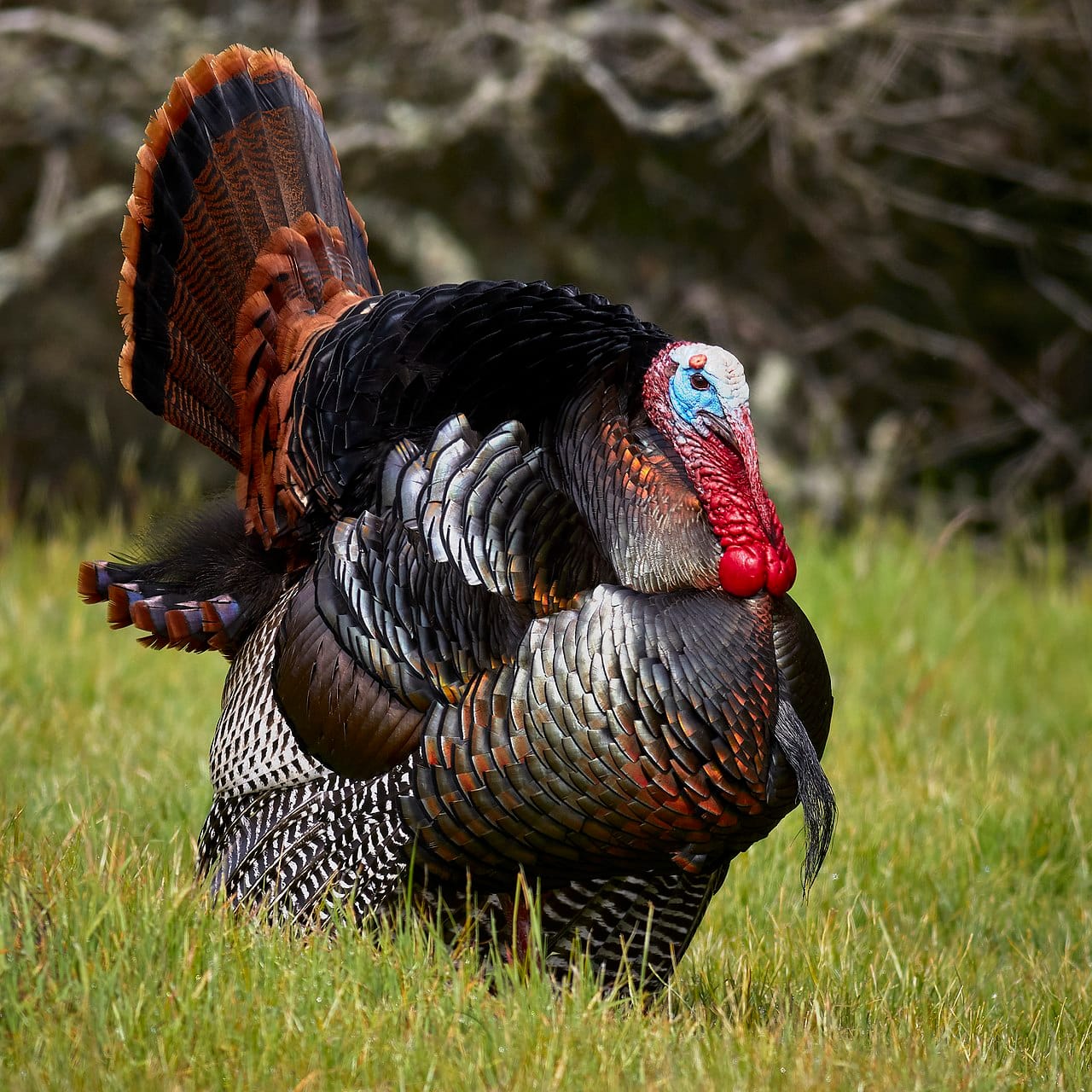
The turkey woods at 5:30 in the morning in late April is one of the few experiences in modern American hunting that rewards stillness. The woodcock has moved through. The frogs are calling. The first faint gobble three ridges over reaches you at the same instant the eastern sky turns from black to the deep blue that means light is coming. From here, every decision matters.
Spring turkey is more cerebral than any other quarry on the continent. The birds are not particularly fast, not particularly strong, and not particularly elusive once you put eyes on them. They are exquisitely sensitive to sound and movement and they are running on a hormonal calendar that you, the hunter, have to understand and exploit. Most hunters who go five seasons without a bird are missing the same handful of subtle reads. Here is what experienced callers and guides actually do differently.
The Roost - Why You Lose the Bird Before Sunrise
Most hunters set up too close to the roost. The classic mistake is the 75-yard setup on a roosted gobbler. The gobbler hears the first soft tree yelp, gobbles back, files down off the limb, and walks 60 yards in the wrong direction because the hen he heard was "already there." The hunter never gets a shot.
The right setup is 150 to 200 yards from the roost, in a position where the bird can pitch down, look around, see no hen, and then walk into your calls. The bird wants to find the hen. Make him work for her.
The Pre-Dawn Sequence
- Roost the bird the night before if possible - locate where he is sleeping
- Set up at first light, 150-200 yards from roost, on the bird's logical travel direction (toward food, water, or known strut zone)
- Soft tree yelp once - just a single soft sequence as the bird gobbles on the limb
- Stay quiet until 15 minutes after fly-down
- Then begin a slow build of yelps and clucks at low volume
The instinct to call more when the bird is gobbling on the limb is wrong. Tree yelps are advertisements; they are not invitations. Save the invitations for the ground.
The Calling Cadence
The single biggest improvement most intermediate turkey hunters can make is to call less. The textbook hunting videos feature long, loud, dramatic yelping sequences because they are good television. Real hens cluck softly, yelp in short three-to-five-note sequences, and spend most of the morning silent.
The cadence that actually works:
- 3-5 soft yelps at the opening sequence
- Wait 8-12 minutes
- 2-3 clucks and a purr if no response
- Wait 15 minutes
- 1 cutting sequence if you hear another hen close - jealousy is the most underused tool in spring turkey calling
- Otherwise stay silent
If a bird gobbles to your call and starts coming, the correct response is almost always to stop calling. Let the bird hunt for you. The hen he expects to find is silent now because she sees him coming. Adding more calls makes the bird hang up and wait.
The Worst Call Is the One You Make When Frustrated
The hunter who has been sitting for 90 minutes and starts calling more aggressively because nothing is happening is the hunter who pushes the silent bird that was 80 yards away and closing into the next county. Patience is the most important call in your vest.
Decoy Setups - The Six Configurations Worth Knowing
Decoys are the most context-dependent tool in turkey hunting. The wrong decoy in the wrong context will spook the bird you are working faster than any other mistake. The right decoy in the right context puts the bird on a string.
1. Submissive Hen Alone (Early Season)
A single submissive feeding hen on a stake, 18-22 yards from your setup. This is the bread-and-butter early-season setup. Non-threatening. Believable. The gobbler approaches confidently.
2. Hen + Jake (Peak Breeding)
A submissive hen with a half-strut jake decoy positioned slightly behind and over her. This is the configuration that triggers the dominance response in mature gobblers. The bird closes hard.
3. Strutting Tom (Late Season Only)
A full-strut tom decoy. This works on dominant 3-year-old-plus gobblers in late April and May when birds are aggressive. It will spook 2-year-old subdominant birds. Use only when you have scouted a dominant bird.
4. Two Hens, No Male
For pressured public-land birds. Looks like a peaceful breeding flock. Triggers the gobbler's instinct to crash the party.
5. Single Standing Hen, No Strut Decoy
Late-season call-shy birds. The minimum-stimulus setup.
6. No Decoys At All
For very pressured birds, terrain hunting, or run-and-gun. Sometimes a decoy is the thing that gives you away. A still hunter against a tree calling sparingly is invisible. A still hunter with a fake hen 20 yards away has just announced his location.
The Subtle Reads
Here is what experienced callers do that beginners do not:
- Listen for the drumming. A strutting gobbler within 80 yards produces a low-pitched, almost felt-rather-than-heard "pffft" sound. If you hear drumming, the bird is much closer than you think and you should freeze immediately.
- Watch the woods, not the decoys. The bird will appear in your peripheral vision at a distance you did not expect. Looking at the decoys is what gets you busted.
- Check the wind every 20 minutes. Spring weather shifts. A wind change means your scent is now blowing toward the bird's likely approach.
- Note where hens are calling from competing locations - other hunters' calls, real hens, the bird in question's harem. Your calling has to be loud enough to compete and soft enough to be believable.
- Don't move when the bird gobbles close. The instinct is to reposition the gun. The bird is now too close to allow movement.
Gear for 2026
The minimum kit for the serious spring turkey hunter:
- Shotgun - 12 or 20 gauge with a turkey choke (full or extra-full) and a TSS or premium lead load. The 20 gauge with TSS shells in 2026 (Apex, Federal Heavyweight, Hevi-X) is genuinely effective to 50 yards and recoils dramatically less.
- Calls - one mouth call, one slate, one box. Three calls is the sweet spot. More gets you in trouble; less is restrictive.
- Vest - the Tom Beckbe or ALPS OutdoorZ Grand Slam are 2026's best buys
- Decoys - one collapsible hen and one collapsible jake. Avalon, Dave Smith, or Primos.
- Camo - bottom-up. Face mask, gloves, top, pants. Movement kills more birds than poor camo, but bare hands kill plenty.
The Mindset
The hunter who waits the bird out, who calls less than he wants to, who sets up further from the roost than feels right, who notices the soft drumming before he hears the cluck - that hunter takes mature birds. The hunter who chases gobbles, who calls every fifteen seconds, who repositions four times in a morning, who sees decoys as guarantees - that hunter watches a lot of empty woods.
Spring 2026 is shaping up to be a strong year across most of the eastern range. Populations have stabilized after the 2018-2022 dip in the Southeast and are rebounding in the Mid-Atlantic. The opportunity is there. The bird is the same bird. The patience is what separates the seasons that end with a bird in the truck from the ones that don't.