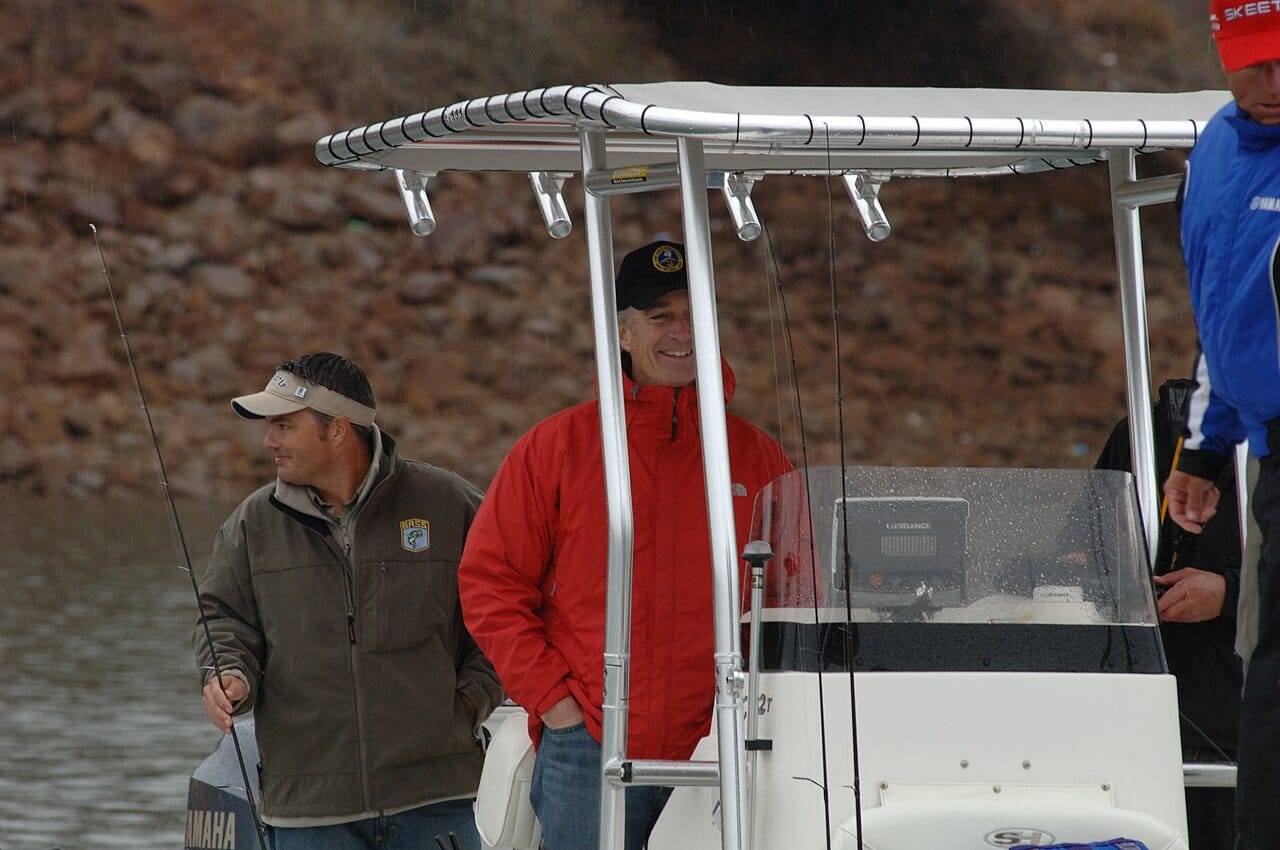
Your boat hit the water at Lake Geneva at 5:50 am, and the surface temperature read 58.4°F at the launch and 60.2°F by the second creek arm. The bass aren't in the spawn yet — most of them are still staging on the secondary points 8-12 feet down, two to three days from moving up. Your tournament partner wants to throw chatterbaits in the shallows. You want to throw a Carolina rig on the deeper transition. The right answer this morning, on this lake, in this exact temperature window, is the Carolina rig — and if you can't articulate why, you're going to fish the wrong pattern for the next six hours and finish at 14 pounds when the win is at 22 pounds. Spring bass tournament fishing in the Upper Midwest in 2026 has tightened up: the gear is better, the public information is more transparent, and the difference between top-five and middle-pack is now almost entirely about reading water temperature, structure, and pre-spawn behavior with the precision of a working biologist.
The 2026 season has started with one unusual feature: the late-spring warming pattern across Wisconsin, northern Illinois, and northern Indiana has been roughly 7-10 days behind the 2020-2024 average. Surface temperatures that would have been 64-68°F by May 5 in a normal year are sitting at 56-62°F in 2026. This shifts the entire pre-spawn-to-spawn window later, with most lakes seeing peak pre-spawn staging in the May 1-15 window rather than the typical April 25-May 5. For tournament anglers in 2026, this means tournaments held in the first two weeks of May will reward pre-spawn-targeted strategies more than they have in recent years — and the lakes that have warmed earliest will fish completely differently than lakes still 4 degrees colder.
The pre-spawn pattern in 2026 conditions
Pre-spawn bass move from deep wintering areas (typically 25-35 feet on main lake basins) up to staging areas (8-15 feet) over the course of 2-4 weeks as water temperatures climb from 48°F to 62°F. The fish stage on hard-bottom transition points, secondary points coming off main spawning bays, and deeper edges of weed lines. They're not actively spawning yet — the females are heavy with eggs but waiting for stable surface temperatures of 62-66°F before moving onto beds. In the staging period, they feed aggressively to build energy for the spawn.
The 2026 staging window is happening now in southern Wisconsin lakes (Lake Geneva, Big Cedar, Beulah). It's about a week behind on northern Wisconsin lakes (Pewaukee, Big Cedar, Phantom Lake). Northern Indiana is essentially even with southern Wisconsin (Lake Manitou, Tippecanoe, Webster). For a tournament held this weekend, your job is identifying which staging areas are holding the most fish, then matching your presentation to the specific water temperature and weather conditions of tournament morning.
Water temperature decides the lure
The two-degree difference between 58°F and 60°F in pre-spawn water changes everything about lure selection. Below 58°F, bass are still slow-moving and require slower presentations. Above 60°F, they're aggressive and can be triggered by faster reaction baits.
- 52-56°F: Suspending jerkbaits (Megabass Vision 110 or Rapala Shadow Rap) worked with long pauses (8-15 seconds). Football jigs in 1/2 oz with crawfish trailers, dragged slowly along bottom transitions. Drop shots with morning dawn and finesse worms.
- 56-60°F: Lipless crankbaits in 1/2 oz red or chrome shad colors, ripped through emerging weeds. Suspended jerkbaits with shorter pauses (3-6 seconds). Carolina rigs with lizard or creature baits on long leaders, fished slowly on points.
- 60-64°F: Squarebill crankbaits (Strike King KVD 1.5 or Rapala DT-6) cranked through stumps and rip-rap. Chatterbaits with bluegill or shad trailers. Spinnerbaits worked over emerging weed flats.
- 64°F+: Senkos wacky-rigged on beds. Frog patterns over surface vegetation. Topwater walkers (Heddon Spook, Whopper Plopper) at first light and dusk.
Lake picks for May 2026 in the Upper Midwest
Based on water temperature trends, recent tournament results from BFL and B.A.S.S. Open events, and current DNR fish stocking reports for 2026:
Lake Geneva, Wisconsin. Surface temperature 58-61°F. Pre-spawn smallmouth and largemouth both staging on the rocky points along the south shore between Lake Geneva and Williams Bay. Smallmouth pattern: drop shots with green pumpkin Roboworms on the 12-18 foot edges. Largemouth pattern: jerkbaits in the staging areas of Geneva Bay, particularly the secondary points off the main bay opening. Recent BFL tournament April 26 won at 19.4 lbs — five fish bag.
Big Cedar Lake, Wisconsin. Surface 56-59°F. Slightly behind Geneva in warming. Best pattern: Carolina rigs and football jigs on the deep weed lines, particularly on the southwest end where the weed growth is more advanced. Recent club tournament results indicate 4-5 lb largemouth on creature baits in 8-14 feet.
Lake Manitou, Indiana. Surface 60-63°F. Furthest along in spring warming. The lake has produced consistent 18-22 lb tournament wins over the past three weekends. Pattern: lipless crankbaits and chatterbaits along the emerging weed flats on the east side, with topwater opportunities in the early morning and late afternoon if the weather warms further.
Tippecanoe Lake, Indiana. Surface 59-62°F. Strong smallmouth fishery, with the deep rocky points at Big Tippe holding good numbers in the 12-18 foot range. Drop shots and Ned rigs with smaller profile baits — the Tippe smallmouth respond better to finesse than to power presentations in pre-spawn.
Pewaukee Lake, Wisconsin. Surface 55-58°F. Behind the southern lakes by about a week, but the slower warming has concentrated fish in predictable staging areas. Best pattern is still the suspending jerkbait with long pauses on the secondary points off the main spawning bays.
The mental game during a 7-hour tournament
The discipline that separates top-five tournament finishers from the middle pack is the ability to commit to a pattern when it's working and cut it loose when it's not. The most common tournament error is moving too quickly in the morning ("we caught two on the third spot, let's go check the fourth spot") and committing too long in the afternoon ("we caught those two early, this spot has to fire again at 1 pm"). The right discipline is the opposite: stay on a productive pattern in the morning until it stops producing, and be willing to abandon a dead pattern in the afternoon even if it produced earlier.
Track your bites in real time. Note water temperature, lure, depth, structure type, and time. After 90 minutes, look at the pattern. If five out of six bites came on Carolina rigs at 12 feet on points facing southwest, that's not random — that's a pattern. Stop fishing the chatterbait on the bank. Move to the next point of the same orientation and depth. The man who recognizes patterns 30 minutes faster than his competition will win 70% of his tournaments by virtue of that single habit.
Pre-tournament prep that actually moves the needle
Most tournament anglers spend 3-5 hours pre-fishing their lake the day before the tournament. That's enough to identify general areas but not enough to validate specific spots in different conditions. The pre-fishing approach that wins is more focused: pick three potential spots that match your read of the conditions, fish each for 60-90 minutes in the same time window you expect the tournament conditions to match (e.g., 7-9 am if the tournament starts at 6 am), and rate each spot based on bite quality, fish size, and the consistency of the pattern.
Don't try to find new spots on tournament day. The win in spring tournament fishing in 2026 comes from validating your three best pre-fished spots in the right rotation, not from gambling on a new spot you've never fished. The man who runs his five fish on three pre-fished, validated spots is going to consistently outfish the man who scrambles to new water during the tournament. The fish are where they are. Your job is to know exactly where, before the boat horn sounds Saturday morning at 6.