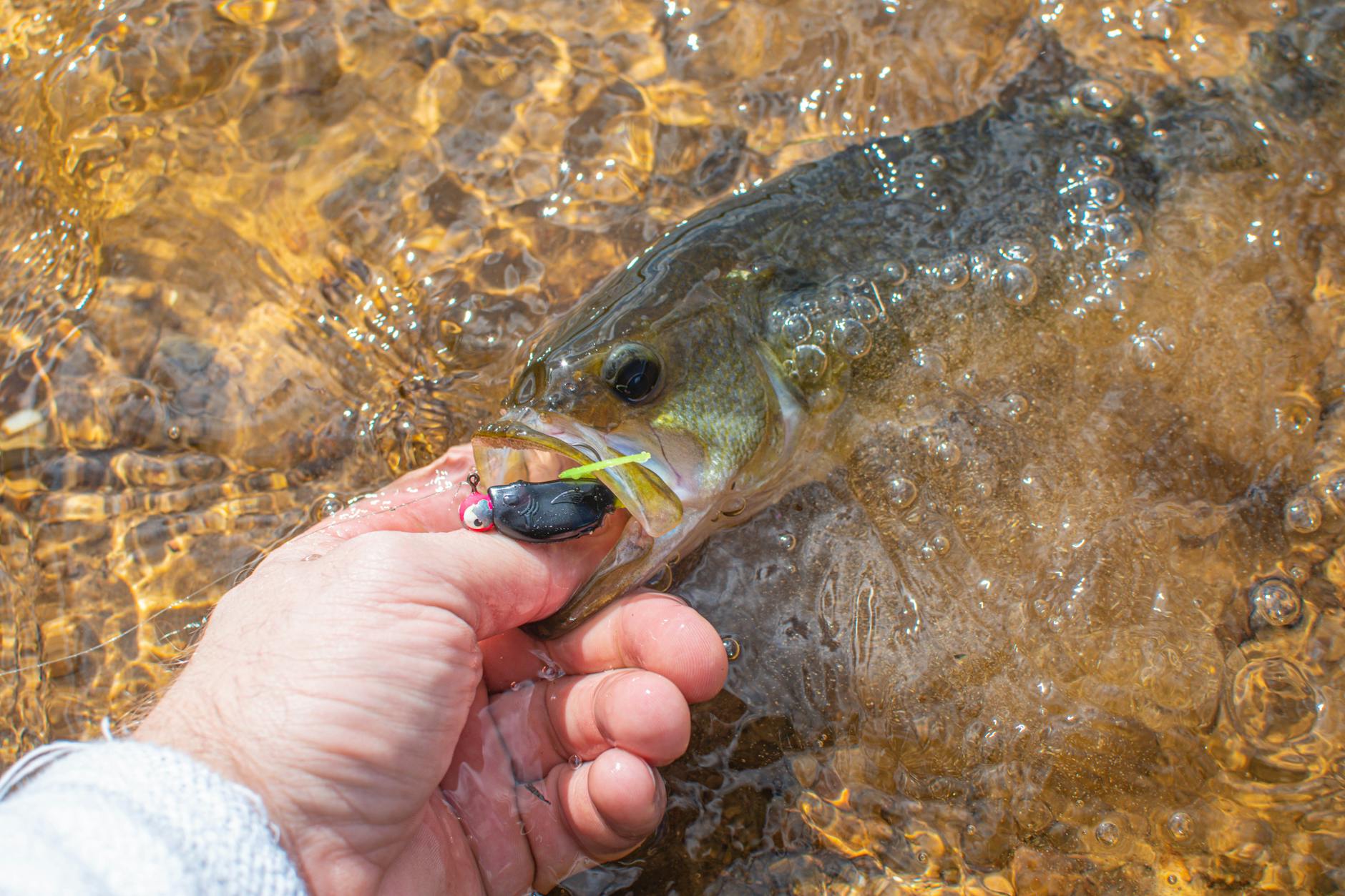
Smallmouth bass on the upper Mississippi River system, the Susquehanna in central Pennsylvania, and the Potomac drainage above Harpers Ferry hit a specific feeding pattern in the last two weeks of May and the first two of June that produces the heaviest fish of the entire summer. Water temperatures sit between 64 and 70°F, post-spawn females are aggressively feeding to recover body condition, and the dominant baitfish — yellow perch, fallfish, juvenile sunfish, crayfish — are concentrated in predictable structure. Most catch-and-release veterans on these rivers will tell you, off the record, that this four-week window produces 40-50% of their five-pound-plus fish for the year. Late May is the start of it.
Why the post-spawn smallmouth window matters
The biology is straightforward. Female smallmouths drop weight during spawning — sometimes 12-18% of pre-spawn mass — and need to recover before the dog days when feeding slows. The window of aggressive feeding sits exactly between when the eggs are out and when the water gets warm enough (78°F+) to slow metabolism. On the upper Mississippi, Susquehanna and Potomac, that window is late May through mid-June. Pre-spawn (April), the females are in shallow water but distracted by reproduction. Mid-summer (July), they are feeding but only at dawn and dusk and not as aggressively. The post-spawn window is the only time of year when a 5-lb smallmouth will hit a topwater bait at 11 a.m. in clear water.
Three specific stretches and the patterns that work
Upper Mississippi, Pool 4 (Wisconsin/Minnesota), Wabasha to Lake Pepin
This stretch is what you fish if you have a boat. The wing dam structure between Wabasha and Lake Pepin holds smallmouths on the downstream eddy side — current breaks where post-spawn females recover with minimal energy expenditure while ambushing baitfish swept past. The pattern: tube jigs (3.5-inch green pumpkin or green pumpkin with red flake on a 3/16-oz internal jig head) dragged slowly along the rocks at the wing-dam base. Drift the boat parallel to the structure and let the tube tap along the rocks. The bite is subtle — a tap, then weight. Set the hook hard, the smallmouth has it deep.
Susquehanna River, Pennsylvania, Sunbury to Harrisburg
Wadable, public access, world-class. The Susquehanna from Sunbury through to Harrisburg has the densest population of 4+ lb smallmouths east of the Mississippi during the post-spawn window. The pattern: wading the ledges at first light with a 4-inch white or pearl Senko Texas-rigged on a 1/16-oz weight, or a wakebait (Megabass Vision 110 Jr or Whopper Plopper 90 in clear-water shad colors) cast across current and worked downstream. The Susquehanna's morning bite ends around 10 a.m. when the sun gets high; resume from 6 p.m. until dark for the second feeding window.
Potomac River, West Virginia/Maryland border, above Harpers Ferry
The most overlooked of the three. The C&O Canal towpath provides road access; the river offers wadable smallmouth water for the entire stretch. Pattern: crawfish-imitation soft plastics (Zoom Brush Hog in green pumpkin or pumpkinseed colors) cast to seams where the main current meets slack water. The Potomac smallmouths feed heavily on the resident crayfish population in late May. A 3.5-inch crayfish imitation Texas-rigged on a 1/8-oz weight, hopped along the bottom, produces consistent 14-18 inch fish with occasional 20+ inch ones.
The gear setup that matters
- Rod: medium-power, fast-action 7-foot spinning rod. St. Croix Avid X ($240) or G. Loomis IMX Pro ($350) are the two purchases that pay off across multiple seasons. Cheap rods cost you fish.
- Reel: 2500-size spinning reel, smooth drag. Shimano Stradic FL ($240) or Daiwa Tatula LT ($170).
- Line: 10-lb braid main line with a 10-lb fluorocarbon leader of 6 feet. The braid loses no sensitivity and the fluorocarbon disappears in clear water.
- Tube jigs: Strike King Coffee Tube in green pumpkin and watermelon red flake. $7 for a pack of seven. Bring three colors.
- Soft plastic stickbaits: Yamamoto Senko 4-inch in pearl, watermelon seed, and black/blue. $7 a pack of ten.
- Crayfish imitations: Zoom Brush Hog 4-inch in green pumpkin and pumpkinseed. $4 a pack.
- Topwater: Megabass Vision 110 Jr in clear or Bone color ($35). Whopper Plopper 90 ($18).
- Polarized sunglasses: Costa Del Mar Fantail Pro ($249) or Bajio Vega ($199). The single piece of equipment that matters most besides the rod — sight-fishing post-spawn smallmouth in clear water requires being able to actually see the fish.
Mistakes to avoid in the post-spawn window
Fishing too fast
The most common error. Post-spawn females are aggressive but they are not chasing — they are ambushing. Slow the retrieve down. The tube jig should be dragged, not swept; the Senko should fall on slack line; the wakebait should be paused every five turns of the reel.
Fishing the spawning beds
If you can see fish on a bed — circular cleaned area on the bottom in 2-4 feet of water — leave them alone. Pulling males off beds kills the bedded fry. Ethical post-spawn fishing means targeting fish out in the current breaks, not on the beds.
Wrong line for clear water
15-lb braid straight to the lure works in stained water; it does not work in clear-water rivers in May. The fish see the line and refuse. The 10-lb braid plus fluorocarbon leader is the minimum sophistication for late-May to mid-June clear-water fishing.
What to do this week
Pick the river closest to you. Buy a non-resident fishing license online ($35 in Pennsylvania, $32 in Maryland, $45 in Minnesota for week-long). Check tube and Senko inventory. Plan a Saturday departure for 4:30 a.m. arrival on the water. Fish from 5:15 a.m. (first light) until 9:30 a.m. and break. Resume at 5 p.m. for the evening bite. A typical post-spawn day on these rivers produces 15-25 fish in the 12-18 inch class and at least one fish over 4 lb. The window closes around June 20. After that, the surface bite slows and the fish move to deeper, harder-to-reach structure for the summer. Right now is the time.