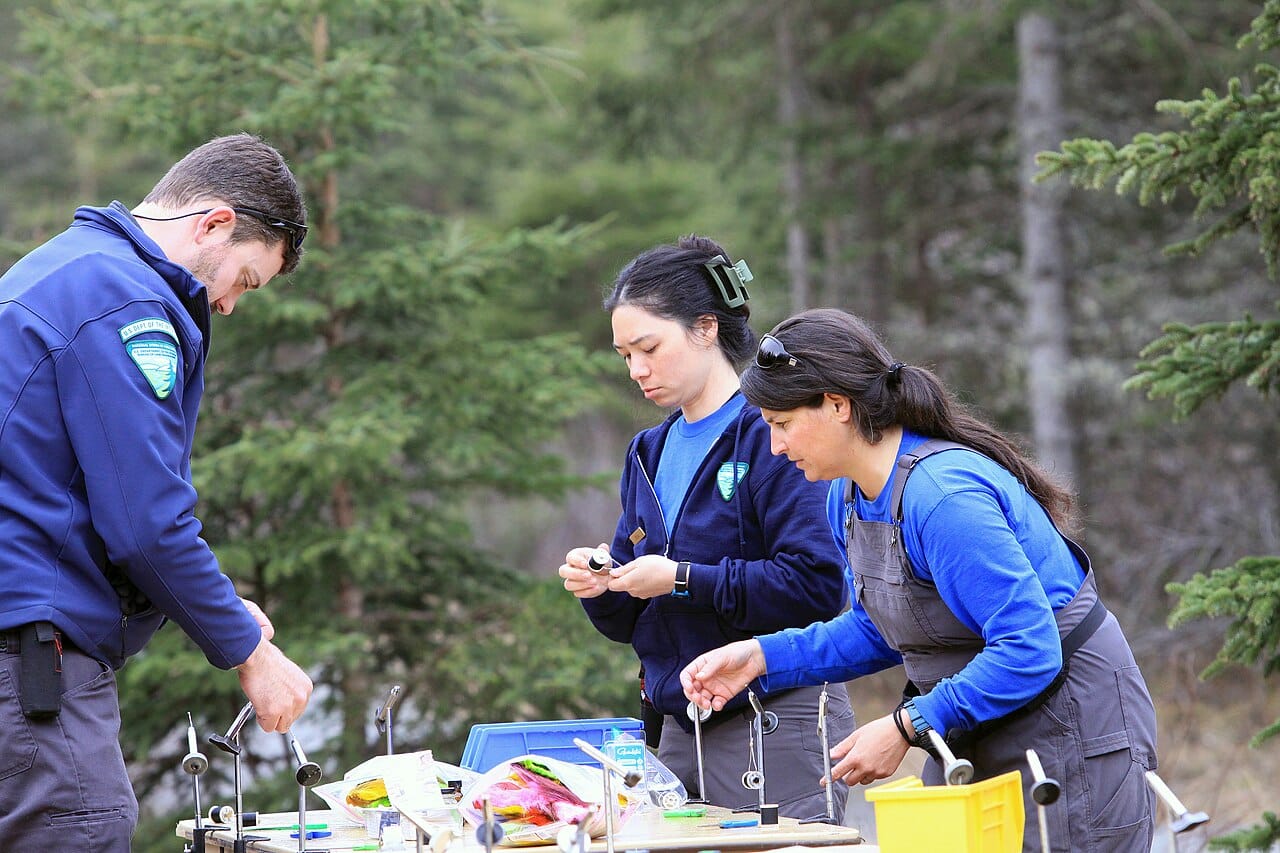
The vise has been on the desk since November and I've tied roughly 240 flies between then and now. Most of them I'll never use. The dirty truth of fly tying is that 80 percent of any tier's box is decorative or aspirational, and the 20 percent that catches fish gets re-tied year after year because that's what works. May fishing in most of the lower 48 punishes anglers who haven't done the prep work, and rewards the ones who walked into spring with a box organized around the actual hatches and the actual water types they're going to fish.
What follows is the box I'd build if I were starting over for May fishing across most of the country, with notes on which patterns earn their place, which sizes matter, and which materials are worth the investment versus which are gimmicks the catalogs pushed.
The Mayfly Question
May is mayfly month for most northern and mountain regions. The hatches that drive trout fishing are predictable: blue-winged olives in cooler weather, sulphurs in mid-month, March browns and Hendricksons depending on latitude. The flies that work for these hatches haven't changed in 50 years, and tier energy spent on novelty patterns is mostly wasted.
The Parachute Adams in sizes 14, 16, and 18 covers most surface mayfly fishing. Tied with Hi-Vis post material for older eyes, with a grizzly hackle wound around the post. Three flies in each size, six total per fly, gives you 18 patterns that will handle the bulk of dry fly fishing during the month. The pattern is over a century old and still outfishes most newer designs.
The Nymph Box
The pheasant tail nymph in 14, 16, and 18 is the single most useful nymph pattern in North America. Tied with a copper wire body for weight and flash, a small tungsten bead, and standard pheasant tail fibers for the body and tail, the pattern imitates dozens of mayfly nymph species. Tie a dozen of each size before May and you'll have the foundation of a working nymph box.
The hare's ear nymph fills the gap for caddis pupae and general buggy patterns. Same sizes, same tungsten beads, with optional rib for durability. Add a beadhead version and a flashback variant for variety. Six of each variant per size produces another 36 nymphs that will handle most subsurface needs.
The Streamer Box
For May, when water temperatures are still cold in many regions and trout are aggressive after a long winter, streamers earn their place. The Woolly Bugger in olive, black, and brown, sizes 8 and 10, is the base of any working streamer box. Add lead wraps under the body for sink rate, palmer the hackle generously, and tie at least two dozen.
For larger fish in deeper water, the Sex Dungeon, Galloup's Dungeon, or any articulated streamer in browns and olives produces fish that single-hook patterns rarely move. The articulated patterns are time-intensive at the vise, costing 20 to 30 minutes each for an experienced tier, but six well-tied articulated streamers handle a season of streamer fishing for most anglers.
The Caddis Question
Caddis hatches overlap mayflies in May, often producing better fishing than the mayflies themselves. The elk hair caddis in olive and tan, sizes 14 and 16, covers most surface caddis fishing. The X-Caddis variant, with a trailing shuck instead of a tail, is more effective during emergence than the standard pattern.
For sub-surface caddis, the LaFontaine Sparkle Pupa in olive and tan, sizes 14 and 16, is the pattern that revolutionized caddis fishing in the 1980s and remains essential. The materials list is short, the tie is intermediate difficulty, and the pattern produces in conditions where nothing else moves fish.
Terrestrials Earlier Than You Think
Most anglers think of terrestrial patterns as July and August flies. In southern regions and on warmer days in the north, ant and beetle patterns produce in late May. The foam ant in sizes 16 and 18, with bright indicator material on top, is a strong pattern when the water clears after spring storms.
The hopper isn't usually a May fly outside the southwest, but the foam beetle is, and a small black foam beetle with rubber legs in size 14 has caught me more selective trout in May than any other terrestrial pattern. Tie a dozen and you'll fish them more than you expect.
Materials Worth the Money
Quality genetic hackle is the single biggest investment that pays off. Whiting Farms or Metz capes for grizzly, brown, and dun cost $80 to $120 each, but a single cape ties hundreds of flies and the consistency makes everything you tie look better. Cheap hackle produces flies that float poorly, sit wrong on the water, and fall apart in two fish.
Tungsten beads are worth the upgrade over brass. They sink faster, get the fly down to the strike zone in faster water, and the price difference is small over the cost of a fishing season. Stock 2.0, 2.5, and 3.0 mm beads in gold, copper, and black. Skip the gimmicky colors unless you're tying for specific waters that demand them.
Materials Not Worth the Money
Specialty dubbing in 30 colors. You need three or four colors, and you can blend custom shades from those. Most of the dubbing rack at fly shops is decorative inventory that gathers dust on your bench. Skip the synthetic flash materials sold in 20 varieties. Krystal Flash and Flashabou cover 95 percent of needs.
Premium tying threads above 70 denier UTC for most patterns. The exotic brands cost twice as much and produce flies that look identical to a knowledgeable angler. Spend the savings on better hackle.
Storage and Organization
The fly box you carry on the water is the difference between fishing and rummaging. The Tacky Daypack or Cliff Bugger Beast hold flies securely without rust, and the slotted foam keeps patterns oriented. Compartment boxes are fine for storage at home but frustrating on the water in wind and rain.
Organize the box by hatch and water type, not by pattern type. A "May mayflies" section with parachutes, emergers, and nymphs in matching sizes lets you fish a hatch without hunting through unrelated patterns. Most anglers organize by pattern (all dries together, all nymphs together) and then waste time searching during the actual hatch.
One Counter-Point
If your local water doesn't fit the standard mayfly-caddis-streamer template, this box is the wrong template. Tailwaters with consistent midges need entirely different patterns. Spring creeks with selective fish reward technical patterns that don't show up here. Stillwater fishing in May is its own discipline. Match your tying to your actual water rather than to a generic May box. The principles still apply: focus on patterns that work, skip novelty, invest in materials that earn their cost.
The Recommendation
Build the box in the next three weeks. Aim for 300 to 400 flies that you can actually fish, organized by hatch, in two boxes that fit your vest. Stock the patterns above and resist the urge to add four more variants of each. The angler with a tight, well-organized box of proven patterns outfishes the angler with twice as many flies and no organization. May rewards the prepared. Get the vise out, tie the patterns that work, and walk into the season with a box you trust.