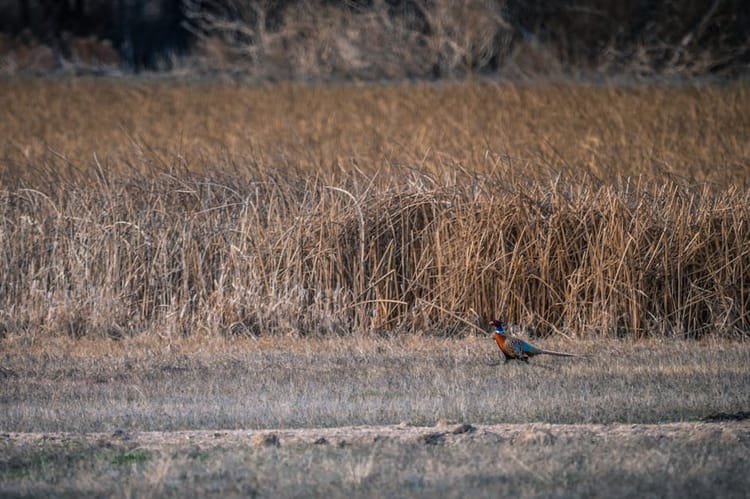
The Honest Truth About Dove Shooting on Opening Day
Opening day of dove season is Labor Day weekend in most southern states. It's 92 degrees and humid. Every farm pond is surrounded by fourteen hunters, a dozen coolers, and a smoke haze of powder. Doves pass at 35 yards doing 45 miles per hour and changing direction like they know something. You burn through three boxes of shells and bring home four birds.
This is normal. Dove shooting is harder than pheasant, quail, duck, or anything else people have stronger opinions about.
Where the Birds Go
Doves feed in agricultural fields — sunflower, millet, wheat stubble, cut corn — and loaf around water and power lines between meals. Opening day groups mostly hunt planted sunflower fields or freshly harvested small-grain stubble near water.
Good setups:
- Edge of a sunflower field with tree cover behind you
- Along a flyway between roost timber and feeding field — often a fence line, power line, or creek edge
- Water source (stock tank, farm pond) during the hot mid-afternoon
- Gap in a tree line that funnels traffic
Dove Lead: The Big Miss
Doves fly erratically — they dip, twist, change speed, and rarely go in a predictable straight line like a pheasant. The common mistake: not leading far enough. A dove at 30 yards crossing at 35 mph needs a lead of about 4 to 5 feet. Most beginners give them two.
The technique most shooting instructors teach is "swing through" — start the muzzle behind the bird, swing through the bird, pull the trigger as you pass, keep swinging. Don't stop the gun. Starting stationary and tracking is the second-worst habit; snap shots are the worst.
The Shotgun
A 12 gauge or 20 gauge with improved cylinder or modified choke. Opening day shots are often in the 30 to 45 yard range as birds pass overhead, so don't underchoke. Late season, when doves are spookier, full choke helps.
Options that work:
- Benelli Montefeltro or M2 Field — $1,000 to $1,500. Semi-auto, soft-shooting.
- Beretta A400 Upland — $1,500 to $1,800.
- Browning Maxus II — $1,400 to $1,800.
- Remington 870 Wingmaster — $700 to $950. Pump that handles dove duty fine.
- Stoeger M3000 — $550. Budget semi-auto that works.
A semi-auto is the dominant platform for dove because you often get multiple shots on a single pass and on doubles. Over-unders and pumps work; you just get one or two shots instead of three.
Ammo
Lead 7.5 or 8 shot, 1 to 1 1/8 ounce loads. Federal Top Gun Sporting, Winchester Super Target, Remington Gun Club — any promotional shell designed for sporting clays or dove. $7 to $12 per box. Bring four boxes per day at minimum. Most hunters shoot five or six.
Scouting
Doves don't use every field. A field full of birds on Tuesday might be empty on Thursday because the seed source changed or the neighbor started hunting the adjacent field. Drive agricultural roads at first and last light in the week before the opener. Where you see doves on power lines, in crop fields, or going to water — that's the ground worth getting access to.
Baiting is federal illegal. Freshly cut fields with grain remaining are legal. Spread grain is not. If you have any doubt about a field's legality, don't shoot it.
The Setup
Position yourself with your back to cover so doves don't see your outline against open sky. A folding stool and a gallon of ice water are not luxuries; they're necessary on 95-degree Labor Day afternoons.
Other gear:
- Bucket with shells, water, and a rangefinder
- Shooting glasses (brown or amber lens) — important for seeing birds against a pale sky
- Sunscreen — nobody looks at the sun all day without consequence
- A dog or a willingness to hunt your downed birds in tall cover
Retrieving Birds
A dead dove in sunflowers is hard to find. A wounded dove flying 80 yards and dropping is harder. A retriever — even a minimally trained Lab — is a huge advantage. Without one, mark every shot carefully and walk out immediately after each bird.
Hot Labor Day weather ruins dove meat fast. Get the bird on ice within an hour. A cooler with block ice at your shooting position is standard.
The Bag Limit and Reality
Most states allow 15 doves per day. Hunters average about 6 to 10 on opening day and fewer as the season progresses. A 15-dove opening day on a great field is a memory, not a standard.
Shell-to-bird ratio for an average dove hunter: 4 to 6 shells per bird. For a good one, 2.5 to 3. For a great one, under 2. Nobody admits their real ratio in the cooler lineup.
Why It's Still Great
Dove openers are the social hunt. A dozen guys along a sunflower edge, laughing between shots, trading barbs about missed doves. Kids with their first single-shot 20. Dogs sprawled in any shade they can find. Beers in coolers for the walk back.
The meat is excellent — dove breasts wrapped in bacon with a jalapeño slice, grilled over coals, are the official appetizer of the southern hunting season. The recipe is simple enough that a four-bird day still produces four good appetizers.
The Late Season
Most hunters forget dove season exists after Labor Day weekend. Late September and early October, with cooler weather and fewer hunters in the fields, is often the best dove hunting of the year. Birds have been hunted and they're wary, but if you can find fresh food sources and minimal pressure, you'll shoot more late season than opening weekend.
The Opening Day Mindset
Don't judge the dove season by how many birds you brought home on the first Saturday. Judge it by whether you figured out where the birds were, what shots you missed and why, and whether you had enough water. The rest of September and the second split in December are where the real shooting happens.