Ruffed Grouse in the Upper Peninsula: Cover, Dogs, and Why You'll Fail at First
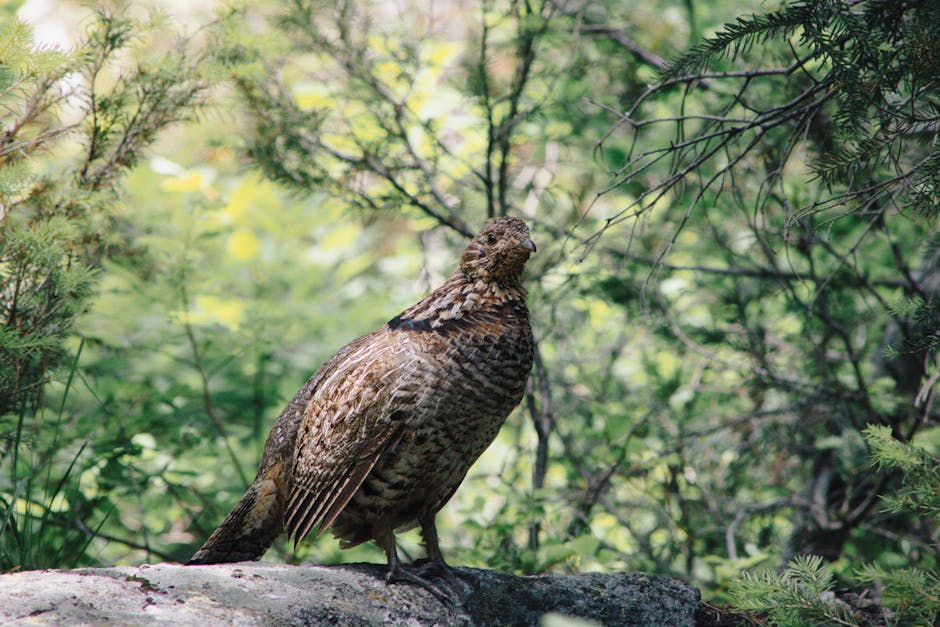
Ruffed grouse are the bird most eastern upland hunters aspire to and fewest actually master. They live in the kind of cover that hides a dog at ten feet. They flush without warning. They fly fast, through trees, for three seconds, and then they're gone. Your first day on a Michigan grouse cover, you'll see twelve birds and shoot at maybe four.
Why the UP
The Upper Peninsula of Michigan has the largest public-land grouse population in the continental US. National forest, state forest, and commercial timber holdings open to hunting add up to millions of acres. Populations cycle on a roughly ten-year pattern — a peak year in the UP can produce remarkable numbers, a trough year can be frustrating even for experienced hunters.
Season runs September 15 through November and again from mid-December to January 1. Resident license: $11. Non-resident: $151.
The weather swings wildly. September can be 75°F and sticky with mosquitoes the size of small birds. Mid-October is the sweet spot — leaves dropping, cooler mornings, visible birds. November gets cold, wet, and sometimes snowy.
Finding Grouse Cover
Ruffed grouse live in young aspen stands — 6 to 25 years old, thick and stemmy. Old timber is not grouse country. Clearcuts five to fifteen years old, with aspen regeneration, are the gold standard.
What to look for:
- Aspen stands with trees at chest to shoulder height
- Edges between aspen regeneration and older timber, conifer, or open areas
- Streams, springs, and wet draws running through aspen
- Old logging roads and skid trails — grouse travel and dust on them
- Thorny apple, hawthorn, or crab apple — grouse feed heavy on fallen fruit
Google Earth imagery 2 to 8 years old shows recent clearcuts as light patches. Cross-reference with Forest Service or DNR timber harvest maps to find the real hotspots.
The Dog
A pointing dog — English Setter, English Pointer, Brittany, or German Shorthair — is the traditional grouse dog. Flushing dogs (Labs, Springers) also work but operate differently. Close-working dogs beat wide-ranging dogs in the UP's thick cover; a dog that ranges 150 yards in open country ranges maybe 30 in the woods.
Without a dog: you can hunt grouse effectively by walking old logging roads slowly at the right time of day. Flush rate is a third to a half what it is with a dog, but you'll still get shots.
The Shotgun
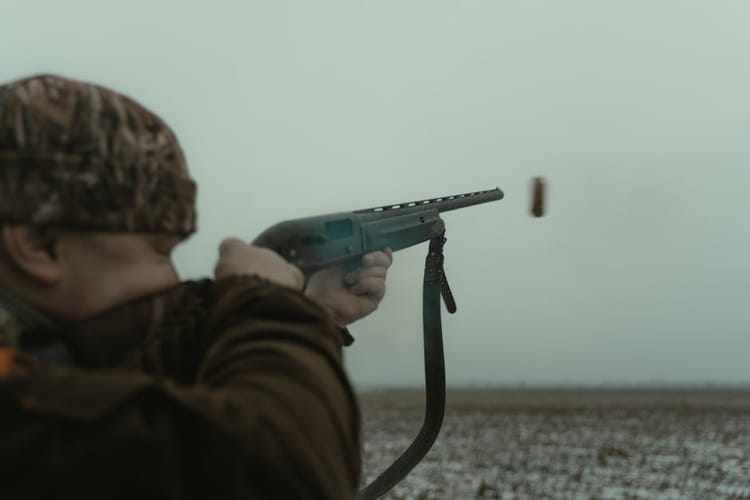
Fast-handling, light, open-choked. A 20 gauge or 12 gauge with cylinder or improved cylinder choke. Shots are typically 15 to 25 yards and happen fast.
Typical choices:
- Beretta 686 Silver Pigeon 20 gauge — $1,900. The classic.
- Browning Citori 725 Field 20 — $2,200.
- Franchi Instinct 20 gauge O/U — $1,300. Good value.
- CZ Drake or Upland Ultralight — $650 to $900.
- Savage Fox Model B 20 or 28 gauge (used) — $450 to $800.
Sub-gauges (28 gauge, .410) work with skilled shooters but handicap beginners. A 28 gauge with 3/4 ounce of 8 shot is elegant and lethal; it's also unforgiving of shot placement.
Ammo
Lead 7.5 or 8 shot, 3/4 to 1 ounce loads. Federal Premium Upland Heavyweight, Fiocchi Golden Pheasant in 7.5, or any standard 7.5 shot promotion-line load. $14 to $25 per box.
The Shot Opportunity
Grouse flush close, loud, and fast. You hear the whirring, you react, you try to find the bird through aspen trunks. The shot happens in the first second to three seconds. If you track the bird too long, you've missed. If you shoot on reflex without acquiring target, you've missed.
Learn to mount the gun with your eyes on the bird, not the bead. Practice at home. The swing and shoot of grouse gunning is more technique than equipment.
Boots, Pants, and Staying Dry
- Waterproof 8-inch uplander boots — Irish Setter Wingshooter, Danner Sharptail, Lacrosse Upland Pro. $180 to $350.
- Brush-rated pants or chaps — the UP has thorn apple and wild rose in every cover worth walking
- A vest with game pouch and shell loops — Filson Tin Cloth vest, Orvis strap vest. $150 to $350.
- Blaze orange hat and vest — required by Michigan regulation
A Typical Day
Out of camp by 8 a.m. (grouse are up an hour earlier but dew through thick cover is miserable). Hunt 2 to 4 coverts in a morning, a mile to two miles per cover. Lunch from the truck. Afternoon hunts continue into the last hour of light, which by late October is 6 p.m.
A good UP day: 15 to 25 flushes, six to ten shots, two or three birds in the vest. Average day: eight flushes, three shots, a bird or a clean miss. First-day hunters: three flushes, one shot, no birds. All of those are acceptable learning curves.
The Cycle
Grouse populations swing on a roughly 10-year cycle. Peak years have 4 to 8 flushes per hour. Trough years have 0.5 to 1 flush per hour. The best peak recently was 2017 to 2020; populations were heading toward a low in the early 2020s but had been rebuilding. Check the Michigan DNR's annual grouse reports before you book lodging.
Even in trough years, good hunters find birds. It just takes more walking and more coverts.
The Reality for First-Timers
You will walk for miles, hear grouse flush and not see them, miss the shots you do get, and question whether you're doing it right. That's the first year. The second year, you'll start hitting some. The fifth year, you'll start to understand what coverts produce in what conditions.
The UP's grouse country is some of the best hunting landscape in America. Slow days are still beautiful. Bring a dog if you can, good boots always, and don't measure success by birds in the bag.