The 12 Gauge, the 20, and Why Most Upland Hunters Pick Wrong
The 12 gauge versus 20 gauge argument has been going on since before your grandfather was born. It's mostly pointless at the actual killing level — both gauges kill upland birds reliably inside normal shooting distances. The real question is about handling, fit, and how a gun feels in the fourth hour of a cover walk.
The Numbers
A 12 gauge 1 1/8-ounce lead load has about 492 pellets of 7.5 shot. A 20 gauge 1-ounce lead load has about 437. Difference: 55 pellets. A 3/4-ounce 20 gauge load has about 328 pellets — still enough to kill anything up to a pheasant cleanly inside 35 yards.
Pattern density matters more than raw pellet count inside a killing distance. A 20 gauge with improved cylinder choke patterns similarly to a 12 gauge with modified choke for any given shot size and comparable payload.
Weight and Handling
This is where the gauges genuinely differ. A typical 12 gauge upland O/U or semi-auto weighs 7 to 7.5 pounds. A comparable 20 gauge weighs 5.75 to 6.5 pounds.
A pound and a half difference doesn't sound like much. Carry both guns over your shoulder for six miles through thick cover, and you'll swear the 20 is a child's toy and the 12 is an anvil.
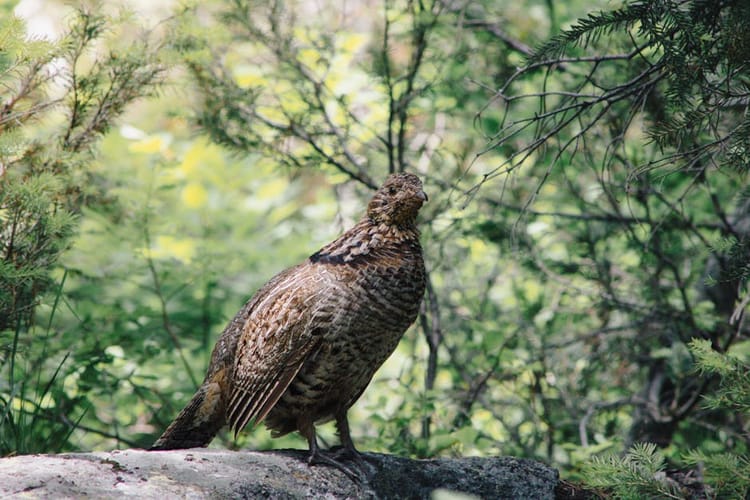
For hunts where you walk a lot and shoot occasionally — ruffed grouse, woodcock, mountain quail, chukar — the 20 gauge's handling advantage is real and matters.
Recoil
A 7.5-pound 12 gauge firing 1 1/8 ounces at 1,200 fps generates roughly 24 ft-lbs of recoil energy. A 6-pound 20 gauge firing 1 ounce at the same velocity generates about 22 ft-lbs.
That's closer than you'd think. What feels lighter about a 20 gauge is the recoil impulse shape — sharper but faster — plus the lighter gun's ability to move with recoil rather than resist it.
Perceived recoil of a 20 gauge with 7/8-ounce loads in a 6-pound gun is genuinely light. Perceived recoil of a 20 gauge with 1-ounce magnum loads in a 5.5-pound gun is sharp and unpleasant.
Where the 12 Gauge Wins
- Waterfowl — larger shot sizes (BB, 2, 3 steel) need payload. 3-inch 12 gauge loads are the standard.
- Turkey — 3 or 3.5-inch 12 gauge loads of TSS or lead magnums kill turkeys at 50 yards
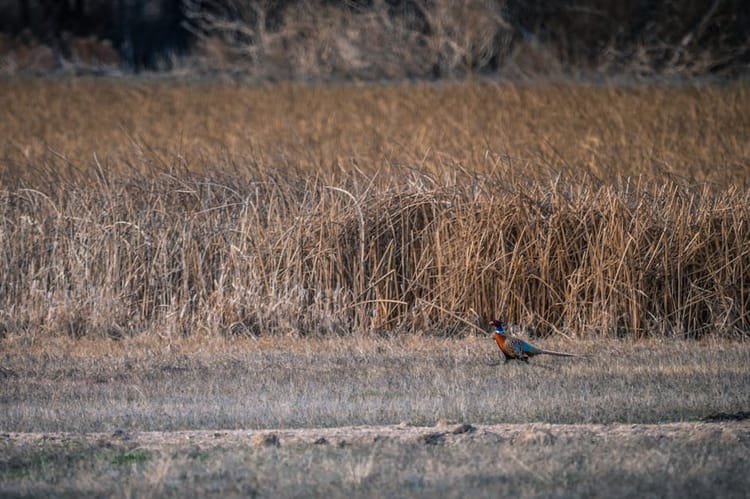
- Pheasants in late season — longer shots, tougher birds, a 1 1/4-ounce 12 gauge load extends reliable killing range
- Shooter who wants one gun for everything — 12 gauge handles all upland, all waterfowl, all clays, without ammunition substitutions
- Larger-framed shooters — the extra weight is easier to absorb, the gun feels balanced in the hands
Where the 20 Gauge Wins
- Grouse, woodcock, mountain quail — fast close shots, light gun swings quickly
- Mountain chukar — miles of steep walking. Lighter gun is a lifesaver
- Youth and smaller-framed shooters — fit matters more than gauge
- Second guns for hunters who already own a 12 — variety in shooting
- Southern quail over pointers — traditional gauge, handles the pace of the hunt
Where You Pick Wrong
The common mistakes:
- Buying a 12 gauge because "more is better" — if you mostly walk-hunt grouse or quail, you'll carry weight you don't use
- Buying a 20 gauge for pass-shooting ducks — possible but limits you on longer shots
- Buying a super-light 20 gauge you can't shoot comfortably — the 5.25-pound 20 with 1-ounce loads gets brutal in a long day
- Buying a sub-gauge (28 or .410) for walk-up pheasants as a beginner — fun, traditional, but you'll wound more birds than a heavier gauge would
Gauge Doesn't Determine Fit
A 12 gauge that fits you beats a 20 gauge that doesn't. Fit — length of pull, drop at comb, cast, pitch — determines whether the gun comes to your shoulder and your eye sees straight down the rib. A $600 gun that fits outshoots a $3,000 gun that doesn't.
Most factory guns come in "average" dimensions that fit maybe 60 percent of shooters acceptably. If you're short, tall, long-necked, short-necked, left-eye dominant, or broad-shouldered, stock modifications matter.
Real-World Picks
If you hunt one species, mostly, here's what I'd tell a newcomer:
- Ruffed grouse — 20 gauge O/U or semi-auto, 6-pound class. Beretta 686 Silver Pigeon 20, Franchi Instinct, Browning Citori 725.
- Pheasants on the prairie — 12 gauge pump or semi-auto. Beretta A400 Upland, Benelli Montefeltro.
- Ducks and pheasants — 12 gauge semi-auto. Benelli Super Black Eagle, Beretta A400 Xtreme.
- Quail over pointers — 20 or 28 gauge O/U. Beretta 686 Silver Pigeon, Browning Citori 725 Field.
- Dove — 12 or 20 gauge semi-auto; either works fine
- First shotgun for everything — 12 gauge pump. Remington 870 Wingmaster or Mossberg 500.
The Honest Answer
The 12 gauge is more versatile, more forgiving at longer ranges, and more powerful. The 20 gauge is lighter, faster to swing, and adequate for anything most hunters actually shoot at. Neither gauge kills more birds than the other in skilled hands.
If you already own one gauge and you hunt one species mainly, the gun you have is probably fine. If you're buying new and you hunt mostly small-bird upland on foot — 20 gauge. If you're buying new and you shoot a mix of ducks, geese, and upland — 12 gauge. If you want one gun for the rest of your life — 12 gauge.