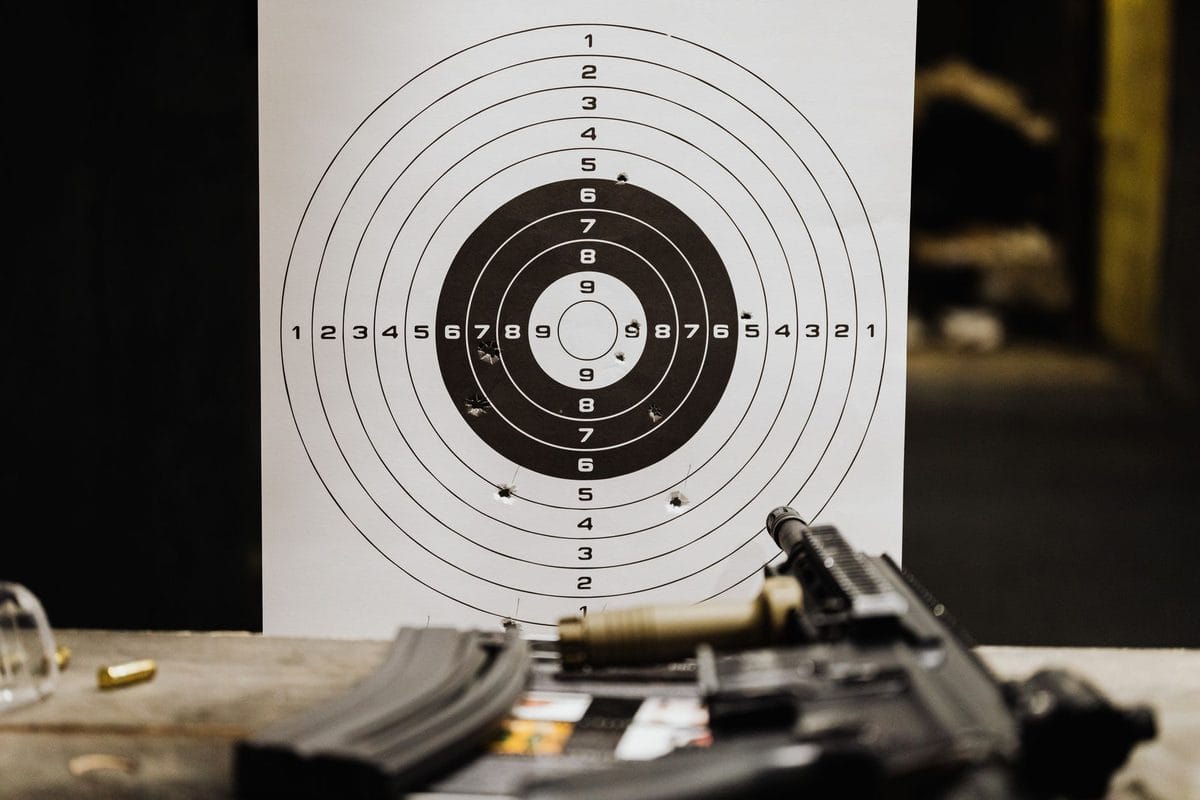
A 165-grain .308 Winchester zeroed at 100 yards drops roughly 14 inches by the time it reaches 300, according to MeatEater's Jordan Sillars, and 14 inches is the difference between a double-lung hit and a clean miss under a whitetail's belly. Plenty of hunters have heard some version of that number and still carry a rifle that was sighted in once, at 100 yards, a few seasons back, then slid into a case and forgotten until the week before opening day. The habit survives because the rifle usually works: Sillars points out that hunters rarely need to shoot much beyond 100 yards, so nobody finds out what the rifle does at 230 until a buck steps out at exactly that distance. October is the month to find out on paper instead.
Why You Should Do This Now, Not the Week Before the Opener
Seasons start earlier than most people's range habits do. Montana's general season runs October 24 through November 29 this year, Texas opens its general white-tailed deer season on November 7, Michigan's regular firearm season starts November 15, and Wisconsin's nine-day gun hunt begins November 21. Montana is three weeks out, about the right runway for a range day that might turn into two. Starting early buys three things a Thursday-night session never will: a quiet bench on a weekday morning, time to order a different load if your rifle turns out to hate the one you bought, and a margin for sending a scope back to the maker if it won't hold its zero. A warranty repair that takes three weeks is an inconvenience on October 3 and a lost season on November 3.
What to Put in the Range Bag
The Texas Parks and Wildlife hunter education course lays out the kit plainly, and it is worth copying almost line for line.
- At least two boxes of exactly the ammunition you will hunt with, not the cheap practice stuff you have a case of.
- A rest that supports the rifle at two points on the stock, with sandbags or a bench rest, never by propping the barrel on something hard.
- Paper targets with a one-inch grid printed under the bullseye, which turns "a little left" into a number of clicks.
- A spotting scope, so you are not walking downrange after every group.
- Eye and ear protection, a screwdriver or coin that fits your turret caps, and a staple gun for the targets, among other small things.
The two-box rule is the one people argue with, mostly because of price. Basic soft-point .308 loads run in the neighborhood of $28 a box of 20 at online ammo retailers, while premium loads such as Hornady's 178-grain ELD-X Precision Hunter typically sell for roughly $40 to $60 depending on the seller, which puts two boxes somewhere between $56 and $120. That is real money, but it is also the cheapest insurance in the whole hunt. Zero with the load you will actually hunt, full stop: bullet weight, bullet construction and manufacturer all move the point of impact, and a rifle zeroed with one brand can print somewhere else with another.
Check the Scope Before the First Shot
A loose scope can eat an entire morning on a problem the turrets cannot fix. The NRA's American Hunter lists the basics worth confirming before any lead goes downrange: 3 to 4 inches of eye relief, a reticle that sits square to the bore, and ring and base screws snug rather than cranked until metal bends. Torque them to the mount maker's spec with a torque driver (Wheeler's FAT Wrench is a common one) instead of trusting your wrist. Then grip the scope and try to twist it in the rings, because anything that moves is the day's real job.
Bore Sight, Then Start at 25 Yards
Bore sighting gets the scope close enough that your first bullet lands on paper. With the rifle locked in sandbags and the bolt removed, look through the barrel and center a bullseye in the bore, then turn the turrets, without nudging the rifle, until the crosshair sits on the same spot. American Hunter's Jeff Johnston recommends doing this at 25 yards, and TPWD starts live fire there as well: three careful shots at the bullseye, loading one round at a time instead of filling the magazine, then adjusting and shooting another three until the group is centered. Skip that step and walk straight to 100 yards, and the first rounds may miss the whole sheet, which tells you nothing about which way to turn the dial.
Once the 25-yard group is centered, move back to 100 and shoot another three-shot group, letting the barrel cool if it gets hot to the touch. Most modern scopes move the point of impact about a quarter inch per click at 100 yards, so four clicks per inch: a group 3 inches low needs 12 clicks up, and one 4 inches right needs 16 clicks left. Check the value printed on your turret cap before you trust that math, because some scopes use half-inch clicks, and mil-based scopes move about 0.36 inch per 0.1 mil click at 100 yards. Shoot another group after every adjustment and stop when the center of the three shots is where you want it.
Choose a Zero That Fits Where You Hunt
Here the guidance splits, and the split is worth understanding. American Hunter calls 200 yards the best all-around zero for most rifles and says a hunter whose treestands sit 40 yards from the trail should consider zeroing at 40; if your range tops out at 100, it says to hit 2 inches high there to approximate a 200-yard zero. TPWD says an inch or two high at 100 yards. MeatEater's Sillars argues for pushing the zero further, around 245 to 270 yards for common deer cartridges, which works out to roughly 3 inches high at 100. His table, built on specific factory loads, shows a .308 Win. zeroed at 247 yards printing 3.27 inches high at 100, 2.51 high at 200 and 4.66 low at 300, while a 6.5 Creedmoor zeroed at 245 yards runs 3.16 high, 2.36 high and 4.73 low at the same distances. That lets you hold on the vital zone out to 300 yards without calculating holdover, in Sillars's words, which is the whole argument for the longer zero, though he warns that pushing it too far leaves the bullet more than 4 inches high at 100 to 200 yards.
The three-inch shortcut works for big deer cartridges but not for everything. The same table shows a .223 Remington only 1.5 inches high at 100 yards and a .22-250 at 1.4, so a flat-shooting small round needs a different number, and every figure comes from published loads at assumed velocities, so your rifle will differ somewhat.
The better choice is to run your own numbers. Hornady's free online ballistic calculator takes bullet weight, ballistic coefficient and muzzle velocity, then shows how high the bullet rides at each distance. If your stand overlooks a lane in thick timber, a plain 100-yard zero is fine. If you hunt open ridges, bean fields or western country, zero long.
Confirm It at the Longest Shot You Would Take
A zero you have only seen at 100 yards is a guess about every other distance.
Sillars makes the same point from the field: he describes crossing a rise on a whitetail hunt, finding a buck 230 yards away, and losing him while he worked out the right correction for a 6.5 Creedmoor zeroed at 100. TPWD's course says to fire from 200 yards too if the range allows, so you understand how that particular ammunition performs at distance. Put a fresh target at your longest realistic shot and shoot a three-shot group. Then compare it with the calculator, and when the target and the calculator disagree, believe the target and correct the calculator's velocity input until they match. Sillars suggests chronographing your load and using the average of as many shots as you can afford, because real muzzle velocity is likely to differ from the number printed on the box. Write the impact heights you measure on a small card, so that on opening morning you are holding from a tested number and not a memory.
Shoot the Way You Will Hunt
The bench proves the rifle. It says very little about you. After the zero is set, spend part of the session shooting from the positions a hunt actually asks for: sitting with a pair of shooting sticks, kneeling, or leaning over a pack, at 100 yards or less, with a target that looks like a deer's vital zone and not a bullseye. TPWD also recommends practicing trigger squeeze, breathing and follow-through with a .22, because ammunition for it is cheap and there is no recoil fatigue to ruin your form.
Add one more habit to every range visit: fire the first shot of the session, before any warm-up rounds, at a fresh target and write down where it lands. Many rifles throw the first round from a clean, cold barrel slightly away from the rest of the group, and the cold shot is the one that counts in the field. Whether yours does is something only a test will tell you.
Shooting on Public Land and Keeping Records
If a commercial or club range is not close, national forest land can work, with some rules. The Forest Service allows target shooting unless it is restricted locally, bars shooting within 150 yards of a residence, building, campsite or developed recreation area, and prohibits shooting across a road or body of water. Use a proper backstop, keep targets off trees and fences, and pack out every scrap, including targets, cans and bottles. Exploding targets are restricted or banned on many forests, and the agency says some areas may be closed to target shooting during fire season, so check the forest's alerts before you load the truck.
When you finish, write the load, bullet weight, zero distance and date on a strip of tape inside the case or in your phone. Recheck the zero if you change ammunition, even within the same bullet weight, and after anything hard happens to the rifle: a drop, a long drive in a truck bed, a flight to Montana in checked baggage. One group shot on arrival is cheaper than finding out from a deer. Book the range for a weekday morning this week, bring two boxes of the load you plan to hunt, and shoot one group before you change anything on the scope.