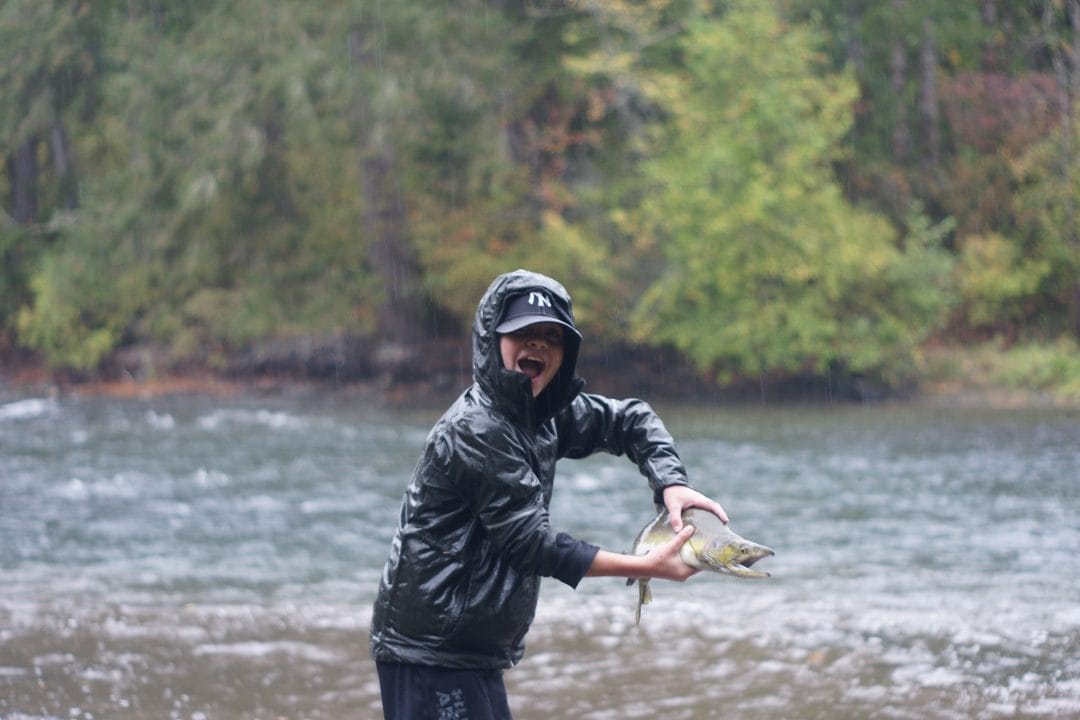
By the second week of September, the boat launch parking lot on the Salmon River in Pulaski, New York, fills before sunrise with trucks bearing plates from six states. Downstream, the water is still low and clear from a dry August, but the fish are already there — you can see them, dark shapes holding in the deeper slots, refusing to move until the flow comes up. Guys in waders line the gravel bar two hours before legal light, coffee in one hand and a rod rigged the night before in the other, because nobody wants to lose the first good drift of the day to the guy who got there five minutes earlier. This is the leading edge of the Great Lakes king salmon run, and if you've never fished it, the next six weeks are the best window of the year to learn. It's loud, it's crowded in the popular stretches, and it produces more 20-pound-plus fish per angler-hour than almost any freshwater fishery on the continent. None of that changes the fact that most first-timers show up with the wrong gear, the wrong expectations, and a leader tied for a fish half the size of what's actually swimming past their boots.
Why September Is the Trigger
Chinook salmon in Lake Michigan and Lake Ontario don't run on a calendar — they run on water temperature. Once tributary temps drop into the upper 50s and low 60s Fahrenheit, usually in the first two weeks of September, staging fish that have spent the summer packed into harbor mouths and river estuaries start pushing upstream in earnest. A cold front with an inch of rain does more for the run in 48 hours than three weeks of stable weather. Watch the gauge, not the date on your calendar, and you'll beat the crowds by two or three days almost every year.
These fish aren't feeding anymore in any meaningful sense. Their digestive systems are shutting down as their bodies redirect everything toward spawning, which means you're not enticing a hungry fish — you're triggering a reflex strike, an irritation response, or a reaction to something drifting too close to a redd. That distinction changes how you should think about presentation, and it's the single biggest thing anglers coming over from trout or bass fishing get wrong in their first season.
Three Tributaries Worth the Drive
Pere Marquette River, Michigan
The Pere Marquette near Baldwin is where this whole fishery started. Michigan's Department of Natural Resources planted coho in 1966 and Chinook the following year, largely as a biological fix for an out-of-control alewife population choking the lakes — nobody involved expected it to become the multi-billion-dollar fishery it is today. The PM still runs some of the clearest water in the state system, which means stealth matters more here than almost anywhere else: long leaders, subdued colors, and a drift boat or careful wading rather than crowding the bank.
Manistee River, Michigan
Twenty minutes north of the Pere Marquette, the Manistee gets a fraction of the pressure and holds fish just as well, particularly in the stretch below Tippy Dam. If the PM's parking lots are full, don't wait in line — the Manistee will produce, and you'll have room to actually fish a run instead of rotating through a lineup of anglers standing shoulder to shoulder.
Salmon River, New York
The Salmon River at Pulaski is the biggest show in the business, full stop. Lake Ontario kings push into this system by the tens of thousands starting in early September, and the stretch through the town — plus the private, rod-fee Douglaston Salmon Run downstream — sees genuine combat fishing on any weekend with decent flow. It is not a peaceful morning on the water. It is also, pound for pound, the most productive water for a first-timer to hook a 20-pound fish, because the sheer number of salmon compensates for a lot of technique you haven't developed yet.
Reading Water That Doesn't Behave Like Trout Water
Forget everything you know about reading a trout stream for feeding lanes. Staging kings hold in the slowest, deepest water they can find — dark pools below riffles, the tail-out of a long run, any depression scoured behind a boulder or downed tree. As they get closer to spawning condition they'll move onto gravel in faster, shallower water to build redds, and that's when sight-fishing becomes possible in clear systems like the Pere Marquette. Early in the run, though, you're fishing blind to holding water, not to visible fish, and that's a different skill entirely.
Cloud cover and low light push fish shallower and make them more willing to move on a bait. Bright, bluebird afternoons after a cold front will often shut a pool down completely by 10 a.m., which is why the serious guys on the Salmon River are rigged and in the water by first light and packing up by mid-morning, then coming back for last light.
What Actually Catches Fish
Bead fishing has taken over as the go-to technique on most Great Lakes tributaries over the last decade, and it deserves the reputation. A single imitation egg — a plastic bead from a maker like Spawn Fly Fish or BnR Tackle, pegged 1.5 to 2 inches above a bare hook and drifted naturally through a run under a float — outfishes an actual skein of real eggs in low, clear water more often than not, mostly because it presents smaller and drifts more consistently without spinning. Skein under a float still works and still has its die-hards, particularly in stained water after rain, but if you're buying gear for your first trip, start with beads. Match the bead color to water clarity: pale peach or "milky" beads in low, clear conditions, and move up to orange or chartreuse once the water carries some color after rain. Centerpin reels have become the standard tool for this style of fishing on rivers like the Salmon and the Pere Marquette because they let a float drift drag-free for forty or fifty yards, far longer than a fixed-spool reel manages, and that longer natural drift is what actually draws strikes from fish that have stopped feeding.
A basic first-trip setup doesn't need to be expensive or exotic:
- A 9- to 10-foot medium-heavy spinning or centerpin rod rated for 10–17 lb line
- 10–12 lb fluorocarbon leader, even though the fish look big enough to demand more
- A dozen egg beads in two or three colors, plus size 6–10 hooks to peg them on
- Split shot in a few sizes — you'll adjust weight more than you think to keep the drift bouncing bottom without snagging
- Waders and a wading staff; September flows on the Salmon River can rise fast after rain, and footing gets serious in a hurry
Fly anglers do just as well with egg patterns — a Glo Bug or a simple chenille egg fly in orange or pink — fished on a nine-foot leader with enough split shot to bounce the bottom through a drift. Spin fishermen working faster water can also do well with body baits and spoons worked through current seams, especially early in the run before fish settle into their darkest, most territorial holding pattern. Nobody serious about this fishery still relies on snagging gear; it's now illegal on nearly every managed tributary, and for good reason — foul-hooked fish tear up spawning habitat and don't fight, they just thrash.
One thing worth saying plainly: don't overbuild your leader thinking a bigger fish needs heavier line. A 20-pound Chinook in gin-clear September water will refuse anything heavier than 10- to 12-pound fluorocarbon nine times out of ten, and you'll land more fish on a properly set drag with lighter line than you will muscling one in on 20-pound test it never touched in the first place.
Licenses, Limits, and Not Being That Guy
Michigan requires a standard fishing license plus, on some Great Lakes tributaries, no additional stamp — check current regulations before you go, since Michigan DNR updates tributary-specific rules seasonally. New York requires a fishing license and, for anyone fishing the Lake Ontario tributaries including the Salmon River, has historically applied specific gear restrictions during the fall run, including hook-and-bait limitations in certain stretches — the DEC's Salmon River fishing regulations guide, updated annually, is the only source worth trusting on this, not a forum post from three seasons ago.
Etiquette matters more here than on almost any other fishery in North America, mostly because the crowding forces it to. Rotate through a hole instead of anchoring on it for an hour. Don't cast over another angler's line. If you hook a fish in combat-fishing water, say so loudly and reel toward open water rather than expecting everyone else to move for you — they won't, and you'll spend the fight untangling six other lines instead of landing your salmon.
Getting a King From the Bank to the Table
Not every king you land in September is worth keeping.
That's not a popular thing to say to someone who just landed a 22-pounder, but it's true. Fish caught in the first week or two of the run, while they're still bright silver with white flesh, are excellent eating — firm, high in fat, ideal for smoking. By late September and into October, as fish darken toward their spawning colors, the flesh softens and takes on a stronger, sometimes mushy texture that most anglers find unpleasant. Keep bright fish early, and lean toward catch-and-release on the dark, hook-jawed males you'll start seeing by the run's back half.
For the fish worth keeping, brine and smoke rather than grill. A basic wet brine of brown sugar, kosher salt, and water for eight to twelve hours, then two to four hours over apple or cherry wood at 175–200°F, turns a Great Lakes king into something worth the drive on its own. Vacuum-sealed and frozen, smoked salmon from a September trip holds its quality through the following spring — which is about how long it takes most people to start planning the next one.