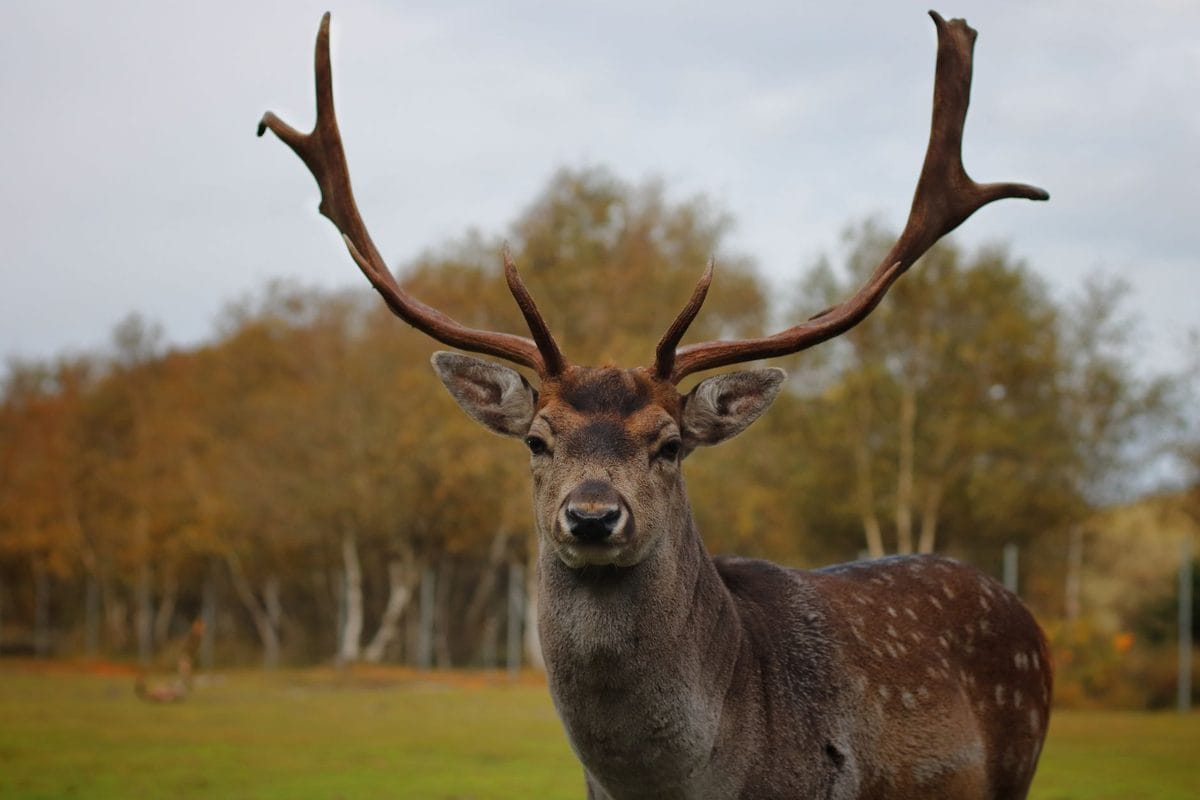
You are standing at the edge of a mixed wood in southern England a little after first light, frost on the bracken and not a breath of wind. Somewhere ahead and slightly uphill comes a deep, belching groan, repeated over and over, like a very large man clearing his throat from the bottom of a well. That is a fallow buck on his rutting stand, advertising himself to every doe and rival within earshot, and the rut runs for three or four weeks, much of which he will spend doing very little else. Woods that looked empty in August are suddenly full of deer. It is the best fortnight of the fallow stalking year, and it punishes sloppy fieldcraft harder than any other.
Why mid-October is the fallow window
The British Deer Society's Deer Diary, published on 6 October, calls October the defining month for the fallow rut, with mature bucks spending more and more time around traditional stands, some of which have been used for years or even generations. Timing matters because the fallow rut is short and sharp: activity peaks in the first half to the middle of October and then tapers quickly, a good deal more compressed than the red deer rut, which the BDS places from late September into early October. For most of the year woodland fallow live in separate herds, bucks in bachelor parties and does with their followers, and the sexes barely mix. In October that arrangement dissolves. Bucks travel to their stands, does come to them, and for those few weeks the whole local population moves through ground it otherwise crosses only occasionally. That is why a wood you walked all summer without seeing a hoofprint can suddenly hold deer, and why a buck on a known stand is far easier to find than to approach.
Two dates belong in your diary. The Deer Act 1991 bans taking deer between one hour after sunset and one hour before sunrise, and in southern England sunrise falls at roughly 07:15 on 10 October and roughly 07:40 on the 24th. The clocks then go back on Sunday 25 October, which moves sunrise to roughly 06:40 overnight. The legal limit is not your limit, though: BASC's code of practice says not to shoot in very poor light, especially in the evening, so treat the edges of the day as closed.
Finding the stand before you need it
A stand is not subtle once you know what you are looking at. Deer managers around Ashdown Forest describe a patch of bare, worked earth roughly a metre across, usually under a low canopy on rising ground, with saplings and low branches thrashed to the white wood somewhere between knee and chest height. The leaf litter is turned over, and if the sign is recent there is a strong smell. Stands tend to sit inside the wood rather than on the open edge, often near a ride or break where a buck can see and be heard. Fallow bucks go back to the same stands year after year, so a scrape you stumble across in September is almost certainly last October's and has a fair chance of being this October's too.
- A bare, scraped patch about a metre across, under low cover on slightly higher ground.
- Saplings and low branches stripped back to pale wood, knee to chest height.
- Churned leaf litter, and a smell you will not mistake for anything else when it is fresh.
- Slots around 6cm long, which separates fallow from roe at about 4cm, among other tracks you may find.
- Worn tracks running in and out. This is how you tell a stand in use from one that was abandoned years ago.
Fallow are most active at dawn and dusk, so do the recce in the middle of the day and keep it short. The BDS asks everyone to avoid disturbing active rutting areas, and a stalker who tramps through the stand the afternoon before has only himself to blame when the buck is silent at dawn.
Getting in range of a buck who never stops moving
Wind decides whether you get there, and the buck's friends decide whether you stay hidden.
A buck on his stand does not sit tight and wait for you. The Scottish best-practice guidance for fallow notes that he advertises himself by moving constantly around the stand while groaning, and Charly Green, a professional stalker who has worked the New Forest for years, points out that once a buck has picked his ground he rarely leaves it. That sounds like good news, because you always know roughly where he is. The catch is his entourage. A rutting buck attracts interested does, lesser bucks and yearlings hanging around the edges, and every one of them is a pair of eyes that can end the stalk before you reach shooting range. Green recommends a face veil when approaching ground where several bucks hold stands, and he is right; hands and face are what catch the light. Come in downwind, let the groan cover your movement, and freeze the moment it stops, because a buck that has gone quiet is a buck that may be looking your way.
You will see grunt calls and cast antlers sold for the fallow rut. They work sometimes. Green's own verdict is that calling gives mixed results, and the animals he describes drawing in were two curious youngsters at the edge of a stand, not the master buck. Leave the call at home until you can reliably reach 100 metres without being seen.
If the ground allows it and you have the landowner's agreement, a high seat with a view of a known stand sidesteps most of the approach problem. BASC's code notes that shooting downwards from a high seat can give a safer backstop at shorter ranges, which matters when the animal you want is circling in thick woodland. The code is also blunt about the rest: a solid backstop behind the deer, an uninterrupted line of shot, no shot at a moving animal, and the chest as the target. Wait for the buck to stop broadside. If he will not, the answer is no.
Which buck, and whether any buck
Fallow are the only British deer with palmate antlers, and mature bucks carry the flattened, shovel-shaped heads from about three years old, growing to as much as 70cm in length. Yearling bucks are known as prickets. Everyone loves the big palmate head, but the animal that has just spent two weeks groaning instead of eating is thinner than the one that walked onto the stand; the BDS notes that some males show weight loss and declining condition as the month goes on, and large bucks may stop feeding altogether.
Now the awkward part. Fallow bucks are in season in England from 1 August to 30 April, so taking one in the rut is perfectly lawful. But deer managers around Ashdown Forest make a fair point: a population's growth is set by its breeding does, and does are not in season in England until 1 November. Lifting a buck off a stand does very little for crop damage or woodland regeneration, and it can unsettle the ground and push deer onto the neighbour's land. If you are stalking for management, the work that changes numbers runs from November to March, on does. If you are stalking for a buck on the wall or in the larder, go ahead, but be honest with yourself about which of the two this is.
North of the border the rules differ. Since 21 October 2023 Scotland has had no statutory close season for male deer of any species, while the BDS table gives the doe close season as 16 February to 20 October, which puts does in season from 21 October. Whether a rutting buck eats worse than a doe shot in January is argued over on every stalking forum, and the evidence points both ways; how fast you gralloch and chill the carcass matters more than the date on the calendar.
Rifle, paperwork and kit
In England and Wales the Deer Act 1991 sets a minimum of .240 inch calibre and 1,700 ft-lb of muzzle energy for fallow, with an expanding bullet. Scotland has its own ballistic minima, including a velocity requirement, so check before you cross the border with a rifle you only know the English figures for. BASC's code adds that the rifle must be checked for zero after a hard knock, after any unaccountable miss, when you change ammunition, or when it has not been fired for a long time, and that nobody should keep stalking with doubts about it. Carry your firearm certificate and written permission for the land.
The Deer Stalking Certificate Level 1 is not a legal requirement, but it is a four-day course BASC runs, and The Field reported in 2025 that landowners increasingly ask to see it before granting permission. Take it. The kit list is shorter than the gun-shop window suggests.
- Binoculars you will actually carry at five in the morning.
- Shooting sticks, because a steady rest matters more than a clever call.
- A face veil and quiet, dull clothing.
- A knife and gloves for the gralloch, plus the number of a tracking-dog handler saved in your phone, because BASC's code says stalkers should own or have access to a dog trained to find wounded deer.
After the shot
Mark where the deer stood against a tree, rock or bush before you fire, then reload, put the safety on and wait at least five minutes. Walk up to the spot, look for hair and blood, and follow any trail slowly. If you think the deer is lost and may still be moving, mark the last sign, leave the area and come back with a trained dog rather than pushing him further away. Gralloch as soon as you can, keep the waste away from watercourses and public paths, and get the carcass into a cool, dry, fly-proof store, chilled to between 1 and 7 degrees Celsius.
If you are in the wood with a camera rather than a rifle, the BDS rut guidance asks you to stay at least 50 metres from any deer and at least 100 metres from rutting deer, and to leave the dog at home. It also describes the warning sign worth knowing: a deer that starts walking parallel to you, glancing at you out of the corner of one eye, is considering whether you are a rival. Move away at once.