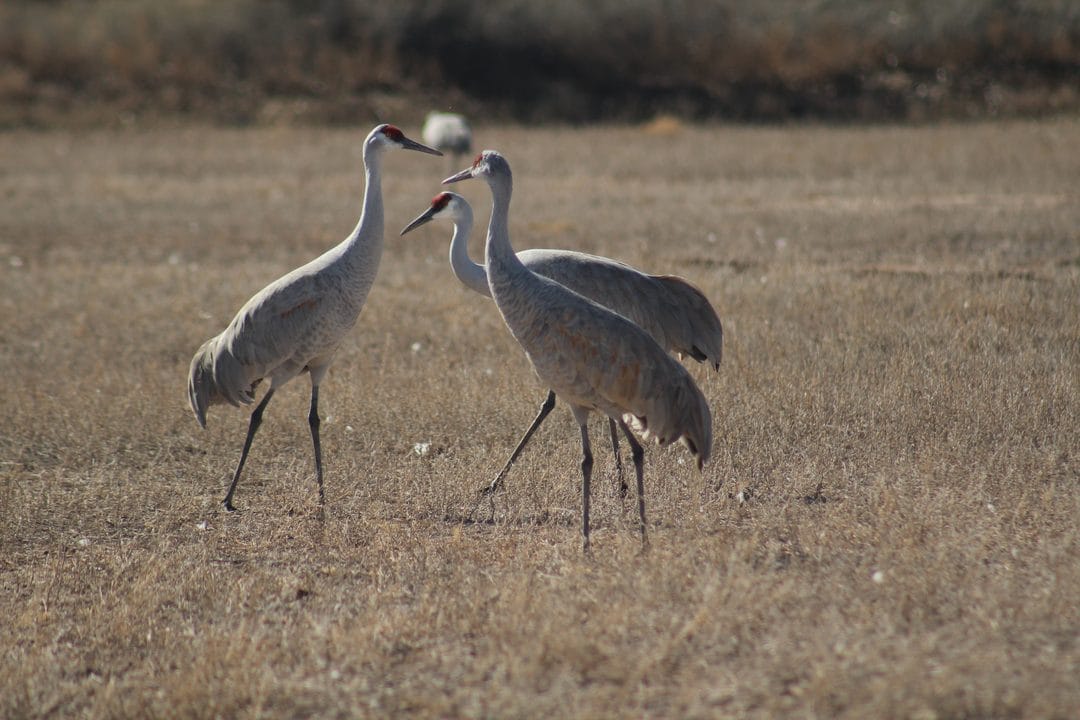
Somewhere over the stubble fields north of Bismarck, a flock of sandhill cranes is circling at 2,000 feet, reading a decoy spread with better eyesight than the hunters crouched below them. They've been doing this migration for longer than birds have any right to — sandhills are one of the oldest bird species alive, largely unchanged for millions of years — and by the time they reach North Dakota's stubble in mid-September, they've already survived a summer of predators, drought, and every goose hunter's decoy spread from Saskatchewan south. That experience shows. A crane will commit to a spread, drop its landing gear, then flare fifteen yards out because a glove flashed white or a decoy rocked in a way a real bird never would.
Why September Actually Means North Dakota, Not Texas
North Dakota's regular sandhill crane season for Units 1 and 2 opens Saturday, September 19, 2026, and runs through November 15 — genuinely one of the earliest crane seasons on the continent. South Dakota follows a week later, opening September 26 and running to November 22. Compare that against Texas, where the western zone that most guided crane hunts run out of doesn't open until October 31, or against New Mexico's Eastern Hunt, which starts October 24 under a permit that has to be drawn months ahead of the season. If your plan has been to wait for the big Texas hunts you've seen on outdoor television, you're giving up five or six weeks of hunting on birds that haven't yet been shot at from Nebraska down to the Gulf Coast. All of this sits inside a bigger management picture, too. The mid-continent population — the group of birds that funnels down through the Dakotas, Nebraska, Kansas, Oklahoma, and Texas each fall — is set by the U.S. Fish and Wildlife Service under the Central Flyway framework, and it's a genuine conservation success story: roughly 700,000 birds today, against a population that was thin enough a century ago that hunting them was unthinkable. That recovery is exactly why the early-opening states matter so much for a hunter without a guide's budget, because birds moving through the Dakotas in late September haven't yet been worked by outfitters running eight hunts a week down in the Panhandle, and they decoy more readily for it.
Scouting Matters More Here Than It Does for Ducks
Treat crane scouting like turkey scouting, not goose scouting. It isn't enough to find a field with birds in it — you need the exact spot in that field where they're feeding, because sandhills will often ignore a spread set up sixty yards from where they actually want to be. Glass the roost at first light, watch the direction birds peel off toward feed, and mark it on OnX or a similar mapping app before you ever ask permission to hunt. Wind matters twice over: once for scent and noise the way it would for any field hunt, and again because cranes fly into the wind on their final approach, using the lift to bleed off altitude as they drop their long legs and back-pedal into a spread. Set your hide with that flight path in mind, not with the compass direction that's most convenient for you to drive in from. Pick a field with recent sign, too — fresh tracks, matted-down feathers, the scattered white droppings that build up fast under a working flock — and confirm it again the evening before you hunt, because cranes will abandon a field the moment a combine or a hunter's truck spooks them off it. They don't always come back the next morning, and a hunter who skips that evening recheck is often the one standing in an empty field at sunrise wondering where the birds went.
The Hide Has to Beat 280 Degrees of Color Vision
Cranes see in color across nearly the whole compass around them, and it shows in how they behave near a blind that isn't brushed in well enough. Guides who run crane hunts for a living routinely compare the standard to turkey hunting — get sloppy with a blind on a spring gobbler and you already know how that ends.
A-frame blinds and quality layout blinds both work in stubble and cut cornfields, but only if they're broken up with the same material sitting in the field around them, not the vegetation from three fields over. Walk out from your hide before shooting light and look back at it from the angle incoming birds will see. If anything shines, moves without reason, or reads as a hard rectangle against soft field texture, fix it. Movement kills more crane hunts than a bad decoy spread ever will — keep hands and faces down until birds are committed and inside range, not just inside what looks like range from 200 feet up.
Decoys: Full-Body Does the Convincing, Silhouettes Fill the Gaps
Full-body decoys are worth the extra cost for cranes in a way they aren't always worth it for puddle ducks. A dozen full-body decoys — SX Decoys makes a painted version and a fully flocked version, both mounted on motion cones that rock in the wind — set the tone for realism, and you fill the rest of the spread with a dozen or so silhouettes or wind socks, such as Dive Bomb's C2 silhouettes and S3i socks, to bulk up the visual footprint without doubling your gear budget.
Keep the spread loose rather than tight, since cranes want landing room and not a crowded field, and face every decoy into the prevailing wind — a spread facing the wrong direction reads as unnatural from a thousand feet up before a bird ever gets close enough to notice detail. Set up at the back of the spread rather than tucked into the middle of it, so incoming birds stay focused on the decoys in front of them rather than scanning past the decoys toward your hide.
Call Sparingly — Cranes Punish Overcalling
This is the one place where less genuinely is more.
Sandhills communicate with a rolling, trumpeting call that carries over a mile in calm conditions, and a tube-style call built specifically for cranes — the Rex Crane Call is the one most guides in the Dakotas and Texas keep on a lanyard — can turn a flock that's lined out away from your field back toward it. But read the birds before you touch the call. If a flock is already committing, feet down and wings cupped, extra calling is more likely to spook them than to seal the deal. Save the aggressive calling for birds that are passing wide or drifting away from the spread; let them get a little distance, then hit the call and watch how often they bank straight back in.
Gauge, Choke, and Loads for a Bird That Won't Go Down Easy
A mature sandhill can weigh close to 11 pounds, with heavy wing bones built for riding thermals up to 15,000 feet at 50 miles an hour, and that build means an undergunned load produces cripples rather than clean kills. A 12-gauge with a 3-inch chamber is the standard, running shot no smaller than #3 and no larger than BB, and most hunters split the difference with #2 or #3 for a balance of pattern density and knockdown power at the relatively short ranges most crane hunts actually produce. Heavier tungsten blends do the job even better: APEX's TSS/Steel-3 combination, running around $50 a box of 25 in BB/7.5 or 2/7.5, and HEVI-Shot's HEVI-Metal loads in BB and 2 both deliver the dense pattern and retained energy a big-boned bird genuinely needs at the far edge of range. Buy the best ammunition you can afford for this hunt specifically — daily limits on cranes run two or three birds in most zones, so you're not burning through cases of shells the way you might on a big duck hole, and there's no excuse for cheaping out on the box that actually matters.
There's a genuine exception worth knowing, and it cuts against everything above: when the field, the hide, and the wind all line up perfectly and birds are finishing at 20 yards instead of 35, a 28-gauge loaded with a premium tungsten load will cleanly kill cranes and makes for a far more enjoyable morning than lugging a 12-gauge magnum for shots that don't need it. Don't build a whole season around that scenario — but don't rule it out on the one morning everything actually goes right, either.
Know What You're Shooting At Before You Shoot
Every crane season sits inside the shadow of a much rarer bird. Whooping cranes — mostly white with black wingtips and a red crown, versus the gray body and white cheek patch of a sandhill — number only around 600 birds continent-wide, migrate along overlapping routes, and are federally protected. That's why several of the states running crane seasons require hunters to pass a species-identification test before a permit is issued, and it's not a box-ticking exercise: misidentifying a whooping crane at 40 yards in poor light carries serious legal consequences, and no bird is worth that mistake. Study the identification materials your state provides before opening morning, not the night before.
None of that takes away from what makes this hunt worth chasing. Sandhill crane is dense, dark meat that tastes closer to beef than to any other game bird — hunters call it the "ribeye of the sky" for good reason, and a breast seared hot and sliced thin against the grain earns the nickname on the first bite. Between the early Dakota opener, a wary bird that rewards good scouting and a disciplined hide, and a table result most upland hunters have never tasted, there's a real case for building a September trip around cranes instead of waiting on the birds everyone else is already hunting.