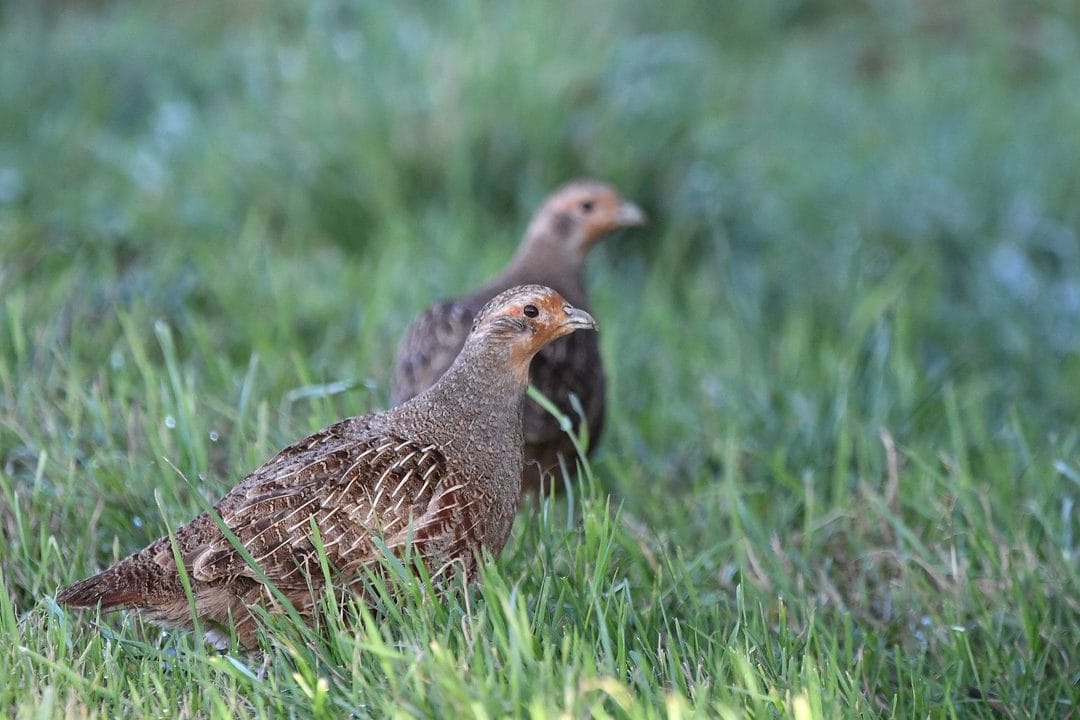
The Twelfth gets all the attention, but for a lot of English guns the season that actually matters starts three weeks later. Partridge shooting opens on 1 September, and if grouse is the sport everyone talks about at the bar, partridge is the one most of them actually do — driven days on lowland estates from Yorkshire down to Wiltshire, walked-up mornings on smaller farms, and a style of shooting that rewards a completely different set of instincts than anything you'll use on a moor.
Two Birds, One Date, Very Different Sport
England runs two partridge species and it's worth being precise about which one you're actually shooting, because the tactics diverge. The grey partridge — native, increasingly scarce, and now largely protected on wild-bird conservation estates rather than shot commercially — opens 1 September alongside its red-legged cousin, but in practice you'll see very few wild greys on a paid day. The red-legged partridge, sometimes called the "Frenchman" because it was introduced from the Continent in the 1770s, is the bird that fills most driven-day bags. It's reared and released on shooting estates, flies fast and low, and gives you the volume that grey partridge simply can't provide anymore after decades of habitat loss.
Ask before you book. A syndicate day advertised as "partridge" on a mixed estate in Norfolk or the Cotswolds is almost certainly redlegs, and that changes what you should expect from the birds — quicker off the drive, more inclined to curl and present a crossing shot rather than the straighter flush you'd get from greys on the rare estate still running a wild-bird programme like the ones in the GWCT's Partridge Count Scheme.
Driven Versus Walked-Up: Pick Your Sport
Grouse shooting on the northern moors is walked-up or driven over dogs across open heather, and the whole day revolves around reading wind and terrain that hasn't changed shape in a century. Partridge shooting splits much more cleanly into two distinct experiences, and which one you book says a lot about what kind of day you actually want.
- Driven days put you in a peg line at the bottom of a valley or hedge line while beaters push birds over from cover crops — maize, kale, or game mix drilled specifically to hold birds through August.
- Walked-up shooting means you and a small line of guns work hedgerows and rough ground behind pointers or spaniels, flushing birds at close range rather than waiting for them to come to you.
- Some smaller family shoots run a hybrid — a walked-up morning followed by two or three driven drives after lunch, which is increasingly the format independent estates use to keep costs down for a four-to-six-gun day.
Driven partridge is faster, more expensive, and — because the birds are coming at you rather than flushing underfoot — considerably more forgiving of a shooter who isn't used to snap decisions at close range. Walked-up shooting is the opposite: cheaper, slower, and it demands the kind of instant target acquisition that separates a competent shot from someone who's only ever stood on a peg.
Gun and Cartridge Choice
You don't need the gun you'd take to a big grouse moor. Partridge sit lower and slower than grouse in most conditions, and a 12-bore over-and-under choked improved cylinder and half will handle the vast majority of driven shots out to 30-35 yards without any trouble. Where people get it wrong is cartridge selection — reaching for the same 32g or 36g load they'd use on pheasant in November, when a 28g or 30g load of 6s or 7s does the job on a redleg with less recoil across what's often a 200-250 cartridge day.
Fibre wad cartridges are effectively mandatory now on most estates running the current lead-shot phase-out, and steel-shot loads in 6 or 7 pattern well through open chokes if your gun's proofed for it. Check with the shoot beforehand — some smaller syndicates are still working through stock of older lead cartridges and haven't fully transitioned, though that's increasingly rare heading into the 2026 season.
Dogs on the Day
A driven partridge day genuinely needs a picker-up with a trained retriever, and if you're the one bringing a dog to a syndicate shoot, a steady Labrador that'll sit at heel through the drive and mark falls without breaking is worth more to the day than a fast gun with a poor dog. Walked-up shooting is where a spaniel earns its keep — close-working, flushing within gun range rather than putting birds up wild at forty yards, which on partridge specifically means the difference between a shootable bird and one that's gone before you've mounted the gun.
What It Actually Costs
A driven day on a commercial lowland shoot runs £28-£38 per bird in most of England for the 2026 season, with a typical day producing a bag of 150-250 birds split across six to eight guns — do the maths and you're looking at £700-£1,200 per gun for a full day including lunch. Walked-up days through smaller estates or farm shoots are considerably cheaper, often £150-£300 per gun for a half-day, because you're not paying for beaters, pickers-up, and the released-bird overhead that drives commercial pricing. Syndicate membership on a rough shoot, where partridge is one of several species on the ground alongside pheasant and the odd woodcock, typically runs £500-£1,500 for a season depending on acreage and how much walked-up ground is available.
Compare that to a grouse day — £150-£180 per brace on a good Yorkshire moor, which for a driven day producing 60-80 brace across eight guns puts you well past £1,500 a gun before tips. Partridge, bird for bird, is the more accessible end of driven game shooting in England, which is a large part of why the September opening draws guns who'd never get near a grouse moor invitation.
Etiquette That Actually Differs From Grouse
Peg discipline on partridge is tighter than most first-timers expect. You stay on your numbered peg until the horn sounds the end of the drive — full stop, no exceptions, even if a bird you clearly winged goes down forty yards outside your zone. On a grouse moor there's more informal movement between drives because the terrain forces it; on a lowland partridge shoot with a fixed peg line running along a valley bottom, wandering off your peg mid-drive is the fastest way to get uninvited back next season.
Safety angles matter more on partridge specifically because the birds fly lower than grouse and pegs are often closer together — 25-30 yards apart rather than the wider spacing you'd see on open moorland. No shooting below a horizontal safety line, full stop, and if you're new to a shoot, ask the keeper to walk the line with you before the first drive so you know exactly where neighbouring guns are standing. Most keepers will do this without being asked on a well-run estate; if they don't offer, ask anyway.
Tipping the keeper at the end of the day is standard practice and expected — roughly £20-£30 per gun on a driven day is the going rate across most English lowland shoots, handed over discreetly rather than announced. It's not written on the invoice, but everyone on the shoot knows it's coming, and turning up without cash for it is the kind of thing that gets remembered.
Reading a Drive: Where the Birds Actually Come From
Partridge drives are usually short and sharp compared to a big grouse drive on open moor — expect five to fifteen minutes of actual shooting once the beaters start pushing, then a longer walk or drive between pegs while the line resets. That compressed window changes how you should approach the first few minutes on any peg you haven't shot before. Watch where the beaters enter the cover crop and note the wind direction relative to the drive; redlegs run and flush against the wind more often than with it, which on a maize strip running north-south with a westerly blowing means the birds tend to break left rather than straight over, and knowing that before the first bird's in the air changes where you should be looking rather than reacting a half-second late.
A picker-up standing well back behind the peg line, and often a second one covering a boundary hedge, tells you the keeper expects birds to carry a fair distance after the shot — which on partridge, given how fast they're travelling, is completely normal even on a clean kill. Don't assume a bird that flew on 60 yards after being hit was missed; mark the spot as best you can and let the picker-up's dog do its job rather than abandoning your peg to go looking, which is both against etiquette and rarely successful without a trained nose doing the work.
Reading the Curl
The single hardest shot on a partridge day is the curling crossing bird — one that flushes wide of the drive line and bends its flight path as it commits to a gap in the cover, rather than flying straight at the guns. New shooters consistently shoot behind these birds because the eye tracks the curve while the gun barrel travels in a straight line unless you consciously swing through the bend. Experienced partridge guns will tell you the same thing in almost identical words: pick the bird up early, commit to where it's going rather than where it currently is, and don't snap-shoot the moment it enters range — a partridge given an extra half-second of flight time before you mount the gun is usually an easier target than one you rush.
Getting a Day Booked
September and early October dates fill fastest because the birds are at their strongest and least wary right after the season opens — by November, surviving partridge on heavily shot ground have learned to flare wide off the drive, which makes for a harder, less satisfying day even though the bag might look similar on paper. If you're chasing your first driven partridge day, book through a shoot agent or directly with an estate for an early-season slot, and don't be shy about asking what the bag average has run over the last three seasons before you commit — a shoot that won't answer that question plainly is usually one worth avoiding.