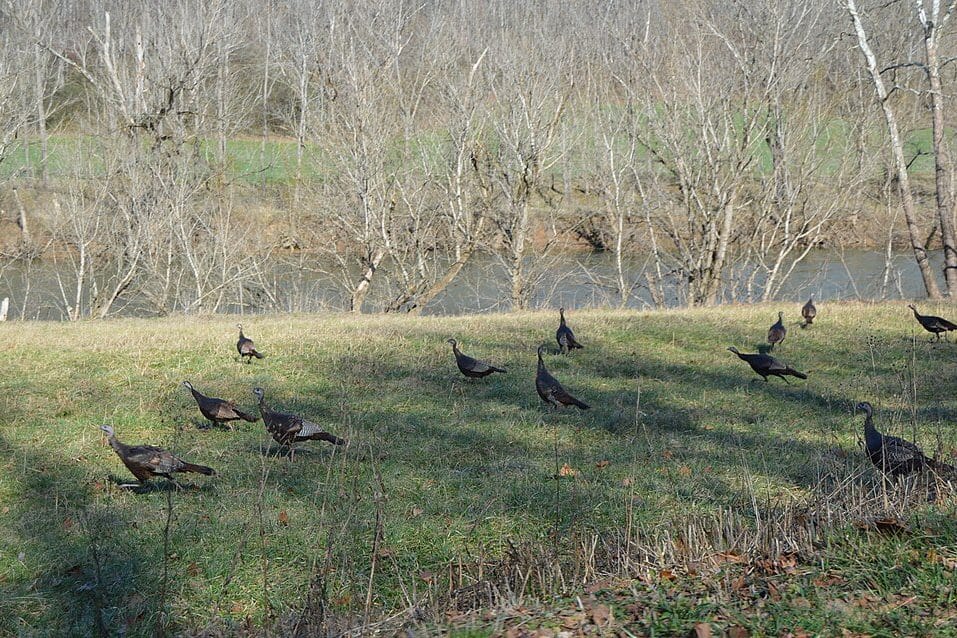
Most turkey hunters who try fall hunting for the first time bring their spring playbook with them, and it fails almost immediately. They find a flock, they sit against a tree, and they start yelping softly like they would for a henned-up gobbler in April. Nothing happens. The birds either ignore the calling entirely or drift away from it, because a fall flock isn't lonely and it isn't looking for a mate — it's a functioning social unit that already knows exactly where everyone is. The whole logic of fall turkey hunting runs backward from spring, and until you break that flock apart, you're not really hunting turkeys at all. You're just sitting in the woods near some.
Why Fall Turkeys Don't Answer the Way Spring Gobblers Do
In spring, you're calling to a gobbler that's actively searching for a hen, so a soft yelp or a series of cutts plays on real urgency — he thinks he's missing out. In fall, hen groups and juvenile flocks (broods of poults with a hen, or bachelor groups of jakes and adult gobblers) travel together for protection and don't have that same reason to move toward a call. A contact yelp from you sounds, at best, like background noise from a bird they already know isn't part of their group. At worst it sounds wrong enough to push them the other direction. The birds that do respond to fall calling aren't answering out of curiosity — they're answering because they've been physically separated from a flock they depend on, and reuniting with it is close to a survival instinct for a young turkey especially.
That's the entire fall strategy in one sentence: you're not calling turkeys to you, you're calling lost turkeys back together after you've made sure they're lost. Skip the separation step and the calling that follows is just noise into an empty woods. This is the part most hunters skip, usually because it feels less like hunting and more like spooking your own quarry on purpose — which, honestly, it is.
Scouting the Flock Before You Ever Bust It
You can't scatter a flock you haven't found, and finding one takes different scouting than spring gobbler work. Fall flocks key on food, not breeding activity, so start where the mast is falling. White oak acorns are the top preference across most of the eastern range, with red oak and beechnut as reliable backups once white oak runs out; in agricultural country, cut cornfields and soybean stubble pull flocks just as hard. Walk field edges and hardwood ridges early or late in the day looking for scratched leaf litter — turkeys flip leaves working backward and leave a fan-shaped disturbance that's easy to tell apart from deer or squirrel sign once you've seen it a few times. Dusting sites are the other giveaway: a shallow bowl of loose, powdery dirt, usually on a south-facing slope or field edge, ringed with tiny feathers and turkey tracks. Roost trees near water or on ridge points will show whitewash accumulation directly below them, and a flock that's using an area consistently will roost within a half-mile of its best food source most nights. Locator calls — an owl hoot at first light, a crow call, even a loud clap — will get a shock gobble or an alarm putt out of birds still on the roost and tell you where to focus without walking in and bumping them prematurely.
Reading Flock Composition
What kind of flock you find changes your whole approach. Hen-and-poult groups scatter in every direction and regroup fast, often within twenty or thirty minutes, because poults panic and call constantly for their hen. Bachelor groups of longbeards or jakes tend to fly farther, land in tighter sub-groups of two or three, and take considerably longer to come back — sometimes not until the next morning. If you're set up on a group of five jakes, budget your patience differently than you would for a hen with six poults trailing her through September cover.
The Bust: How to Break Up a Flock Correctly
Once you've located a flock, the goal is a full sprint into the middle of it — not a slow stalk, not a careful approach. A slow approach lets the birds walk away calmly in a loose group that stays in contact the whole time, which defeats the entire point. You want them airborne and running in different directions with no idea where the rest of the flock ended up. Move as fast and loud as you can manage through the last fifty yards, yelling, clapping, even firing a cap gun if the ground cover is thick enough that birds are slow to spook. The messier the scatter, the better the calling works afterward.
Mark exactly where the bust happened — a stump, a fence corner, a distinctive tree — because that spot, not wherever you feel like sitting, is where the flock will try to reassemble. Set up within fifty to seventy-five yards of it, ideally with your back against cover and a clear lane in at least two directions, and give the birds thirty to forty-five minutes to settle down and start calling to each other before you make a sound yourself. Move in too soon and you'll cut off natural reassembly calls that would have told you which direction to expect birds from.
Calling After the Bust: The Kee-Kee Run and the Assembly Yelp
This is where fall calling and spring calling stop having anything in common. The two calls that matter here are the kee-kee run — a young bird's contact call, three or four rising whistled notes followed by a couple of yelps — and the plain assembly yelp, a slower and coarser series than the seductive spring hen yelp. Neither one is trying to sound attractive. Both are trying to sound lost, which is a different job for your diaphragm or pot call and takes some deliberate practice before the season if you've only ever called spring birds.
Start soft and infrequent, listening hard between each series for a return call from any direction. Poults especially will answer fast, sometimes within a minute or two of the first kee-kee run, and their calls get noticeably louder and more frantic as they close the distance — trust that build in volume rather than second-guessing it. If nothing answers after fifteen minutes, move fifty to a hundred yards and try again rather than sitting indefinitely in a dead spot. Adult hens and gobblers take longer and call less, so a bachelor-group bust calls for more patience and a wider search radius than a hen-and-poult scatter does.
Setup, Decoys, and Patience
A single upright hen decoy or a jake-and-hen pair placed fifteen to twenty yards out gives returning birds a visual target to walk toward once they're close enough to see it, which matters more in fall than in spring because these birds are reuniting on sight as much as on sound. Skip the strutter decoy — you're not trying to provoke a dominance response, you're trying to look like part of the group that got separated.
Sit still and stay quiet between calling sequences; fall turkeys returning to a bust site come in cautious and alert, watching for exactly the kind of movement that gives away a spring hunter waiting on a gobbler that's already fully committed. Give any setup at least an hour before moving, and don't be surprised if the most productive calling happens the following morning at the same bust location rather than the same afternoon — flocks separated late in the day often don't finish reassembling until first light.
Know Before You Go
Fall turkey seasons, legal weapons, bag limits, and whether hens are legal to take all vary widely by state and sometimes by wildlife management unit within a state, so check your state wildlife agency's current regulations before you scout, not after you've already busted a flock on land you assumed was open. Some states run fall turkey only in specific zones or only with archery equipment; others allow either-sex harvest where spring is gobbler-only. None of that changes the tactics above, but it absolutely changes what you're legally allowed to do once a bird walks into range.