Why Your Treestand Is in the Wrong Spot (And How to Fix It)
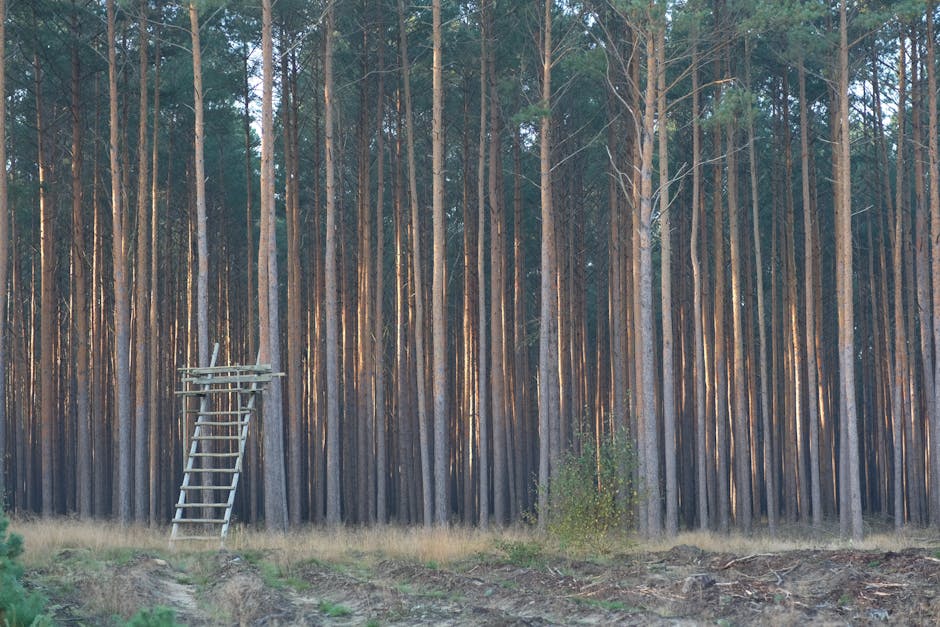
If you've sat the same stand for three seasons and you're seeing fewer deer each year, the stand is wrong, not the season. Hunters fall in love with locations because they're convenient — close to the truck, easy to climb, shade in the afternoon. Deer don't care about your convenience.
How to Tell Your Stand Is Dead
A dead stand has these signs:
- You sit all day and see one or two deer, maybe none, and the ones you do see are 200 yards off
- Trail camera coverage within 80 yards shows very little movement, or only nighttime movement
- Fresh rubs and scrapes are consistently elsewhere on the property
- You can smell yourself in the stand — which means the deer can too
- The wind shifts on you more often than it stays right
One bad season is a bad season. Three is a pattern.
The Three Things That Determine a Good Stand
Wind
Whitetails detect scent at ranges that don't feel fair. A cross-wind that blows from the stand to a thick bedding area a quarter mile away is a ruined stand, even if it looks good. Map your prevailing winds, then pick stand locations where the wind pushes your scent into unused country — across a pasture, into a road corridor, into a creek bottom where deer aren't moving.
The stands that kill consistently are wind-specific. You have a morning stand for a north wind, an evening stand for a west wind, and so on. One stand that you hunt every day, regardless of wind, is a stand you'll ruin within a few sits.
Sign
In September and early October, before the pressure kicks up, walk the property and find:
- Trails between bedding and food — not random deer trails, but ones with fresh tracks pointing both ways
- Community scrapes where multiple bucks hit — usually under a low overhanging branch along a travel corridor
- Rub lines — a sequence of rubs heading in one direction on a ridge, fencerow, or between cover types
- Natural funnels — creek crossings, fence gaps, low saddles in ridges
Put the stand near the travel corridor, not on the corridor. You want deer passing at 20 to 40 yards, not directly under you.
Access
How you get into the stand matters as much as the stand itself. If you walk through the best bedding on your property to reach your stand every morning, you've bumped the deer before you've sat down. They know.
Access routes:
- Use creek beds, ditches, or low spots that hide your silhouette and dampen sound
- If you can drive or ATV to within 150 yards of the stand without crossing a bedding area, do it
- Clear the walking trail in the summer so you're not crunching leaves at 5 a.m.
Diagnosing a Bad Stand
The "Too Deep in the Timber" Problem
Stands often get placed where the hunter feels comfortable, which is usually deep in cover. Deer move on transitions — edges of cover, between food and bedding — not in the middle of heavy timber during daylight. A stand 300 yards inside a big woods with no edges, no food, no travel pinch is a dead stand.
The "Two Hunters, One Trail" Problem
You and your buddy both hunt the same forty acres. His stand is on the other side of the ridge from yours. Deer that bumped off his stand in the morning don't come anywhere near yours all day. Coordinate. Rotate. Don't hunt stands that blow into each other.
The "Field Edge Temptation"
Field edges look great on a September scouting trip — tons of tracks, big rubs. Mature bucks hit field edges at or after dark. A field-edge stand for an October evening hunt works; a field-edge stand during peak gun season usually doesn't. Move 50 to 80 yards back into the timber, onto the trail the deer used to get to the field.
The "Wrong Side of the Thermal" Problem
On steep terrain, thermals pull scent downhill in the morning as air cools, uphill in the afternoon as it warms. A stand above a bedding area in the morning sends your scent directly down into the deer. A stand below the same bedding area in the afternoon does the same thing going up.
Fix: morning stands should be downhill or level with the bedding area. Afternoon stands should be uphill or level.
Moving a Stand: When and How
Don't move a stand in late October through November. Any new stand that goes up in the rut needs to be hung and ignored for a week before the first sit. The disturbance itself is enough to shift deer patterns for days.
Summer through early October is the window. Set the new stand, trim shooting lanes, tag out access routes, then let it cool. First sit the new stand on a day with the correct wind — don't force it.
Saddles, Sticks, and the Mobile Setup
The last ten years of whitetail hunting has seen hunters shift toward mobile setups — a saddle harness or hang-on stand with climbing sticks, ready to move based on conditions. The logic is sound: a pre-hung stand commits you to a location; a mobile setup lets you hunt wind and sign day by day.
A minimal mobile kit: saddle platform and bridge, five sticks, a lineman's belt. Budget around $400 to $800 for a decent setup. More expensive than a $150 pre-hung stand, but you're not stuck with a bad spot.
If you're going to run a mobile setup, practice with it at home before opening day. Don't learn a saddle and aiding system in the dark on November 7.
The Hard Truth
Most hunters over-hunt their best stand and under-scout their property. The answer isn't always a better stand. Sometimes it's fewer sits, better conditions, and the discipline to sit elsewhere when the wind's wrong.
Walk the property in January after the season ends. Find where deer actually moved. Then set next year's stands based on evidence, not hope.