Deer Hunting 101: Everything a First-Timer Needs to Know Before Opening Day
You decided you want to hunt deer. Good. Here's the part nobody puts on the cover of a magazine: your first season is mostly going to be spent sitting still, learning that patience is a physical skill, and figuring out why your boots hurt on day three.
This isn't a guide to make you feel good. It's a guide to keep you from wasting a year.
Get Your Tag First, Not Your Rifle
The order most newcomers get wrong: they buy a rifle, then a scope, then camo, then look up the regs in October. Flip it. In most states, over-the-counter whitetail tags run $25 to $45 for residents and $150 to $400 for non-residents. Some states — Iowa, Kansas, Illinois — are draw only for non-residents, and you're already too late for this year.
Go to your state wildlife agency website before you spend a dollar on gear. Find out:
- Whether your county is gun, bow, or shotgun-only
- Which weeks are the firearm season (two weeks is typical; Pennsylvania is the exception most newcomers don't realize)
- What hunter-education course you need and whether it's online this cycle
Hunter-ed is mandatory in every state for first-time license buyers born after a cutoff year. It's $20, takes a weekend, and it's the only way to get your number on the license.
The Rifle Conversation
If somebody tells you that you need a .300 Win Mag for whitetail, ignore them. A whitetail at realistic eastern woods distance — sixty to a hundred and fifty yards — drops cleanly to a .243 Winchester, 6.5 Creedmoor, .308 Winchester, or .30-06 Springfield. The caliber argument has eaten more online hours than any actual deer.
Here's the short version:
- .243 Winchester — low recoil, plenty for deer, good for smaller shooters. Ruger American Ranch is about $550.
- 6.5 Creedmoor — the overbought caliber of the last decade, but genuinely good. Savage Axis II XP comes scoped for around $550.
- .308 Winchester — the honest workhorse. Remington 700 ADL in .308 sits around $650.
- .30-06 Springfield — if your father-in-law has one he wants to give you, take it.
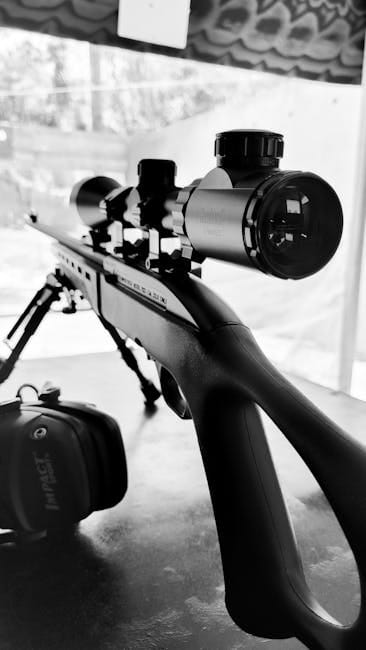
Skip anything branded as "tactical" for deer hunting. You don't need a twenty-round AR magazine and a bipod longer than your forearm.
The Scope You Actually Need
A 3-9x40 scope is almost always correct for whitetail distances. Don't buy a 6-24x50 because it looks serious. You'll spend 95 percent of your time on the lowest magnification and the other 5 percent regretting that you can't find the deer through your 24x field of view.
Vortex Diamondback 3-9x40 runs about $200. Leupold VX-Freedom 3-9x40 runs about $300. Either is fine for the next twenty years.
Where You Hunt Matters More Than What You Carry
A cheap rifle on a good piece of ground kills more deer than an expensive rifle on bad ground. This is the hardest lesson to accept because it requires work you can't buy.
Your options:
- Public land — free, crowded on opening weekend, usually excellent by the second week when the weekend warriors leave
- Knocking on doors — still works in rural areas. You'd be surprised how many landowners say yes to a polite adult who offers to help with fences
- Leasing — $10 to $30 per acre annually in the Midwest, much higher in Texas trophy country
- Join a club — common in the southeast, $500 to $2,500 a year for a share
Scout before the season. In August and September, walk the property and find where deer bed, where they feed, and the travel routes between those places. A deer is not a random event; it's a creature of habit until the rut rearranges its brain.
The Stand or the Ground
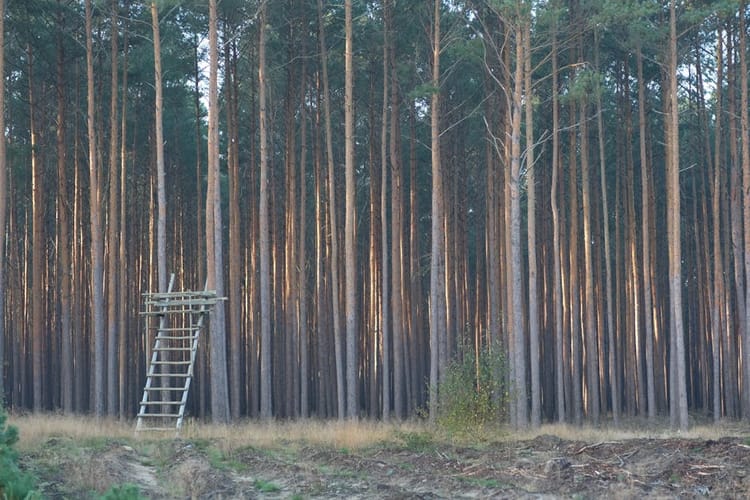
Most first-timers go up a tree because that's what the magazines show. Treestands work. They also fall. Use a full-body harness every time — no exceptions, no "just this once to grab my bow." More hunters die from tree falls than from any other cause.
Ground blinds are underrated. A $150 Ameristep pop-up blind on the edge of a cornfield with a zero-sight-line setup behind you will kill deer. If you can sit still, you don't need to be twenty feet up.
The non-negotiable on either setup: know your shooting lanes before the season. Walk them. Measure them with a rangefinder. Trim branches in September, not on November 14th when you're flushing the deer you're trying to kill.
Opening Morning: What to Actually Do
Get in the stand at least an hour before legal light. Legal light is thirty minutes before sunrise in most states. So you're in the dark for ninety minutes. Bring a thermos.
Do not move when a squirrel makes noise behind you. Do not move when your hands get cold. Move when you have a deer committed, and move slowly.
Take the broadside shot. Pass on the head-on shot. Pass on the Texas heart shot, whatever your uncle told you about it. Double-lung is the shot that ends clean. Aim behind the shoulder, a third of the way up the chest.
After the Shot
Wait. Even if you're sure. Even if you think the deer dropped. Give it thirty minutes on a lung shot and two hours on a gut shot. Adrenaline pushes you to walk up immediately; discipline pulls you back.
Track slowly. If you lose blood, grid-search. A deer rarely travels more than two hundred yards on a lung hit but they can run surprising distances.
Field Dressing: The Part Nobody Films
You shot it. Now you have to gut it before the meat spoils. Bring a sharp knife — the Havalon Piranta with replaceable blades is what most guides use now, about $40 — and nitrile gloves.
Roll the deer on its back, slit from sternum to pelvis, cut around the anus, pull the entire gut sack out. Don't puncture the bladder or stomach. Keep the heart and liver if you like them. Prop the cavity open with a stick to let it cool.
If it's above 50°F and you can't get the deer to a cooler within a few hours, you're going to lose meat. Plan for that before you pull the trigger.
Mistakes First-Timers Make
- Over-gunning — buying a magnum for a 100-yard woods hunt
- Under-practicing — zeroing the rifle once in September and never shooting it again until opening day
- Hunting too early in the morning — most deer movement is the last hour of light in the first week of the season
- Moving too much in the stand — you're not invisible, you're just harder to notice when still
- Shooting beyond their skill — if you haven't shot a four-inch group off a bench at the distance, don't take that distance in the field
The Part That Takes Years
Reading a woodlot. Knowing how wind changes at dusk. Understanding that the deer you watched all summer is not the same animal in November. Figuring out whether the track you're looking at is two hours old or two days old. None of this comes from reading. It comes from being out there, season after season, doing the work.
First-year hunters who kill a deer get lucky. First-year hunters who don't shouldn't feel bad. The people who quit after a blank season miss the part where you become a hunter instead of a person with a rifle.
Get your tag. Get a rifle that works. Find a piece of ground you can get to. Sit still. The rest of it arrives over time.