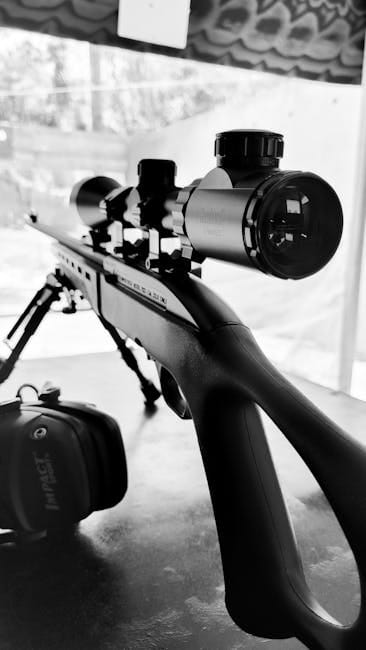
Every gun store in America has been moving in the same direction for the last decade. Walk into a Cabela's or Scheels in any state and look at the rifle wall. The vast majority of new hunting rifles on the display, especially in the $800 to $1,500 range, are topped with scopes that start at 4 power and top out at 16 or 18. Vortex Diamondback 4-16x44, Leupold VX-5HD 3-15x44, Nikon Black X1000 4-16x50, the list goes on. What you rarely see anymore is the scope that killed more whitetails in North America than any other optic ever made, the humble 3-9x40.
I have been hunting whitetails in Michigan, mule deer in Colorado, and elk in Idaho since the late 1990s. I have owned both styles of scope, in roughly equal numbers, over those years. After all of that, I have come to a firm opinion most modern gun writers would call heretical. For the average hunter, shooting average rifle distances, in the actual conditions deer and elk are killed in, the 3-9x40 is a better tool than the 4-16x50. I will defend that position with anyone who cares to listen.
The Distances Nobody Wants to Admit
The bulk of North American big game is shot inside 200 yards. Not 300. Not 500. Inside 200, closer to 150 for most whitetail hunters and a lot of western hunters too. I have heard the surveys. I have talked to taxidermists who weigh hundreds of deer a season and ask every customer the same question. I have read the data from Quality Deer Management Association. The national average hunting shot distance on whitetail is right around 110 yards. On mule deer and elk, it creeps up to 200 to 250, but the vast majority are still inside 300.
Why does this matter? Because at 150 yards, 9x magnification is actually too much. You can see a deer's individual hair follicles. You can see the deer breathe. What you can also see is every tiny tremor in your position, every heartbeat in your crosshair, every bit of mirage between you and the animal. More magnification amplifies wobble. At 3x to 5x, a deer at 150 yards fills enough of your scope to aim precisely while letting you hold steady. At 9x it is twitching and drifting in ways that actively hurt your accuracy.
I watched a guy at the range last year working up a load for a new rifle, a Bergara B-14 in 6.5 Creedmoor. He had a Vortex Viper 4-16x50 mounted on it. At 100 yards, he was shooting groups on a standard deer-sized target cranked to 16x, and he could not hold the crosshair on the target. It danced around a six-inch circle. I loaned him my Leupold VX-Freedom 3-9x40 on the same rifle, dialed back to 5x, and his group tightened to under an inch. The scope was not making him a better shot. It was making him a worse one.
The Weight and Mount Height Problem
A 4-16x50 scope weighs close to 22 ounces empty. A 3-9x40 weighs around 12. That is ten ounces of weight on top of your rifle. On a mountain hunt, ten ounces matters. On a walking whitetail hunt on a cold morning in November, ten ounces also matters, just less.
The bigger issue is mount height. A 50mm objective lens forces higher rings to clear the barrel. Higher rings mean a higher line of sight above bore, which means a different holdover model, which means the zero you use at 100 yards is different from the zero at 25 yards. For most hunters this is invisible, but if you have ever missed a deer at 40 yards because you thought you were dead on at 100, now you know why. High-mounted scopes with the cheek weld crawl of a normal hunting stock introduce parallax errors.
The Low-Light Factor, Honestly
Gear reviewers love to talk about how a 50mm objective lets in more light in low conditions. This is theoretically true. It is also overstated. The human eye, at its maximum dilation in late evening or early morning, has a pupil about 5 to 6 millimeters across. The exit pupil of a scope, which is the bright circle of light that reaches your eye, is the objective divided by the magnification. A 3-9x40 at 5x has an 8mm exit pupil, larger than your eye can even use. A 4-16x50 at 6x has an 8.3mm exit pupil, essentially identical.
At the high end of magnification, 4-16x50 at 16 power has a 3.1mm exit pupil, which is actually worse for low light than a 3-9x40 at 9 power, which is 4.4mm. The idea that you gain low-light performance from a bigger objective is true only at certain power ranges, and at the ranges you actually hunt with, it is essentially a wash.
When the 4-16x50 Actually Makes Sense
I am not saying high-magnification scopes are worthless. They are not. If you genuinely hunt open country at 400 plus yards, mule deer on flat-out plains in Wyoming, pronghorn on the sage flats of Nevada, or coyotes at long range, a 4-16 or 5-20 makes sense. You need the magnification to identify the target and hold for precise aimpoint at distance. For those specific use cases, spending $900 on a Leupold VX-5HD 4-16x50 is smart money.
Similarly, if you shoot a lot of long-range precision practice during the off-season, and you actually train at 600 to 1,000 yards, a scope that gets you there makes sense even for closer hunting because you are used to it. This is a small group of hunters. Most people who buy these scopes think they are in this group and are not.
The Truth About Turrets and BDC Reticles
Modern scopes often come with elaborate BDC reticles, Vortex's Dead-Hold BDC, Leupold's CDS-ZL, capped target turrets. These are useful at actual long range. They are useless at the 150-yard shots most hunters take, where a 100-yard zero covers everything out to 200 yards with a 3-inch maximum-point-blank arc.
If you know your rifle and cartridge, and you have a 100-yard zero with a modern 6.5 Creedmoor, a 308 Winchester, or a 30-06, you do not need to dial. You need to put the crosshair on the target and press the trigger. Adding a turret or a fancy reticle is adding complexity to a shot that does not need it. I have watched hunters miss deer because they were trying to remember which hash mark to use at an estimated 175 yards when a plain duplex reticle centered on the shoulder would have dropped the deer cleanly.
What to Actually Buy
If you are buying a new deer or elk rifle and you do not shoot beyond 300 yards with any regularity, skip the 4-16x50. Get a 2-7x33 like the Leupold VX-Freedom 2-7x33 for a thick-timber whitetail rifle. Get a 3-9x40 or 3-9x50 for a general-purpose hunter, something like the Vortex Diamondback 3-9x40, the Leupold VX-3HD 3.5-10x40, or the Burris Fullfield IV 2.5-10x42. Budget around $300 to $600 for a quality scope in that range.
Spend the savings on ammunition and range time. A $400 scope on a rifle you have shot 500 rounds through will outshoot a $1,200 scope on a rifle you have shot 80 rounds through, every single day of the week. The scope does not make you accurate. You make yourself accurate.
The Optics I Actually Own
My Tikka T3x Lite in 6.5 Creedmoor wears a Leupold VX-Freedom 3-9x40. My Savage 110 Apex in 30-06 wears a Vortex Diamondback 3-9x40. My brush-gun lever action in 45-70 wears a Leupold VX-Freedom 1.5-4x20. I have never felt undergunned in the optics department. I have killed every animal I have pointed any of those rifles at.
The one exception is my long-range target rifle, a custom 6.5 PRC bolt action I built to ring steel at 1,000 yards for fun. That rifle wears a Nightforce NX8 4-32x50, a $2,600 scope, because that is what long-range target shooting actually requires. I do not hunt with it. It would be wasted on a 150-yard whitetail, and I would hate carrying the weight through any country worth hunting.
Match the tool to the actual job. The 3-9x40 has killed more game in North America than any other scope design in history because it was always the right tool for the hunting the vast majority of people do. The marketing has moved on, but the game animals have not. Think about what you actually hunt, at what actual distances, and buy the scope that matches that reality rather than the one on the showroom wall.