Decoy Spreads for Big Water Divers vs. Small Creek Mallards
The decoy spread that kills bluebills on a Great Lakes bay at 30 mph looks nothing like the spread that kills mallards on a half-acre beaver pond. Hunters who run the same setup in both places do fine in one and poor in the other. The birds respond to different things, so the spread has to do different things.
Diver Ducks: Big Water, Big Spreads
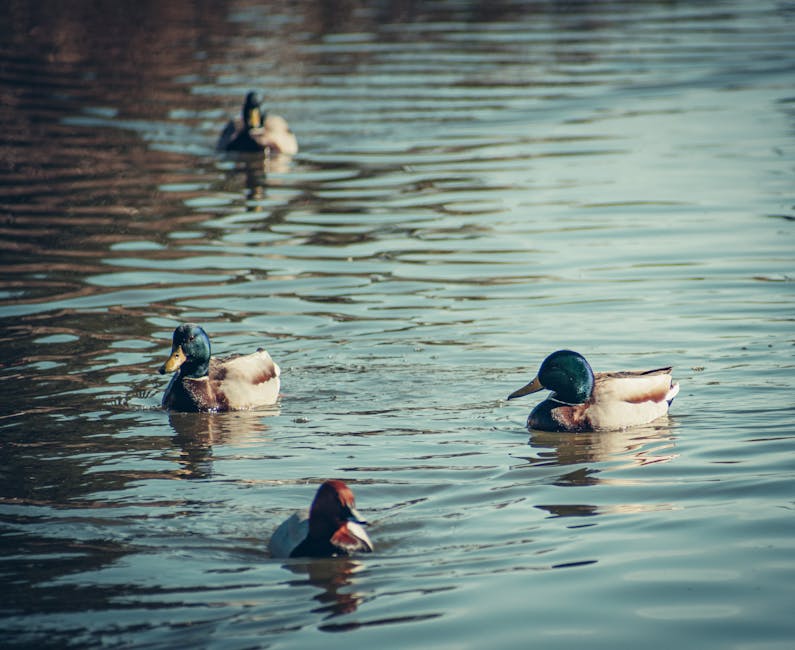
Divers — bluebills (scaup), redheads, canvasbacks, ringnecks, goldeneyes, buffleheads — raft up in huge groups on open water. They fly fast, low, and decisively. Their decoy spread strategy is built around visibility and mass.
The Long Line
The classic diver setup: a long line of decoys stretched 30 to 80 yards off the blind, forming a gun-sight shape or a fish hook. The long line draws birds across the open water; the hook or clump at the end is the kill zone where they commit.
- Standard spread: 3 to 6 dozen decoys (or more on big bays)
- Mostly bluebills and ringnecks on the line; a few canvasbacks for visibility
- All facing generally into the wind
- Blind positioned at the "pocket" of the hook or tail of the gun-sight
Why Numbers Matter
Diving ducks see rafts of their own kind from a mile away and come to investigate. A spread of 12 decoys on a 300-acre lake reads as lonely and gets ignored. A spread of 60 reads as a raft worth checking.
Motion from wave action on the open water makes it easier than for puddle-duck hunters — you don't need spinning-wing or jerk string motion as much.
Layout Boat or Shoreline Blind
Big-water diver hunting often happens from a layout boat anchored in the spread or a shore blind on a point. Layout boating is cold and requires experience; don't try it your first season in November 30-knot winds.
Puddle Ducks: Small Water, Intimate Spreads
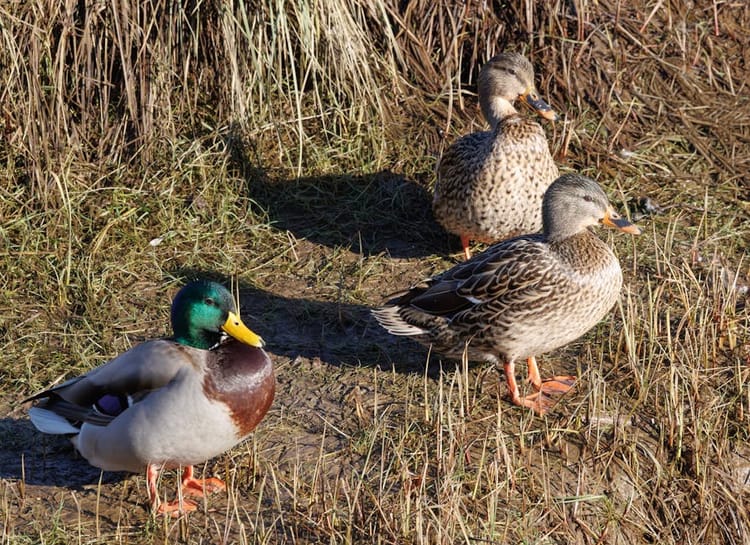
Mallards, gadwall, wigeon, teal, pintail, and black ducks use shallow freshwater — beaver ponds, flooded fields, river backwaters, marsh holes. The decoy spread here is smaller, more detailed, and responds to the birds working the hole rather than crossing long distances.
The Small-Water Setup
- 12 to 36 decoys
- Mostly mallards, with 4 to 8 wigeon, gadwall, or teal for species variety
- Arranged to leave a landing hole 12 to 20 yards across
- Hole positioned downwind of the blind, in shooting range
The key: birds read a small-water setup closely. They see individual decoy heads. A spread with all active poses and no resters reads as panicked; a spread with 70 percent feeder/rester poses and 30 percent active reads as comfortable.
Motion on Small Water
A jerk string — two or three decoys on a tether that you pull to create ripple — is the single most productive motion addition on small water. Flapping-wing decoys (spinning-wing "mojos") work early in the season and after low hunting pressure; they become a liability on pressured birds who've seen them week after week.
Legal status varies: check your state and refuge rules on motorized or spinning-wing decoys.
Timber Spreads
Flooded timber in Arkansas or Mississippi is its own category. The spread is tiny — 6 to 20 decoys, clustered in an opening between trees. Birds swing low and circle, looking for the hole in the canopy to land. Motion comes from hunters kicking water to create ripples.
This is the hunt where calling, blind concealment, and reading birds matters more than decoy count. A good caller with a dozen decoys in timber outshoots a bad caller with six dozen.
Sea Ducks and Exceptions
Sea duck spreads (eiders, long-tailed ducks, scoters) use massive decoy numbers — 6 to 10 dozen — on coastal reefs or bays. Specialized sea duck decoys are heavier (weight-keeled for rough water) and come with long mother lines for efficient pickup.
Geese get their own treatment. A goose spread is species-specific and usually much larger than a duck spread — 4 to 12 dozen full-body or silhouette decoys, often in species-specific formations.
Common Mistakes
- Running an identical spread all season as pressure changes — birds wise up
- Over-calling to birds that are already working the spread
- Putting the spread in position for the wind you expected instead of the wind you have
- Spreading decoys too far apart on small water (looks panicky)
- Bunching decoys too tight on big water (looks fake)
Storage, Weight, Cost
A 6-dozen diver spread weighs 80 to 120 pounds with lines and weights. Trailer or boat storage is a necessity. Quality decoys — Avian-X, Dive Bomb, Final Approach, Dakota Decoys — run $60 to $120 per dozen for plastics, more for premium.
Weights and lines are another $50 to $100 per dozen if you're rigging them yourself. Pre-rigged decoys from Dive Bomb or Higdon run $180 to $250 per dozen.
The Spread That Works
The best decoy spread is the one you put in the spot birds want to be, in a way that matches what they expect to see there. Big water needs big, loose, and visible. Small water needs small, detailed, and natural. Timber needs almost nothing at all.
Spend time learning one water type before you buy decoys for three. A master of small-water mallards beats a dabbler of all water types every time.