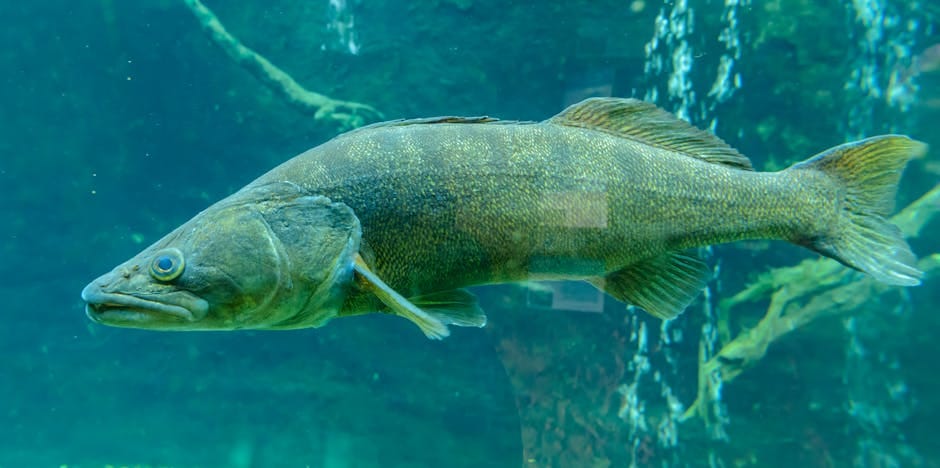
Walleye have a reputation for being difficult, and they earn it. They don't hit aggressively like smallmouth. They feed in tight windows. They suspend off structure in ways that make precise presentations matter. On Lake Erie, Lake Winnebago, Mille Lacs, Leech, or the countless smaller Midwest lakes and rivers where walleye live, consistent catches come from a narrow set of techniques.
Why Walleye Are Hard
Walleye have light-sensitive eyes. They feed aggressively at dusk, dawn, overnight, and on overcast days with chop. Calm, sunny days push them deep and make them lethargic. They follow forage — shiners, perch, cisco, shad — in ways that can change daily.
They're also bottom-oriented predators that use structure intelligently. Finding them on a 50-foot hump in 60 feet of water requires sonar, mapping, and patience.
Jigging: The Foundation
A jig-and-minnow or jig-and-plastic presentation is the single most productive walleye technique across most conditions.
The Setup
- 1/16 to 3/8 oz jighead
- Fathead minnow, plastic swimbait (like a Northland Impulse Paddle Minnow), or a plastic shad tail
- Medium-light spinning rod, 6'6" to 7', fast action
- 6 to 10 lb fluorocarbon line or 10 lb braid with fluoro leader
Presentation
Vertical jig or cast-and-retrieve. Vertical jigging on deeper structure: drop the jig to bottom, lift rod tip 12 to 18 inches, let it fall back. Watch for light taps. Walleye bites are subtle — a soft "tick" on the fall or a sudden heaviness.
Casting in shallower water: cast parallel to structure, let the jig fall, hop it back with short rod-tip lifts.
Pulling Crankbaits
Also called trolling cranks. A boat moves at 1.5 to 2.5 mph with deep-diving crankbaits behind. The lures run at specific depths based on line length, boat speed, and lure dive curve.
Popular Cranks
- Rapala Shad Rap — $12. The timeless walleye crank.
- Berkley Flicker Shad — $8. Cheap and productive.
- Reef Runner Ripstick — $15. Big water classic.
- Salmo Hornet — $14.
- Storm Hot N Tot — $10.
Line Counters
A line-counter reel — Okuma Convector LC, Daiwa Lexa LC — lets you set the exact amount of line out. This matters because a specific crankbait running at 220 feet of 10 lb mono will be at 18 feet deep; at 180 feet, it's at 15 feet deep.
Precision matters. Walleye relate to specific depths; if your cranks are running at 20 feet and the fish are at 24, you'll catch nothing for hours.
Live Bait Rigs
A Lindy Rig or similar sliding sinker rig with a live leech, nightcrawler, or minnow. Trolled slowly or drift-fished.
The Lindy Rig
- 1/4 to 3/4 oz walking sinker
- Bead stop
- Swivel
- 4 to 6 feet of fluorocarbon leader
- Size 2 or 4 octopus hook
- Live bait — leech, crawler, or minnow
Drag along bottom at 0.5 to 1.2 mph. Watch for pressure changes. Feed line to the fish when you feel a pickup; walleye hold bait for 3 to 8 seconds before swallowing.
Slip Bobbers
Underrated and devastating on suspended walleye. A sliding bobber stop on the main line, a bead, a slip bobber, a split shot or two, and a hook baited with a leech, minnow, or crawler. The bobber stops at a set depth, suspending the bait exactly where walleye are holding.
Slip bobbers excel in:
- Weed edges in 6 to 14 feet
- Off rocky points
- Over sand flats at dusk
- Anywhere walleye are suspended at a specific depth
A Thill Mini Stealth or Beckman Slip Bobber works fine. Stops and beads: Eagle Claw or Thill from any tackle shop.
Electronics
Modern walleye fishing on big water is a sonar game. Live-sonar technology — Garmin LiveScope, Lowrance ActiveTarget, Humminbird MEGA Live — shows fish in real time. Anglers target individual walleye and put lures in front of them.
Traditional 2D sonar and side-imaging — Humminbird Helix 9, Garmin EchoMap — still work for finding bottom structure and schools without live-scope sticker shock. A budget of $800 to $1,500 gets you capable electronics.
Where to Fish
Lake Erie
Probably the best walleye fishery in the world by numbers. The western basin (Maumee River through Sandusky) holds huge walleye populations. Chartered trips run $150 to $300 per person per day.
Mille Lacs (Minnesota)
Historic walleye water. Regulations have tightened in recent years due to population management; stay current on rules.
Lake of the Woods (Minnesota/Ontario)
The saugeye and walleye water of the border region. Massive, historically productive, year-round.
Winnebago System (Wisconsin)
Lake Winnebago, Winneconne, Butte des Morts, Poygan. Shallow, dark-water walleye fisheries with excellent numbers.
Smaller Lakes
Every Midwestern state has walleye lakes below 5,000 acres that get less pressure and fish well. Ask at the local bait shop.
Timing
Spring (April-June) post-spawn. Summer (July-August) deep structure. Fall (September-November) pre-winter feed. Walleye are catchable year-round but the productive patterns shift.
The Eating Part
Walleye is one of the best-tasting freshwater fish in North America. Fillet, bread, pan-fry. A shore lunch on a northern Minnesota lake in June is the Midwestern equivalent of a bonefish trip — not for the fish itself but for the experience of being there.