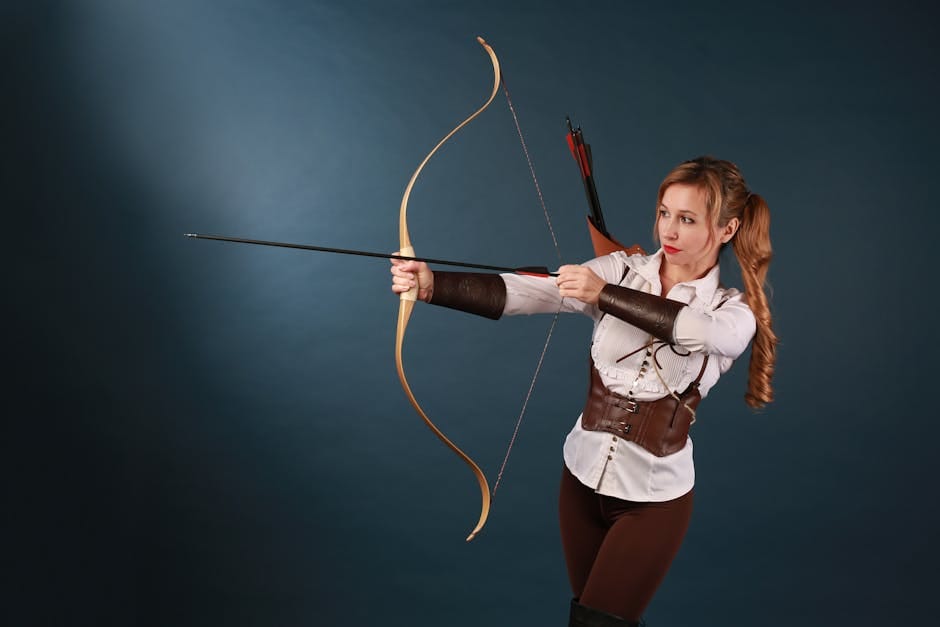
Every October my buddy Tom and I sit around a fire at his cabin in the Allegheny Mountains of Pennsylvania and argue about traditional bows. He shoots a 62-inch Bob Lee recurve, 50 pounds at his 28-inch draw. I shoot a 64-inch Stonehaven longbow, 52 pounds at 28. We have been having this argument since roughly 2008, and we will have it again this fall. Neither of us has ever convinced the other of anything, but we have both killed plenty of deer with both types of bows at this point, and the honest answer has become a lot simpler than either of us wants to admit.
If you are picking your first traditional bow, or thinking about switching from a compound to stickbow for the challenge of it, forget the internet arguments. Both bows kill deer. Both are effective to about 20 yards in the hands of a practiced shooter. What separates them is not performance. It is feel, and how each bow forces you to shoot.
The Mechanical Truth First
A recurve has limbs that curve away from the archer at the tips. This stores more energy per inch of draw and usually produces a slightly faster arrow. At 50 pounds and 28 inches of draw, a modern recurve like the Bob Lee Signature or the Black Widow PSAX pushes an arrow around 175 to 185 feet per second, depending on arrow weight. A comparable longbow, same draw and weight, runs 160 to 175 feet per second. That is a meaningful difference on paper. In practice, within the ranges a traditional hunter should be shooting, it changes almost nothing.
The difference for both styles starts to matter at 25 to 30 yards, where trajectory drops hard. If you are tempted to shoot a deer at 30 yards with either bow, do not. That is a compound distance. Traditional archery is a 15-to-20-yard game, and at those ranges, 15 feet per second of arrow speed is invisible. The arrow gets there while the deer is still trying to figure out what the sound was.
What the Longbow Actually Gives You
A longbow is a simple stick with a string. The straight-limbed profile gives you a smoother draw cycle with less stacking at the back wall, which for some shooters matters a lot. When I come to my anchor, I do not feel a hard cliff of weight at the end. I feel a gradual, consistent pull right up to my face. It forgives small inconsistencies in draw length in a way a recurve will not. Pull half an inch short on a recurve and you lose real energy. Do the same on a longbow and you lose a trivial amount.
Longbows are also quieter, almost universally. Something about the straight limbs and the way they release energy produces a softer thump instead of the recurve's sharper twang. In a treestand at 12 yards from a wary doe, that matters. My bow makes a sound like a heavy book dropped on a rug. Tom's recurve makes a sound closer to a muted handclap. Deer react more to his shot sound than mine, by a clear margin, in my experience. Is this a night-and-day difference? No. But it is real and I have watched it a hundred times.
The Longbow Aesthetic
There is also a philosophical argument about longbows, which I find harder to articulate but not less true. The longbow predates most of recorded history. It is the oldest bow design on earth, essentially unchanged from the yew staves the English used at Agincourt. When I shoot my longbow I feel connected to that lineage in a way that a recurve does not quite produce. This is not rational. It is pure feel. But feel matters when you are spending 40 hours a season in the woods with this tool, and anyone who tells you it does not is lying.
What the Recurve Gives You
A recurve is more forgiving on arrow tuning, meaning a slightly wrong-spined shaft will still fly acceptably. Longbows are less forgiving here and demand closer attention to arrow selection. If you are new to traditional archery, that matters. You will likely be shooting less-than-ideal arrows for a while as you sort out spine, point weight, and fletching. A recurve covers those sins better.
Recurves are also shorter, typically 58 to 62 inches versus 64 to 68 for a longbow. For tree stand hunting in thick brush or ground hunting from a blind, that is useful. I have clipped my longbow tip on a branch more than once on the way up a ladder stand. Tom, with his shorter recurve, has never had that problem. If you hunt out of tight spots, a recurve is the more practical tool.
The modern take-down recurve is also much easier to travel with. You unscrew the limbs, pack the riser separately, and the whole thing fits in a suitcase. A one-piece longbow is 64 inches of unbreakable stick, and you will be arguing with airline luggage policies for every trip. If you travel to hunt, the recurve wins on logistics alone.
Energy Storage and Broadhead Performance
Here is something most recurve-vs-longbow articles miss. For broadhead penetration on heavy animals, the recurve's slightly higher energy per pound of draw weight matters on marginal shots. A 50-pound recurve behaves more like a 55-pound longbow in terms of penetration. If you plan to hunt elk, black bear, or big mule deer where a clean pass-through matters more, go recurve. If you are strictly a whitetail hunter, it is a wash.
Which One Is Easier to Shoot Well?
This is the question nobody will answer honestly. The answer depends on you. If you have a long, slow, deliberate draw cycle, you will probably shoot a longbow better. If you come to anchor fast and lock in hard, a recurve will suit you. My draw takes about three seconds. Tom's takes about one. His draw style is wrong for my bow and mine is wrong for his. We have both tried each other's bows and shot poorly with them. That alone tells you that the two styles demand different techniques.
Most experienced traditional archers say recurves are harder to shoot consistently because the stack at the back wall amplifies errors in draw length. Most experienced traditional archers also say longbows are harder to shoot consistently because the lack of stack makes anchor verification less tactile. Both camps are right for their particular shooter. Pick the bow that feels right when you draw it back, not the one the magazine says is better.
Arrow Setup for Traditional
Regardless of which bow you pick, arrows matter enormously. I shoot 29-inch cedar arrows from Rose City, weighing about 500 grains total with a 125-grain Magnus Stinger broadhead. Tom shoots aluminum Easton XX75 2016s with the same broadheads. Both combinations work. What does not work is trying to shoot carbon arrows too stiff or too light for the bow.
For a 50-pound recurve, you are probably looking at a 55 to 60 pound spine cedar, or a 500 spine carbon with 125 grains up front. For a 50-pound longbow, bump spine down slightly to 50 to 55 pounds cedar, or a 500 spine carbon with 100 grains. Bare-shaft test your setup before you hunt with it. Shoot three unfletched arrows at 15 yards into a bag target next to three fletched arrows with the same point weight. The groups should touch. If they are inches apart, you have a spine problem that fletching is hiding.
The Practical Verdict
If I had to recommend one bow to a person walking into a trad shop for the first time, I would say a 55-inch to 60-inch recurve in the 45 to 50 pound range. Forgiveness on spine and on anchor, shorter profile, easier to travel with, slightly more broadhead punch. A Samick Sage runs about $150 and will serve you for years of learning before you feel the need to upgrade. Bob Lee, Black Widow, Morrison, and Striker all make $800 to $1,500 custom recurves that will last a lifetime when you are ready.
If you already know you want the oldest, quietest, simplest stick bow available, go longbow. A Stonehaven, a Bob Lee Signature Series Longbow, or a John Strunk if you can find one used, and you are set for life. I personally will die with a longbow in my hand because of how it makes me feel at full draw, and that is a perfectly valid reason to choose one. Just do not pretend the mechanical advantages make the decision for you. They do not. You do.
Two weeks ago Tom drew his recurve on a nice 8-pointer at 13 yards, made a clean double-lung shot, and tracked the deer 40 yards to where it piled up against a deadfall. Next morning I did the same thing with my longbow, minus the tracking distance because my arrow was sticking out of the dirt on the far side of the deer. Either bow, in a practiced hand, is a deadly hunting tool at traditional ranges. The stick you pick matters less than the hours you put into it.