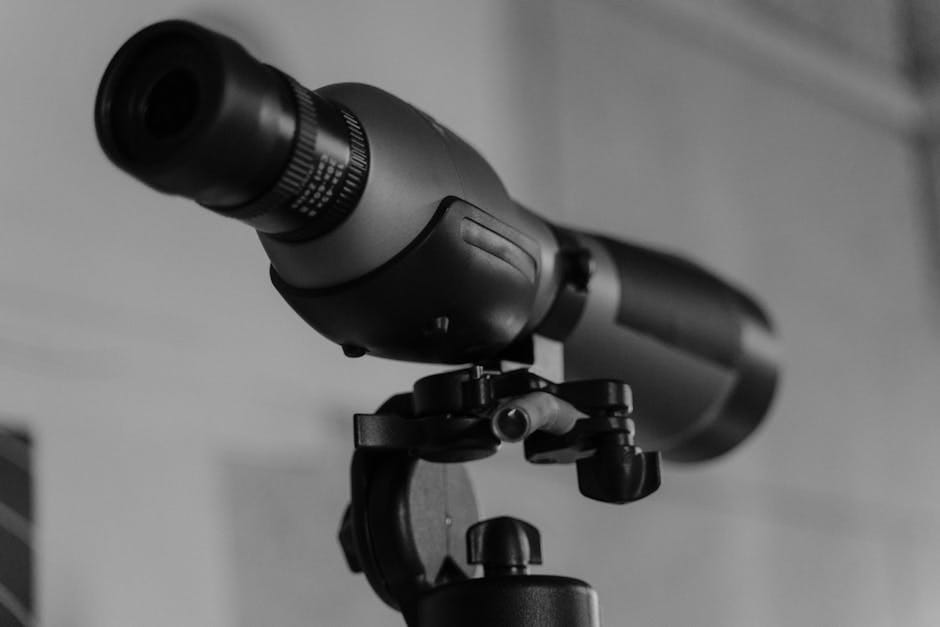
Last September I spent nine days in the White River National Forest in Colorado, glassing for elk in a basin at 11,200 feet. I had my Vortex Razor HD 27-60x85 on a carbon tripod. A guy camped 300 yards away had a Swarovski ATX 85mm with a 25-60 eyepiece. We bumped into each other on the fourth morning and he offered to let me look through his glass. I spent about ten minutes behind it, scanning the same spruce blowdown at 2,400 yards where I had been picking apart shadows for four days looking for bull antler tines. What I saw through the Swarovski was a different planet. Individual needles on individual branches. A cow elk bedded in a patch I had been glassing for an hour. I had missed her because my scope just would not resolve that much detail at that range in the early-morning haze.
Then he looked through mine and said it was a damn fine scope, which it is, and we both went back to camp and ate oatmeal. The lesson is not that Swarovski is better than Vortex. The Swarovski ATX retails for $3,200. My Razor HD was $1,700. For twice the price, you do get better glass. Whether that is worth it depends on you and what you hunt. This article is about the best spotting scope you can buy for under $2,000, and whether you should spend anywhere near that much in the first place.
What a Spotting Scope Actually Does
A spotting scope is not a binocular. It is not a rifle scope. It is a specialized tool for identifying what your binoculars told you was there. Your 10x42 binoculars see a dark shape on a ridge. Your spotting scope tells you that dark shape is a cow elk, or a rock, or a six-point bull with 50-inch beams. Without a spotting scope, western hunting is guesswork at anything past 800 yards. With one, you can spend hours grid-searching a basin and pick out individual animals at 2,500 yards.
For eastern whitetail hunters, this is all irrelevant. You do not need a spotting scope in Pennsylvania. Your binoculars cover the ranges you hunt. For western hunters, long-range varmint shooters, or anyone glassing coyotes on the prairie, it is essential. It is also expensive, fragile, and finicky, and picking the wrong one is a $1,500 mistake that hurts.
The Three Contenders
Swarovski STX 65mm with 25-60x Eyepiece
Swarovski's STX is the baby sibling of the ATX, the full-size 85mm or 95mm scope the serious guides use. The STX 65mm comes in just under $2,000 with the 25-60 eyepiece, around $1,950 retail. It is smaller, lighter, and more packable than the full ATX at 85mm. The optics are unmistakably Swarovski. The image is sharp, color-accurate, and has the kind of depth that makes you realize your other glass has been flat all along.
Where the STX 65 falls short is raw light gathering. A 65mm objective is smaller than the 85mm ATX or the 85mm Vortex Razor HD. In dim light, dawn and dusk, when elk and mule deer are on their feet, the smaller objective shows a dimmer image. At 60x magnification, the exit pupil is about 1.1mm, which is below what your eye can resolve in low light. You will find yourself dialing down to 45x just to keep the image bright, and losing resolution advantage.
The angled eyepiece is what I would choose every time over a straight eyepiece. Glassing at awkward angles up at a mountain, you do not want to crane your neck to a straight scope. Angled eyepieces let you hunch comfortably behind the glass for hours.
Vortex Razor HD 27-60x85
The Razor HD 27-60x85 is the scope I actually own and have used in a dozen western hunts. Retail is right around $1,700, often less at sales. Build quality is excellent, the housing is rubber-armored and has survived two bad falls on rock, and the optics are genuinely good. Not Swarovski good. But very good.
The 85mm objective gathers meaningfully more light than a 65mm, and the scope stays usable all the way to 60x at dawn and dusk, where the Swarovski STX 65 starts to dim out. For most western hunting applications, where you are glassing in the first and last hours of daylight, the bigger Razor pulls a lot of hunting weight the Swarovski STX 65 cannot.
Chromatic aberration, the purple and green fringing on high-contrast edges, is present but minimal. Resolution at long range, 2,000 yards plus, is noticeably behind Swarovski. Resolution at moderate range, 1,000 yards and in, is indistinguishable to my eye. The Razor is also substantially heavier than the STX, about 75 ounces versus 51 ounces. Off a tripod in camp, that does not matter. In a backpack on a 12-mile day hike to glass a basin, it matters.
Vortex's VIP warranty is a real consideration. I have sent in equipment with dropped-rock damage that was absolutely my fault and received a repaired or replaced unit at no charge. That is a long-term cost savings that the European glass companies simply do not match.
Leupold SX-5 Santiam HD 27-55x80
Leupold's SX-5 Santiam comes in around $1,100 to $1,300, a notable step down in price from both the Swarovski and the Vortex. It is lighter than the Razor, about 54 ounces, and comes with Leupold's limited lifetime warranty, which is generous but not quite the no-questions-asked VIP that Vortex offers. Glass quality sits between the Razor HD and the base-level Vortex Viper HD. It is good. It is not quite as good as the Razor.
At 55x maximum magnification versus 60x on the others, the Santiam gives up a bit on identification range. In practice, the difference between 55x and 60x at long range is smaller than it sounds because atmospheric haze limits resolution far more than magnification past 40x in most conditions. On a crisp morning in the Rockies, you can sometimes see better at 45x than at 60x because you are not magnifying the mirage.
The Santiam's ergonomics are excellent. The focus wheel is smooth, the magnification ring is firm but not sticky, and the included eyepiece cover actually stays on. Small stuff, but over a nine-day hunt you notice.
The Tripod Problem Nobody Talks About
A $1,700 spotting scope on a $90 tripod is a $1,800 disappointment. The tripod matters as much as the scope at the higher magnifications because any vibration or flex is amplified. You need a carbon-fiber tripod with a fluid head, and you should plan on spending $400 to $700 on this. A Gitzo GT1545T with a Manfrotto 410 junior geared head is a good combination. A Really Right Stuff TVC-23 with a BH-40 ball head is better and more expensive. A cheap aluminum tripod from a big-box store will undercut any scope you put on it.
I made this mistake for years. I finally bought a proper tripod in 2019 and realized my spotter was considerably sharper than I had been giving it credit for. The image had been vibrating in 5mph breezes.
Which One Would I Buy Now
If I had $1,700 for a spotting scope today and was starting from zero, I would buy the Vortex Razor HD 27-60x85. The combination of light-gathering from the 85mm objective, the warranty, and the overall optical quality beats both alternatives for general western hunting use. For a lighter, packable option, the Swarovski STX 65 is genuinely better glass, but the smaller objective hurts in the conditions you most need it.
If I were tight on budget at $1,200, the Leupold SX-5 Santiam gets most of the job done. You will see what you need to see to identify game at 1,500 yards. You will not see individual hair detail at 2,500 like Swarovski will.
If I had $3,000 and absolutely needed the best sub-$2,000 glass I could buy, I would bump my budget to $3,200 and buy the Swarovski ATX 85mm modular scope with the 25-60 eyepiece, which is actually a different universe of optical performance. But this article is about sub-$2,000 scopes, and within that price, Vortex Razor HD is my answer.
What Actually Matters After You Pick
Once you have a good scope on a good tripod, the skill of using it comes in. Learn to grid-search a slope methodically, starting top-left and working line by line across to the bottom-right. Spend 15 to 20 minutes on each basin, not five. Focus sharp on something at the same distance as what you are glassing, then scan for shapes that do not belong, not specifically for animals. Your eye will find what it has been trained to find.
I spotted three bulls in three days in Colorado last fall. Two were in obvious open meadows and the Razor had no trouble picking them out at 1,400 yards. The third was a bedded five-by-six bull tucked into a shadow patch in lodgepole pine at 2,100 yards. I only saw him because I was in hour three of glassing the same slope, my eye had learned every rock, and his ear twitch caught me. No scope magnification replaces hours behind the glass. But better glass makes those hours more productive, and that is why the price jump from $400 budget spotters to a real $1,700 scope is worth the money for any serious western hunter.