Reading Trout Water: Seams, Buckets, and the Lazy Inside Bend
Trout don't live in the whole river — they live in specific pieces of it. Here's how to read water and put your fly where the fish actually are.
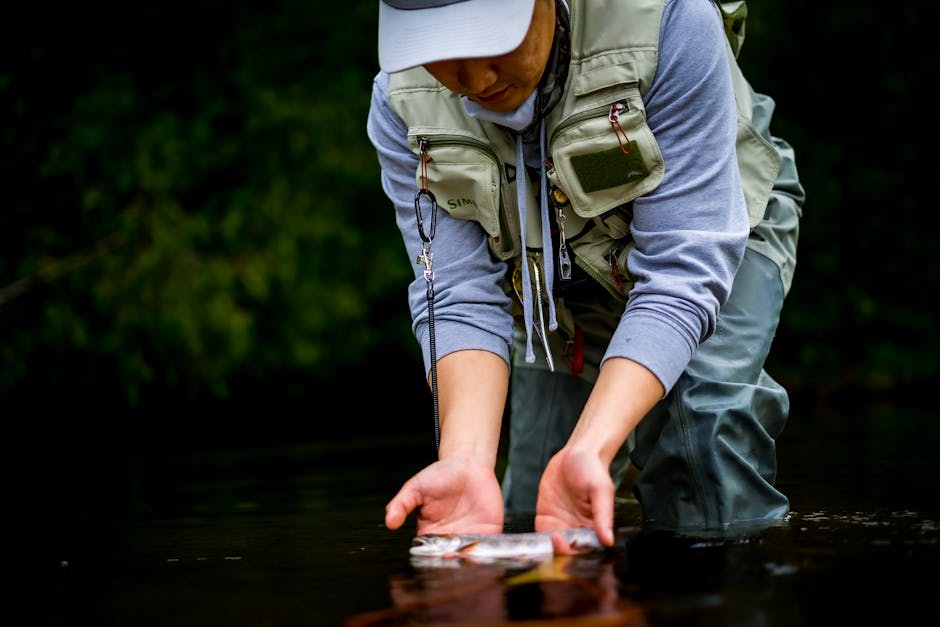
A beginner fly angler looks at a river and sees water. A hundred hours in, you start to see the river as a map of specific places fish live versus places they don't. This shift is probably the biggest difference between anglers who catch fish and those who don't — not their casting, not their flies, but their ability to read water.
What Trout Need
A trout needs three things in order of importance: safety from predators, a steady food delivery, and minimal energy expenditure. Water that provides all three holds fish. Water missing any of the three doesn't, or holds them only briefly.
The Seam
A seam is the boundary between faster and slower water. Think of a tongue of current flowing through a pool — the fast water in the middle, the slow water on either side. The seam is the narrow band where they meet.
Trout hold in the slow water and watch the fast water deliver food. They don't fight current unless they have to; they sit in slower water and let the fast water push caddis, nymphs, and midges past their face. Seams are feeding lanes.
You cast your fly into the fast water upstream and let it drift into the seam. The fish is positioned at the edge, watching.
The Bucket
A bucket is a depression in the streambed where water eddies and holds bait. Rocks, logs, and uneven bottom create them. Trout hold in the slow water of the bucket while the main current flows past.
Look for:
- A pillow of slack water behind a rock
- A hole downstream of a log jam
- An eddy where current reverses direction
- A pocket on the inside of a rock
These are not just holding lies — they're feeding lies where fish actively eat.
The Inside Bend
Rivers bend, and when they do, current piles up on the outside. The outside bank is typically deeper, faster, and carved. The inside bank is shallower and slower.
Most beginners fish the outside because it looks deeper, darker, more "troutlike." That's often wrong. The inside bend — the shallower, slower side — often holds more fish because:
- Slower current demands less energy
- Food drifting on the main current gets pushed toward the inside as the river curves
- Structure is often along the inside edge
Good anglers know to fish the inside bend first, especially in the middle foot or two of water depth.
The Head of the Pool
The place where fast broken water enters a pool is called the head. It's an oxygenated, food-rich spot where fish feed actively on nymphs and emerging insects. Trout hold in the transition zone between the incoming current and the deeper pool water.
Classic head-of-pool lie: 2 to 4 feet below the riffle, in slightly slower water, just off to one side of the main current tongue.
The Tail of the Pool
Where the pool narrows before exiting downstream, current accelerates. Trout hold here to feed on insects getting pushed through the tail. It's a smaller window — fish in the tailout are often wary because they can see upstream clearly.
Tail of pool fishing is often the most technical. Drag-free drifts and careful approach matter. A clumsy cast in the tail spooks the whole pool.
Structure Explained
Structure means anything in the river that breaks the flow: rocks, logs, undercut banks, bridge pilings, weed beds. Trout use structure for cover. Every piece of structure has water around it that's worth a cast.
Rocks
A midstream rock has three potential lies — upstream pillow (water slows in front of the rock), downstream eddy (slack water behind), and side edge seams (where fast and slow meet). Each holds fish at different times.
Logs and Wood
Fallen trees and log jams create complex current breaks. Fish hold in the current-free water underneath and behind. Getting a fly in there requires a heavy nymph or streamer and accurate casting.
Undercut Banks
Rivers carve banks, creating overhangs. Trout love undercuts — cover from above, cool water, steady food delivery. Getting a fly into an undercut requires casting to the edge and letting the current swing the fly under.
Depth and Holding
Trout need depth to feel safe. In rivers with heavy predator pressure (eagles, ospreys, otters, fishermen), trout won't hold for long in shallow water. The rule of thumb: if you can see the fish clearly from 40 feet away, the fish can see you from 40 feet away and has probably moved.
Productive depth ranges vary by river but 2 to 5 feet is usually the sweet spot. Shallower fish are transient; deeper fish are harder to target with nymphs or dries.
Time of Day
Trout move between lies throughout the day. Dawn and dusk, they move into shallower feeding lies and tailouts. Midday, they drop back to deeper structure and safety lies. Reading water has to include reading time — the productive spot at 7 a.m. isn't the productive spot at 2 p.m.
Training Your Eye
Good water readers do three things:
- Watch feeding fish when they find them — noting exactly where a rising fish holds tells you what kind of lie works
- Fish the same water multiple times, noting which spots consistently produce
- Study photos or videos of captured trout in aquariums or slow-moving water, noting how they orient to current
The 100-hour rule applies. Your first hundred hours, you'll miss most of the lies. After a hundred hours of focused observation and fishing, you'll start seeing the river as a map.
The Wader's Error
Most wading anglers fish from positions that are too deep in the water. You walk into the river, cast across, and retrieve. The trouble: you're standing in water that holds fish. You've spooked them before you cast.
Stay on the bank as long as possible. Approach from downstream and fish the near water first. Most productive water in a small stream is within 20 feet of the bank you're walking.
Putting It Together
Walk the river before you fish. Stand on high ground — a bridge, a hill, a rock — and watch the water. Pick out seams, buckets, inside bends, and head/tail transitions. Fish those spots first.
You'll catch more fish in two hours of fishing thoughtfully than in six hours of pounding random water.