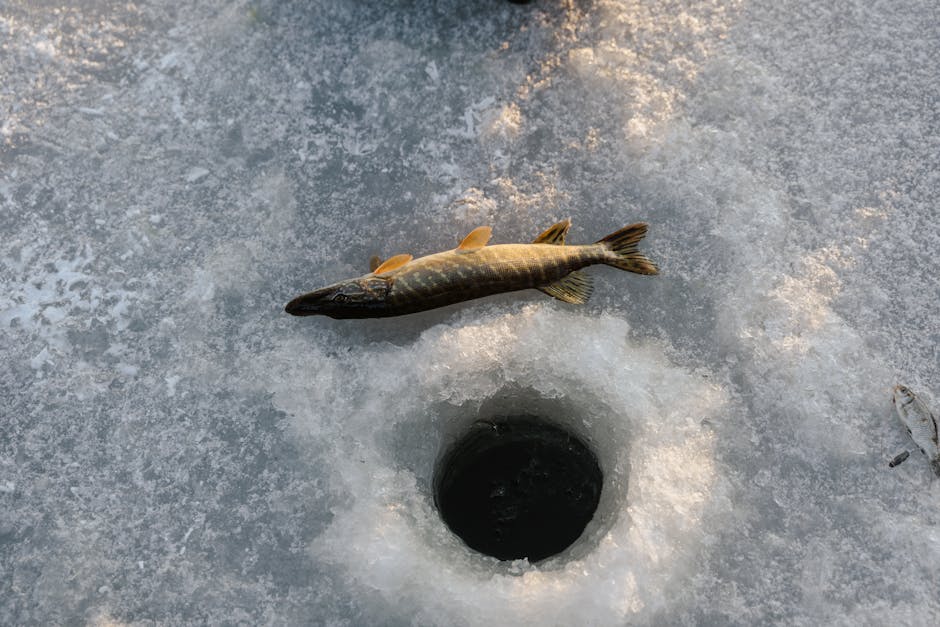
A 36-inch pike blowing up on a topwater bucktail at 12 feet off the boat's bow is a moment you won't forget. The fish charges from under the cover, the water explodes, the rod doubles over, and for five seconds you're hanging on to something powerful and mad. Then it goes sideways under the boat and you're fighting it off a prop or a dock piling.
Pike are not the world's smartest fish, but they are one of the most violent, and topwater is their best stage.
Where Pike Live
Northern pike inhabit cool lakes and rivers across the northern United States, Canada, and Europe. In the U.S., quality pike fishing exists in:
- Upper Midwest: Minnesota, Wisconsin, northern Michigan — thousands of lakes
- Northeast: New York's Thousand Islands, Vermont's Lake Champlain, Adirondack lakes
- Northern Rockies: Montana, Idaho — some excellent waters
- Canada: Manitoba, Ontario, Quebec — world-class fisheries with multi-day trips available
The farther north you go, the bigger average fish. Manitoba and Ontario trophy pike fisheries hold fish over 45 inches that respond to topwater.
Pike Habitat
Pike are ambush predators that relate to:
- Weed beds — cabbage, pondweed, coontail, milfoil
- Shallow bays with emergent vegetation
- Points and drop-offs into deeper water
- River current breaks
- Downed trees and laydowns
They hold motionless in cover, watching for movement. When prey passes, they explode outward in a burst, grab the prey crosswise in their teeth, and retreat to cover to swallow.
Topwater Conditions
Pike hit topwater best in:
- Water temperatures 55°F to 72°F
- Spring (May to June post-spawn) and fall (September to October)
- Morning and evening low-light windows, cloudy days
- Shallow water — 2 to 6 feet over weed beds
Summer heat drives pike to deeper, cooler water. Midday bright sun on a 78°F lake is not topwater time. Dawn and dusk in cool water is topwater time.
Topwater Lures
Buzzbaits
A blade-and-rubber-skirt bait that churns the surface. Classic pike producer.
- Booyah Buzz — $8
- Cavitron Buzzbait — $10
- War Eagle Buzzbait — $10
Black or white skirts for clear water; chartreuse for stained water. Quarter-ounce for standard casting distance; 3/4 to 1 ounce for bigger pike waters and longer casts.
Walking Baits
A cigar-shaped floating plug you walk back and forth across the surface.
- Heddon Super Spook — $8. Walking classic.
- Zara Spook — $8.
- Rapala X-Rap Magnum Walking — $14.
A slower walking cadence works on pike — they prefer a deliberate, wounded-looking retrieve to a frantic one.
Prop Baits
Propeller-equipped baits that splash and gurgle.
- Smithwick Devil's Horse — $8
- Heddon Tiny Torpedo — $6
- Yo-Zuri 3DB Prop — $12
Frogs and Hollow-Body Rats
Over matted vegetation in summer, a hollow-body frog or rat triggers aggressive bites.
- SPRO Bronzeye Frog — $10
- Live Target Hollow Body Frog — $12
Big Topwater Plugs (Musky Size)
For trophy pike, musky-sized topwaters move water aggressively.
- Topraider (Musky Innovations) — $40
- Pacemaker Predator — $30
- Llungen Lures Tapper — $40
Tackle
- Rod: 7' to 7'6" medium-heavy to heavy casting rod. St. Croix Mojo Musky, Dobyns 735C, G. Loomis E6X Musky. $150 to $450.
- Reel: High-capacity baitcaster. Shimano Tranx, Daiwa Lexa 300. $200 to $450.
- Line: 50 to 80 lb braided line. PowerPro Maxcuatro, Sufix 832 Advanced Superline.
- Leader: 18 to 24 inches of 60 to 80 lb fluorocarbon or single-strand wire. Pike teeth cut through fluoro eventually; wire is safer.
Leaders: The Most Common Pike Loss
Skip the leader and you'll lose fish. Pike have teeth specifically designed to slice lines. Fluorocarbon leaders work for a few fish but eventually fail. Single-strand titanium or seven-strand wire leaders last longer.
Knot or crimp the leader to the lure. Haywire twist to a swivel on the main line side, or attach to braid via a duo lock or ball bearing swivel.
Hooking and Landing
Pike often hit the lure sideways. A solid hookset after the initial strike — wait for the fish to turn with the bait — is more productive than an immediate reaction set.
Use a long-nosed pliers and a proper jaw spreader to remove hooks. Pike teeth are surgically sharp and will open skin. A cradle net or a big rubber-coated net for landing; avoid lipping pike.
Release Ethics
Bigger pike — 40 inches and up — are trophy fish that take decades to grow. Catch and release is the norm on most fisheries. Use single or barbless hooks where legal, land quickly, keep the fish wet, minimize handling, release carefully.
The Eating Question
Pike meat is white, flaky, and excellent eating — when properly handled. The reputation for "Y bones" is real; every pike has a row of Y-shaped bones in the fillet that require a specific cut to remove. A quick YouTube lesson teaches you the 5-bone cut that produces boneless pike fillets.
Kept pike should be under 28 inches for most Midwestern regulations. Bigger pike are meant to be released.
The Moment
The reason you fish pike on topwater isn't efficiency. It's the strike. A big pike hitting a buzzbait is violent, explosive, and specific to pike — no other freshwater fish does it quite the same way. You'll remember the strike long after you've forgotten the fight.
Worth the drive to Minnesota, the Thousand Islands, or Ontario for that. A summer week on a pike lake is one of the finest fishing vacations in North America, especially if topwater is your thing.