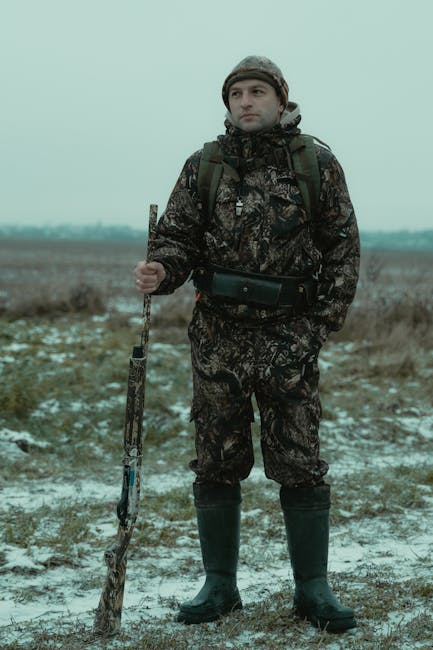
Every year around August I get the same call from three or four different friends. They are about to drop $450 to $600 on hunting boots for a western trip or a late-season Michigan rut hunt, and they want to know which ones to buy. I have worn Crispi Briksdal, Kenetrek Mountain Extreme 1000, and Irish Setter Elk Tracker 12-inch for multiple seasons each. I have put all three through the same trips, the same mud, the same snow, the same long days. The answers are not theoretical for me. I can tell you exactly where each boot falls apart and where each one shines, and I can tell you which one I reach for when I have a specific hunt coming up.
Before getting into it, a note. All three of these brands make multiple models. I am specifically talking about the Crispi Briksdal GTX, the Kenetrek Mountain Extreme 1000 gram insulation, and the Irish Setter 883 Elk Tracker. These are the flagship mountain-style hunting boots from each brand, comparable in price and use case, generally retailing between $440 and $580. There are cheaper and more expensive options from all three companies that will perform differently from what I describe here.
Crispi Briksdal GTX
The Crispi Briksdal is an Italian-made mountain boot that has become a favorite of western hunters over the last decade. Retail is around $470. It is uninsulated, built on a stiff shank with a Vibram outsole, and uses a proprietary leather from ltalian tanneries that is treated for water resistance. The first impression is that it looks overbuilt. The second impression, after walking 40 miles in a week, is that it is overbuilt in exactly the right ways.
I took a pair of Briksdal's to Colorado in 2022 for an elk hunt above 10,000 feet. We covered between eight and fourteen miles a day across timber, talus, and scree. The Crispis broke in quickly, which surprised me, given the stiffness out of the box. By day three my ankles had no hot spots, my arches were supported on steep side-hill walks, and my toes never felt jammed on the downhills. That last detail matters. Cheap boots without a proper last and without a stiff shank will let your foot slide forward on descents, and after a few 2,000-foot drops your toenails will be black.
The downside of the Briksdal is heat. Uninsulated boots are great at 45 degrees and miserable at 15. When I wore them late season in Wisconsin, walking in at 3am in a 20-degree breeze, my feet were cold inside an hour. I tried heavier wool socks. That helped, but cramped my toes. The Briksdal is not the boot for sitting in a treestand. It is a boot for moving hard, staying warm through exertion, and getting home before the temperature drops.
Break-In and Durability
The Briksdal breaks in fast, but the sole will wear out faster than the Kenetrek. I put roughly 200 trail miles on my pair before the lugs started to round at the edges. The leather held up beautifully. The stitching is still tight after three seasons. I sent them back to Crispi for a resole after season two, a $160 service, and they came back looking almost new. That service alone extends boot life by years.
Kenetrek Mountain Extreme 1000
The Kenetrek Mountain Extreme is the Montana-made competitor in this price range, retailing around $525 to $580 depending on the year. The 1000-gram Thinsulate insulation makes it the warmest of the three. It is heavier than the Briksdal by about 4 ounces per boot, and the break-in period is much longer. I spent weeks wearing mine on pavement, on gravel trails, and around the house before I would trust them on a hunt.
Once broken in, the Mountain Extreme is phenomenal for cold-weather big game hunting. The insulation keeps your feet warm down into the teens with standard wool socks, and the stiff shank supports your ankle through miles of rough terrain without giving way. I wore these for a late-November elk hunt in southern Montana at around 8,500 feet with snow on the ground. My feet stayed dry, warm, and comfortable through ten-hour days of hiking and glassing. The Crispi would have been miserable on that trip. The Elk Tracker would have fallen apart.
The Mountain Extreme excels where the Briksdal fails, in cold weather and deep snow. Where the Mountain Extreme falls behind the Briksdal is agility. It is simply a heavier, more aggressive boot. For fast hiking, for moving quickly to set up on a bugling bull, it is not my first choice. It feels like a piece of equipment rather than an extension of your leg.
The Break-In Warning
Please hear me on this. Do not take brand-new Kenetrek Mountain Extremes to a hunt. I have watched two friends try to do this. Both got hamburger-meat heels by day two. The boot is built to last, but it expects you to do the work. Plan on 30 to 50 miles of dirt and pavement walking before the first hunt. This matters.
Irish Setter Elk Tracker 883
The Irish Setter Elk Tracker is the budget pick in this comparison, retailing around $280 to $330. It is 1000-gram Thinsulate, 12 inches tall, made with Red Wing's Premium Full-Grain leather. It is heavier than the Briksdal but lighter than the Kenetrek. Break-in is fast. Right out of the box, these boots are close to ready for a hunt.
Where the Elk Tracker falls short is in stiffness and longevity. The shank is not as stiff as the other two boots, which means on long descents with 40 pounds of meat in your pack, your foot will slide forward more and your toes will feel it. The sole is Red Wing's own rubber compound, which is fine for shorter distances but wears noticeably faster than Vibram compounds on the Crispi and Kenetrek. After one season of hard western use, my Elk Trackers showed visible lug wear. After two seasons, they were ready for replacement.
For someone who hunts whitetails mostly, who walks in to a treestand or blind and sits for hours, the Elk Tracker is an excellent choice. It is warm, waterproof, and comfortable without much break-in. For a guy who hunts elk once every few years but mostly shoots deer at home, the Elk Tracker is the practical answer. Spending $550 on Kenetreks for three days of western elk hunting a year is hard to justify.
Waterproofing: The Truth Every Company Hides
All three boots are marketed as waterproof. All three are, for a while. The Gore-Tex liner in the Briksdal and the Kenetrek is a good one. The H2BLOCK waterproofing in the Elk Tracker is also good. But all three lose their waterproofing over time as the outer leather dries out, as the seams wear, and as the Gore-Tex liner itself slowly breaks down from foot sweat and abrasion.
I have had the Elk Tracker leak in year two of ownership after a river crossing. I have had the Crispi leak in year three after walking through wet grass for several hours. The Kenetrek, so far, has held up the best on waterproofing, which I attribute to the better-sealed construction and the use of Windtex over the tongue. None of these boots will stay perfectly waterproof forever. Maintain them with wax or conditioner every year and they will last.
Conditioning Schedule
Obenauf's LP is my conditioner of choice for all three. Apply after every hunting trip, a thin coat, rubbed in by hand. Let it soak overnight. This alone has extended my boot life by probably a season on each pair. The leather stays supple, the seams stay tight, and the water resistance holds up longer. Boots that get stored dry and dirty crack and fail fast. Boots that get wiped down and conditioned last.
Socks Matter More Than Boots
Before you spend $500 on any boot, spend $100 on socks. A pair of Darn Tough or Smartwool heavy-weight merino wool hunting socks, worn with a synthetic liner, will do more for your foot comfort than a $200 upgrade in boot price. I wear Darn Tough Hunter Mid-Weight as my primary hunting sock and own eight pairs. The lifetime warranty means they last forever, and the wool blend handles sweat and cold better than any synthetic.
Cheap socks cause blisters. They also cause cold feet because wet cotton or poorly-wicking synthetic loses insulation. Even a top-tier boot is only as good as the sock interface. Do not skip this.
Which One Would I Buy Now
If I could only have one pair of boots for all my hunting, it would be the Kenetrek Mountain Extreme 1000. Yes, it is heavier than I would like for August archery hunts. But the range of conditions it handles, from 50-degree mountain weather to single-digit Wisconsin treestand days, is unmatched. A pair of these will last me five to seven years of hard use, and the total cost per hunt is lower than cheaper boots that need replacement every two years.
If I knew I only hunted warmer weather, the Crispi Briksdal GTX is the better pick. Lighter, faster, more agile on the mountain. If I were buying for a hunter who mostly sits treestands for whitetails in the Midwest or Northeast, the Irish Setter Elk Tracker is the right call. It does the job for half the money.
Do not overbuy your boot. A $580 boot for a weekend Pennsylvania whitetail hunter is wasted money. Do not underbuy either. A $180 big-box boot for a nine-day Colorado elk hunt will leave you hobbling by day three. Match the boot to the hunting you actually do, not the hunting you imagine doing.