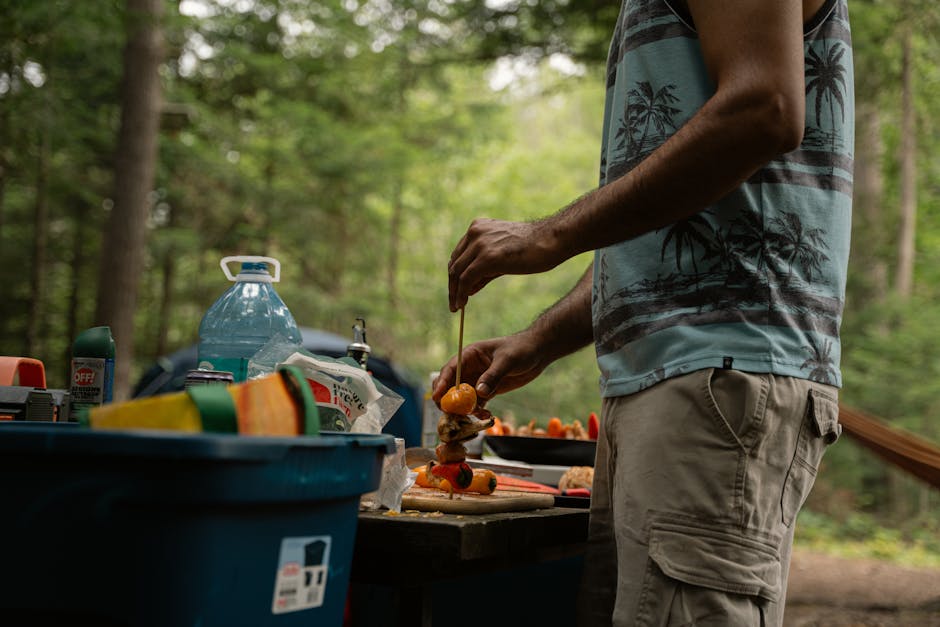
On day five of a seven-day backcountry elk hunt in the San Juan Mountains, I sat on a log at 11,200 feet eating a cold Mountain House Beef Stroganoff straight out of the bag. My fuel canister had run out that morning, the spare one was back at the trailhead, and I was watching my breath fog up in the 20-degree afternoon. The stroganoff was gummy, cold, and slightly gritty with undissolved starches. It was also 600 calories of food I badly needed. I ate the whole bag in about six minutes, drank a liter of cold snowmelt on top of it, and felt fine for the rest of the afternoon. That is the essential nature of backcountry hunting food. It is fuel. It is calories. It is energy for doing hard physical work at altitude. It is not a meal in the normal sense. Understanding this reframes the whole food-planning question.
The average hunter, burning through 5,000 to 7,000 calories a day on a hunt that involves real climbing and long distances, cannot pack enough food to truly match caloric output. You end up in a deficit. The question is not how to match your burn. It is how to minimize the deficit while keeping your food weight manageable. Three days at 5,000 calories a day is 15,000 calories of food. At a reasonable caloric density of 125 calories per ounce, that is 7.5 pounds of food. Most hunters end up closer to 1.5 pounds of food per day in practice, about 3,000 calories, which means a consistent 2,000 to 4,000 calorie daily deficit. You lose weight. You adapt.
The Caloric Density Math
Caloric density is the metric that matters. Everything else, taste, variety, nutrition, is secondary. The best backcountry foods hit 140 to 180 calories per ounce. The worst sit at 40 to 80 calories per ounce. A granola bar at 100 calories per ounce is mediocre. Almond butter at 170 is excellent. Olive oil at 255 is the undisputed winner, though drinking it straight is unpleasant. Peanut M&Ms at 145 are genuinely one of the best backcountry foods by this metric, taste great, and keep well in the cold.
Compare this to a fresh apple at 17 calories per ounce. You are carrying 6 ounces of water-weight in that apple to get 100 calories. No fresh fruit in the backcountry. Same logic applies to fresh vegetables. A small cucumber is 98 percent water. You are doing yourself no favors.
What Actually Works
Mountain House and Peak Refuel freeze-dried meals, the 600-to-900-calorie larger bags, are the backbone of my backcountry dinner. Mountain House Beef Stew, Peak Refuel Chicken Teriyaki, and Mountain House Lasagna are the three I rotate. They cost $9 to $14 per bag. The caloric density is decent, around 100 calories per ounce including the packaging. The sodium levels will preserve you. And they require only hot water to rehydrate, which means almost no mess to clean up.
Skip the 400-calorie "single serving" freeze-dried meals. They are for weekend backpacking, not serious hunting. Get the larger bags designed for two servings and eat the whole thing yourself.
Breakfast: Protein and Fat
Oatmeal alone, the Quaker instant packets, is a trap. Too many carbs, not enough fat, and you crash at 10am when you are three miles from camp and looking for a bedded mule deer. Instead, I mix my oatmeal with a packet of Justin's Almond Butter (200 calories, 9 grams protein, 18 grams fat), a handful of pecans (200 calories in an ounce), and a tablespoon of dry milk powder. This turns a 150-calorie oatmeal into a 600-calorie breakfast that actually holds you until lunch.
Alternatively, hot drinks plus energy bars. A Starbucks Via coffee packet, a hot chocolate packet mixed together, and two Clif Bars or Pro Bars will run you 500 to 600 calories of fast-metabolizing fuel. This is my cold-weather breakfast, particularly on mornings I am hiking in the dark and do not want to deal with a cold stove and cold water.
The Bar Situation
Most energy bars are sugar-heavy and not caloric-dense enough. The exceptions are Pro Bars, Clif Builder Bars, and Bobo's Oat Bars, all of which hit 300 to 400 calories per bar at reasonable weights. Skip KIND bars, RXBARs, and most "healthy" snack bars. They do not have the fat content you need for backcountry performance.
Pro Bar Meals are my favorite single-bar backcountry food. 370 calories in a 3-ounce bar, around 125 calories per ounce, and they taste decent. I eat two a day on most trips, one around 10am and one around 2pm, between breakfast and the main dinner.
Lunch: Calorie-Dense, Shelf-Stable
I do not cook lunch in the backcountry. I graze. A typical lunch is a Pro Bar, a handful of mixed nuts and dried fruit trail mix, a piece of hard cheese, and a package of summer sausage or jerky. Total calories around 800 to 1,000, eaten while glassing or hiking slowly. This distributed-eating approach keeps blood sugar stable and avoids the post-lunch crash.
Hard cheeses, aged cheddar or pecorino or parmesan, last for a week or more in a backpack even in warm weather. Summer sausage lasts similarly well. Both are calorie-dense, around 100 to 120 calories per ounce, and full of fat and protein. This is old European food technology that works exactly as well now as it did for hunters 300 years ago.
Electrolytes Matter More Than You Think
At altitude, dehydration sneaks up on you. You breathe out more water than at sea level, you urinate more because of altitude diuresis, and you often do not feel thirsty until you are already well dehydrated. Electrolyte powder in your water bottle is not optional. I use Liquid IV, LMNT, or Nuun, one packet per liter of water, at least once a day and often twice. The sodium especially is critical for muscle function and preventing cramping.
If you come back from a backcountry hunt feeling wrecked, cramping, and exhausted for three days, you were under-hydrated and under-salted, probably both. Electrolytes are some of the cheapest, highest-value items in your pack.
Snacks That Earn Their Weight
Justin's Almond Butter packets (200 calories in 1.15 ounces, 174 calories per ounce) are the single best snack in my pack. I carry four to six of these per day and eat them between major meals. Peanut M&Ms (145 calories per ounce) are a close second. Beef jerky and summer sausage at around 100 calories per ounce are decent. Pretzels, chips, and most crackers are weight-traps. Skip them.
Gu or Clif Shot gels are useful for the specific moment you realize you are about to bonk on a long climb and you need 100 to 150 calories delivered to your bloodstream immediately. They should not be your primary calorie source because they are expensive, messy, and not satisfying. One or two a day as emergency backup.
Water and Cooking
Water filtration is non-optional. I pack a Sawyer Squeeze as my primary filter, it weighs about 3 ounces, filters at 100,000 gallons per lifetime, and costs $40. A Katadyn BeFree is faster but has a shorter lifespan. Either works. Chemical tablets work too but take 30 minutes and taste like chlorine. Boiling works but wastes fuel.
For cooking, a JetBoil Flash plus one 100-gram fuel canister is standard for a three-day hunt. For a seven-day hunt, I carry two 230-gram canisters. Over-packing fuel is one of the most common backcountry mistakes, but running out is worse. On my fuel-out day in Colorado, I had to eat cold food for the rest of the trip. I never made that mistake again.
The Packing List for a Three-Day Hunt
Three days, caloric target 4,500 per day, total of 13,500 calories, target weight of 6.5 pounds of food. Three dinners of large freeze-dried meals at 900 calories each equals 2,700. Three breakfasts of oatmeal with almond butter and pecans at 600 calories each equals 1,800. Three Pro Bar lunches at 1,000 calories total equals 3,000. Six Justin's Almond Butter packets at 200 each equals 1,200. One pound of cheese plus summer sausage at 1,800 calories total equals 1,800. Three servings of electrolyte powder, coffee, hot cocoa, and miscellaneous at 500 calories equals 1,500. Total 12,000 calories, roughly 1,500 calorie daily deficit from target, acceptable.
Total weight roughly 6 pounds. You will adjust based on your own burn rate, but this is the template I follow. If I can carry more, I carry more fat. If I need to carry less, the first thing to cut is bars, because the fat-heavy foods are higher caloric density per ounce than the bar options.
The Truth About Feeling Hungry
You will be hungry on a real backcountry hunt. Not starving, but hungry. Most hunters are not used to this because modern life is an endless buffet. The discomfort of mild hunger is manageable and does not impair hunting performance. Constantly snacking to suppress hunger eats your food supply and does not actually help you hunt. Eat your three planned meals, eat your planned snacks, and accept a mild deficit as part of the experience. You will lose two to four pounds on a seven-day hunt, most of it water weight, and you will regain it within a week of coming home. This is fine. It is not a medical emergency.
Hunters who overpack food are usually anxious eaters at home who cannot imagine being hungry. Hunters who underpack food have often not learned what their actual burn rate is. After your first or second serious hunt, you will know exactly how much food you need. Until then, plan for 1.5 pounds of food per day and adjust based on experience.